
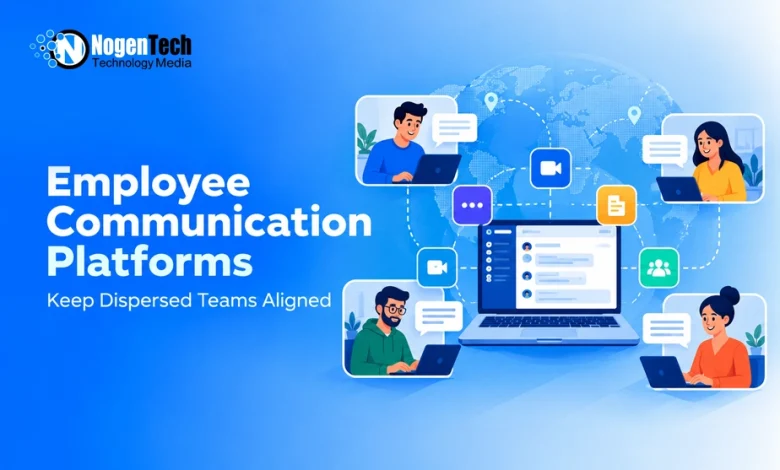
Dispersed teams work across offices, time zones, and schedules, so shared information must travel without depending on hallway conversations. When updates sit in scattered chats, inboxes, and meetings, employees miss context or act on old decisions.
Communication systems create clear channels for urgent discussion, formal announcements, stored knowledge, and feedback. The right structure begins with matching each message to its proper format.
A practical communication plan separates speed from depth. Chat handles a quick clarification, while email records a policy change and an intranet stores reference material. Cloud-based collaboration tools help dispersed teams manage these needs across different locations and schedules.
For leaders seeking reach, employee communication platforms give employees a reliable place to receive updates without searching through unrelated conversations. This separation reduces duplicate messages, protects attention, and makes important information easier to find after a meeting ends.
Give Each Channel a Defined Job
Well-connected employees are often the most engaged employees. Every channel needs a defined job. Chat suits urgent coordination, video meetings suit decisions that require discussion, and email suits formal notices.
A shared knowledge base holds procedures, policies, and recurring answers. Employees then know where to look, while managers avoid sending the same message across several channels.
Teams also need a rule for what belongs in each space. A product decision should live in a searchable record, not inside a fast-moving chat thread.
A leadership update needs a format that preserves context, while a short operational alert needs a direct route to the people affected. These rules reduce channel confusion before it becomes a communication gap.
Make Important Information Findable
Alignment depends on memory as much as delivery. Employees need to retrieve the latest policy, decision, or project brief without asking a colleague to forward it.
AI note-taker apps can support this process by capturing meeting discussions, generating summaries, and preserving action items for employees who could not attend.
Leaders should also state the action, owner, and deadline in each operational update. That structure lets employees separate information they should read from information they must use.
A summary followed by a link to the full record keeps the message readable without removing the evidence behind it.
Support Asynchronous Communication
Dispersed employees do not share one working day. A recorded message lets a night-shift employee, a parent between appointments, or a colleague in another time zone receive the same context later.
Asynchronous communication reduces the pressure to attend every meeting and gives employees time to process complex updates before responding.
Internal podcasts fit this need when a message depends on explanation, tone, or leadership context. A leader can record a focused update that employees hear during a commute or routine task.
The format does not replace written records, because decisions and instructions still need searchable text.
Build Feedback Into the System
Alignment weakens when communication moves in one direction. Employees need a clear route for questions, corrections, and concerns, especially after policy changes or company announcements.
A feedback channel, survey, or scheduled listening session gives leaders evidence about confusion and shows where instructions need clarification.
Feedback also improves channel choices. If employees repeatedly ask for the same detail, the original message belongs in a permanent reference space. If a discussion produces a decision, the owner should publish that decision where affected teams can find it later.
Track Alignment With Useful Signals
Communication teams can measure whether the system works through observable behavior. Useful signals include repeated questions, missed deadlines caused by unclear instructions, search activity, and participation in feedback channels.
These signals show where information breaks down without reducing alignment to message volume or open rates.
A monthly review can connect each problem to a channel change. A team might shorten an announcement, move a procedure into the knowledge base, record a detailed explanation, or clarify who owns follow-up.
Small adjustments keep the communication system tied to work rather than personal preference.
Managers should compare results across teams before changing a channel. One group’s chat use might reflect work, while others might signal missing records. Context prevents habits from becoming rules.
Conclusion
Dispersed teams stay aligned when communication has structure, memory, and feedback. Map recurring messages by purpose, assign each purpose to one primary channel, and document the rules in a short team guide. Leaders should then review repeated questions and missed handoffs each month.
That review turns communication problems into visible workflow changes. Employees then find the right information and act on it without waiting for another meeting.