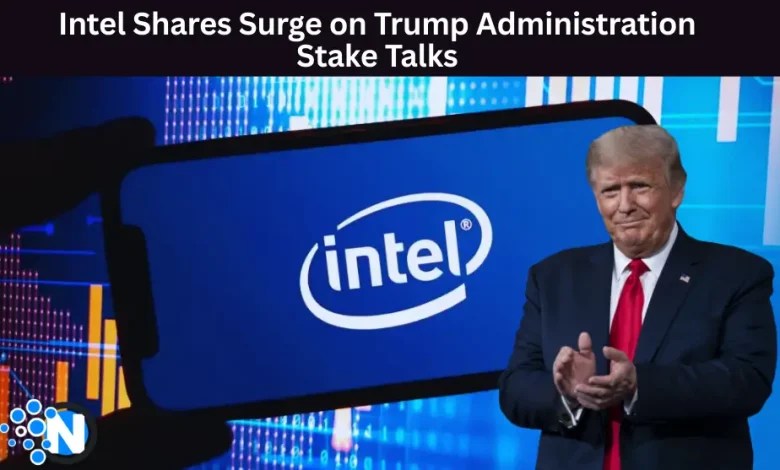
Intel Corporation (NASDAQ: INTC) is enjoying a rare market spotlight, with shares leaping after reports emerged that the Trump administration is probing an equity stake in the semiconductor giant. The move, still unconfirmed by both parties, could mark one of the most significant intersections of U.S. government policy and private tech in decades.
Thursday’s trading saw Intel’s stock rise more than 7%, followed by a 4-5% gain in early pre-market hours Friday. Over the past week, the stock has rallied close to 20%, reflecting investor optimism over what many are calling “the biggest bet yet” on America’s chip making future.
The Meeting That Sparked the Buzz
The reported talks follow a closed-door meeting between President Donald Trump and Intel CEO Lip-Bu Tan. The timing is striking: only days earlier, Trump publicly called for Tan’s resignation over alleged links to Chinese military-affiliated companies.
Yet, the very same week, the two men reportedly discussed a path to government backing- proof that in the world of high-stakes industry, rivals can become partners overnight.
If a stake is acquired, sources say the administration would likely tap CHIPS Act funding, aimed at reviving U.S. semiconductor manufacturing. The investment would primarily target Intel’s ambitious – and currently delayed $28 billion Ohio manufacturing complex, now projected to come online around 2030 or later.
Strategic Play or Political Theater?
On one hand, a U.S. stake in Intel would send a resounding signal: Washington is willing to put its money quite literally where its mouth is when it comes to technology sovereignty. Such backing could reassure allies, deter rivals, and reframe the U.S. as a serious contender against Asian manufacturing dominance.
On the other hand, critics warn of the pitfalls. Government ownership could distort market dynamics, politicize corporate strategy, and still fail to address Intel’s deeper competitive weaknesses particularly in the lucrative AI chip sector, where Nvidia and TSMC continue to dominate.
“Capital infusion is a spark,” one tech strategist put it, “but a spark is only useful if the engine is working.”
The Market Mood
Investors aren’t waiting for the fine print. The stock’s rally has spilled over into other semiconductor names, with traders betting that support for Intel could set a precedent for wider industry subsidies. Suppliers, equipment makers, and even rare-earth mining companies have felt the lift.
Still, both the White House and Intel remain officially silent. White House spokesman Kush Desai cautioned that such initiatives are “speculative unless formally announced,” underscoring that the talks are preliminary at best.
The Bigger Picture
Beyond stock charts and factory timelines lies a bigger narrative: the blurring line between national security and corporate strategy. In the Cold War, governments routinely took stakes in strategic industries. Today, such moves are rare but global chip shortages, geopolitical rivalries, and AI arms races are rewriting those rules in real time.
For Intel, the mere suggestion of a U.S. government stake has delivered a badly needed boost in market confidence. Whether that confidence becomes capital and whether capital becomes competitiveness will be the test that determines if this week’s surge was a turning point or just another headline-driven spike.