Why Zuckerberg’s “AI for Everyone” Pitch Is Falling Flat, Per TechCrunch
Meta CEO Mark Zuckerberg published a 6,500-word manifesto promising AI-powered personal empowerment for everyone. TechCrunch's own editors don't believe him.

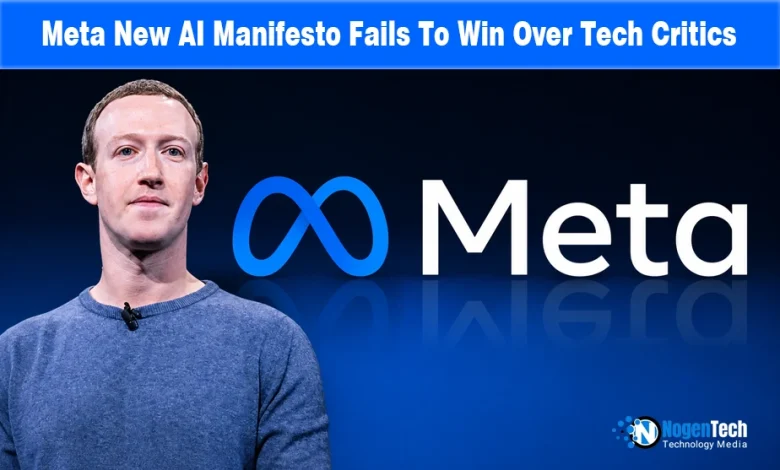
Meta CEO Mark Zuckerberg published a 6,500-word essay last week titled “The Future Is for Everyone,” describing a world where every person has an exceptionally capable personal AI agent that understands them, their goals, and everything they care about.
The manifesto arrived as Meta pushes its new Muse Glimmer and Muse Spark models toward consumers.
But on TechCrunch’s Equity podcast, editors Anthony Ha, Kirsten Korosec, and Rebecca Bellan explained why the pitch is facing skepticism, pointing to Zuckerberg’s similar promise a decade ago.
The Same Promise Meta Already Broke Once
TechCrunch’s Rebecca Bellan drew a clear comparison: Zuckerberg made a similar pitch during the early social media era, promising everyone an outlet for connecting with friends, but what followed, in her words, was ragebait and advertising rather than connection.
That history matters more than a passing criticism here, because it reframes Zuckerberg’s new AI promise as a rerun rather than a fresh vision.
TechCrunch’s Kirsten Korosec said the manifesto is too optimistic about AI, focusing on its benefits without properly acknowledging the costs that come with it.
This is the framing she said explains why the negative reaction has been so widespread rather than confined to AI skeptics alone.
Positioning Himself as the Anti-Dario, Without the Product to Back It
Anthropic CEO Dario Amodei has increasingly warned about AI risks, recently describing the industry’s failure to deliver on its promises as a “crisis of trust.”
Bellan argues that Zuckerberg is positioning himself as Anti-Dario, refusing to slow AI development or qualify AI’s risks as rival lab leaders increasingly have after recent safety incidents.
That contrast is deliberate, but it creates a problem. Meta is not leading in frontier capabilities or open-source adoption, leaving personal empowerment through an always-on agent as the main area where Zuckerberg can claim an edge.
Bellan tested that claim by trying to download Muse Glimmer on her MacBook. It required specific hardware that most consumers do not have, weakening the “for everyone” pitch before the product reaches users.
A Familiar Pattern: Big Promises, Small Reception
What ties this discussion to a broader pattern is how often AI executives’ abstract claims fail to connect with the public, while their specific predictions can land even worse.
Anthony Ha pointed to Sam Altman’s recent suggestion that parents could use ChatGPT to create personalized podcasts about their children’s interests for school rides, which drew widespread mockery rather than enthusiasm.
The reaction highlights what Zuckerberg’s manifesto shares with Altman’s pitch.
When AI executives talk about unleashing creativity and empowering individuals, skeptics don’t pay attention.
But when they get specific enough for people to evaluate the actual use case, people’s reaction is often: “Does anyone actually need this?”
Zuckerberg’s essay leans heavily on the first approach and offers little of the second.
That may explain why a 6,500-word document meant to build excitement about AI’s future instead became, in TechCrunch’s framing, a case study in exactly why they remain skeptical of it.
Source: Why people aren’t buying Mark Zuckerberg’s AI future