How AI-Powered Customer Communication Tools Are Reshaping Business Engagement in 2026

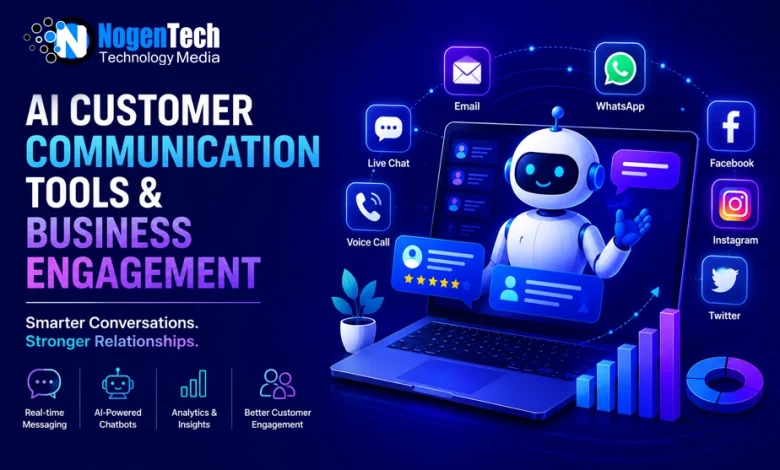
Over the last few years, I’ve personally noticed a major shift in how businesses communicate with customers online. What once depended heavily on large support teams and manual follow-ups is now being handled through AI-powered communication systems that respond faster, work around the clock, and create a much smoother customer experience.
In my experience, businesses that adopt AI communication tools early usually gain an advantage in customer engagement, lead handling, and overall efficiency. Whether it is eCommerce stores, SaaS companies, agencies, or service providers, many are now relying on modern AI agents to automate repetitive tasks while keeping customer interactions more organized.
Platforms like Kommo, Salesforce, and HubSpot are integrating AI tools directly into CRM platforms to support real-time engagement and customer relationship management.
- AI-powered communication tools help businesses deliver faster and more personalized customer support
- Conversational AI platforms automate repetitive tasks like FAQs, order tracking, and appointment scheduling.
- AI-driven CRM systems improve lead qualification, follow-ups, and sales pipeline management.
- Hybrid customer service models combine AI automation with human support for better customer experiences.
- Businesses adopting AI communication systems early can improve scalability, efficiency, and customer retention.
What Are AI-Powered Customer Communication Tools?
AI-powered customer communication tools are software platforms that use artificial intelligence to automate, manage, and improve interactions between businesses and customers across digital channels.
These tools help businesses communicate faster and more efficiently through chat systems, messaging apps, email automation, CRM platforms, and customer support systems.
Instead of relying completely on human agents, AI systems can understand customer questions, provide automated responses, route conversations, and even personalize interactions based on customer behavior.
Common Features of AI-Powered Communication Tools
These systems typically include:
- AI chatbots
- Automated customer support
- Smart lead qualification
- CRM integration
- Omnichannel messaging
- Workflow automation
- Sentiment analysis
- Personalized responses
- Real-time customer assistance
- Multilingual support

Why AI Communication Tools Are Becoming Essential
Customers now expect instant support through messaging apps, websites, and social media platforms. Long response times often lead to lost sales opportunities and poor customer experiences.
AI-powered customer engagement tools solve this problem by providing:
- 24/7 customer support
- Automated responses
- Lead qualification
- Smart routing systems
- Personalized communication
- Omnichannel messaging
- Real-time customer assistance
Businesses using conversational AI platforms can respond to customer inquiries faster while reducing pressure on human support teams.
Another trend I’ve observed is the rise of conversational commerce. Customers are increasingly contacting brands directly through apps like WhatsApp, Instagram, and Facebook instead of traditional contact forms or emails.
AI Automation Helps Businesses Solve Common Communication Problems
One of the biggest challenges companies face is managing repetitive customer inquiries. Support teams often spend hours answering the same questions repeatedly.
AI communication systems help solve this issue by automating routine interactions such as:
- Appointment confirmations
- Pricing inquiries
- Order tracking
- Payment reminders
- FAQ responses
- Consultation scheduling
- Product recommendations
This automation improves workflow efficiency while allowing human representatives to focus on more complex customer concerns.
Businesses also reduce operational bottlenecks because AI systems can manage thousands of conversations simultaneously without delays.
Better Lead Qualification Through AI
Sales teams frequently struggle with large volumes of incoming messages and inconsistent follow-up processes. AI-powered CRM automation improves lead management by organizing conversations and identifying high-intent prospects automatically.
Modern AI agents can:
- Analyze customer intent
- Prioritize qualified leads
- Trigger automated follow-ups
- Segment customer conversations
- Track engagement behavior
- Improve sales pipeline visibility
This helps businesses reduce missed opportunities while improving conversion rates and customer response times.
AI-driven lead nurturing also creates more consistent communication throughout the customer journey.
Multilingual AI Support Expands Global Reach
Businesses expanding into international markets often face language barriers and rising support costs. AI-powered communication tools now offer multilingual support that helps companies engage with customers in multiple languages without hiring separate regional teams.
Many platforms support:
- English
- Spanish
- Portuguese
- Turkish
- Arabic
- French
- Bahasa Indonesia
This capability improves accessibility for global audiences and helps businesses scale customer support operations more efficiently.
For eCommerce brands, SaaS companies, and online service providers, multilingual AI communication improves both customer satisfaction and international growth opportunities.
Human Support Still Plays a Critical Role
Although automation improves efficiency, human interaction remains essential for complex or emotional conversations. AI works best when combined with trained customer support professionals.
Many CRM systems now use hybrid communication workflows where AI handles initial interactions before transferring sensitive cases to human agents.
This approach helps businesses:
- Reduce customer wait times
- Improve service quality
- Maintain personalized communication
- Handle large inquiry volumes
- Increase customer trust
Customers still value empathy, especially during technical issues, complaints, or high-value purchasing decisions.
Conversational AI Is Reshaping Digital Customer Experience
AI communication technology is moving beyond basic chatbots. Modern conversational AI systems can now understand customer behavior, analyze sentiment, and provide more context-aware responses.
Businesses are increasingly using AI-powered systems for:
- Customer onboarding
- Automated marketing campaigns
- Sales engagement
- Customer retention
- Personalized messaging
- Workflow automation
- Omnichannel support
Companies that integrate conversational AI into their customer engagement strategies often improve operational efficiency while creating more seamless digital experiences.
The Future of AI-Powered Business Communication
Based on current trends, I believe AI-powered communication tools will continue becoming smarter, more personalized, and more deeply integrated into CRM and marketing systems.
Industry discussions among SaaS providers and digital marketing professionals show growing interest in AI solutions capable of:
- Managing customer journeys
- Automating communication workflows
- Integrating across messaging platforms
- Supporting predictive customer engagement
- Delivering data-driven insights
Businesses that adopt intelligent communication tools early are likely to gain a competitive advantage through faster support, stronger customer relationships, and improved scalability.
At the same time, I think the companies that succeed most in 2026 and beyond will be the ones that combine AI efficiency with genuine human-centered communication.
FAQs
How do AI communication tools improve customer support?
These tools provide instant responses, automate repetitive inquiries, offer 24/7 support, and route complex issues to human agents, helping businesses improve customer satisfaction and reduce delays.
What is conversational AI in customer service?
Conversational AI refers to intelligent systems that simulate human-like conversations using natural language processing and machine learning to assist customers through chat, messaging apps, and voice interfaces.
Can AI replace human customer support teams?
AI can automate routine tasks and improve efficiency, but human agents are still essential for handling complex, emotional, or high-value customer interactions that require empathy and critical thinking.
Which industries benefit most from AI communication tools?
Industries such as eCommerce, SaaS, healthcare, finance, education, and online services benefit significantly from AI-powered communication systems due to high customer interaction volumes.
What are the benefits of multilingual AI support?
Multilingual AI support helps businesses communicate with global audiences, improve customer accessibility, reduce regional support costs, and expand into international markets more efficiently.
How does AI improve lead qualification?
AI systems analyze customer behavior, identify high-intent prospects, automate follow-ups, and prioritize leads based on engagement patterns, helping sales teams improve conversion rates.