Put the Right Logging in Place Before You Need It, Guerassim Nikolov Advises
Guerassim Nikolov explains how effective event logging, secure retention, and regular monitoring help organisations preserve critical evidence and investigate cybersecurity incidents.

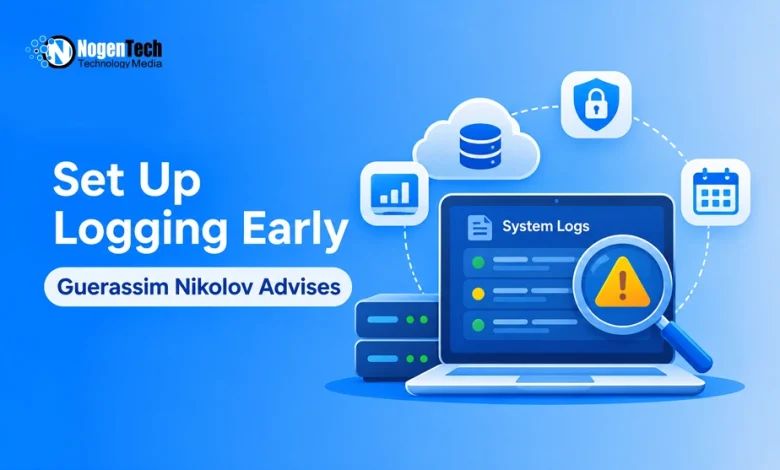
Guerassim Nikolov highlights why effective event logging, secure log retention, and regular monitoring are essential for investigating cybersecurity incidents.
The UK’s National Cyber Security Centre (NCSC) identifies understanding what happened, assessing the impact, and determining the next steps as key priorities during a cybersecurity incident.
An organisation’s ability to answer these questions, known as forensic readiness, depends on what information it records, where logs are stored, and how long they are retained.
Joint guidance published in 2024 by cybersecurity agencies, including the NCSC, the US Cybersecurity and Infrastructure Security Agency (CISA), and the Australian Cyber Security Centre, notes that some incidents can take up to 18 months to discover.
“An investigation can only ever be as good as the evidence available to it, and that evidence is created or lost months before anyone knows there is a problem,” according to Guerassim Nikolov, whose advisory work spans endpoint protection and forensic investigation. “Too often logging is treated as housekeeping until the record that is needed simply does not exist.”
Why Inadequate Logging Can Delay Cybersecurity Investigations
Effective event logging helps security teams determine the scope and extent of a cybersecurity compromise.
According to the joint guidance, insufficient logging can prevent investigators from identifying how far an attacker moved through systems, which accounts were compromised, and what information may have been accessed.
Missing historical logs can also limit incident response and prevent investigators from understanding the full extent of a compromise.
When incidents remain undetected for more than a year, retaining logs for only a few weeks may leave investigators without critical evidence.
Why Logging Should Be a Business-Level Decision
Organisations often rely on default logging configurations until a security incident exposes gaps in their records.
The NCSC recommends identifying the questions an organisation must answer during an incident and determining which logs can provide that information. An NCSC blog summarises this approach with the question: “For what?”
The joint guidance also recommends implementing an enterprise-approved logging policy that accounts for responsibilities shared with external service providers.
Guerassim Nikolov believes organisational leadership should participate in these decisions rather than leaving them entirely to IT teams.
“Deciding what to log is really deciding which questions the business wants to be able to answer under pressure,” he says. “Those are questions about regulatory exposure, customer trust and recovery time, so the people accountable for those outcomes should help shape the policy.”
How Organisations Can Improve Logging and Forensic Readiness
The joint guidance recommends several measures to strengthen event logging and support cybersecurity investigations:
- Centralise event logging: Aggregate records from across the organisation into a centralised logging facility.
- Use SIEM capabilities: Deploy a security information and event management (SIEM) system to identify deviations, security events, and potential incidents.
- Support security analysis: Managed security service providers can supply analysts to tune SIEM detection rules and investigate alerts when internal expertise is difficult to recruit or retain
- Protect logging infrastructure: Store logs in separate or segmented networks with additional security controls to prevent unauthorised modification or deletion.
The NCSC recommends transferring logs to a central location as quickly as possible to reduce attackers’ opportunities to delete evidence.
This is particularly important because attackers may deliberately target logging services to conceal their activities.
Log Retention and Regular Reviews Are Essential
The joint guidance warns that default log retention periods are often insufficient for incident investigations. The NCSC provides different retention recommendations depending on the systems involved:
- Minimum six months: Retain logs needed to answer essential incident investigation questions.
- 13 months: Suggested storage period for certain critical areas.
- Around 180 days: Suggested retention period for less critical networks.
Logging strategies also require regular updates as systems, configurations, and technology usage change.
The NCSC recommends reviewing and validating logging strategies every six to 12 months to identify incomplete or inaccurate records.
“Good logging is an investment that pays back on the day it is needed most,” Guerassim Nikolov says. “When logging is designed around the questions a compromise will raise, and kept under regular review, an incident can be understood and contained rather than reconstructed from fragments.”
Assessing Organisational Readiness Before an Incident
Organisations can evaluate their forensic readiness by considering whether they could investigate a compromise that began a year ago but was discovered tomorrow.
Could they establish what happened, identify affected systems, assess the impact, and determine the necessary response?
Their ability to answer depends on the logging, retention, monitoring, and evidence protection measures already in place.
About Guerassim Nikolov
Guerassim Nikolov is a cybersecurity professional whose advisory work spans endpoint protection and forensic investigation, with a focus on reliable evidence and effective logging in incident response.
Editorial Note: This article was independently prepared by the NogenTech editorial team based on commentary from Guerassim Nikolov and referenced cybersecurity guidance. It is intended for informational and editorial purposes and is not an official announcement from the NCSC, CISA, or the Australian Cyber Security Centre.
Sources: UK National Cyber Security Centre (NCSC) guidance and blog on event logging; 2024 joint event logging guidance from national cybersecurity agencies, including the NCSC, CISA, and the Australian Cyber Security Centre.