Most tech professionals have already replaced their physical wallets. Smartphones replaced cards, cards replaced cash, and now digital card providers are competing to become the default financial layer inside your phone.
In 2026, that competition is more intense than ever. New players are entering the market, while established platforms are evolving rapidly with automation, multi-currency support, and deeper integrations.
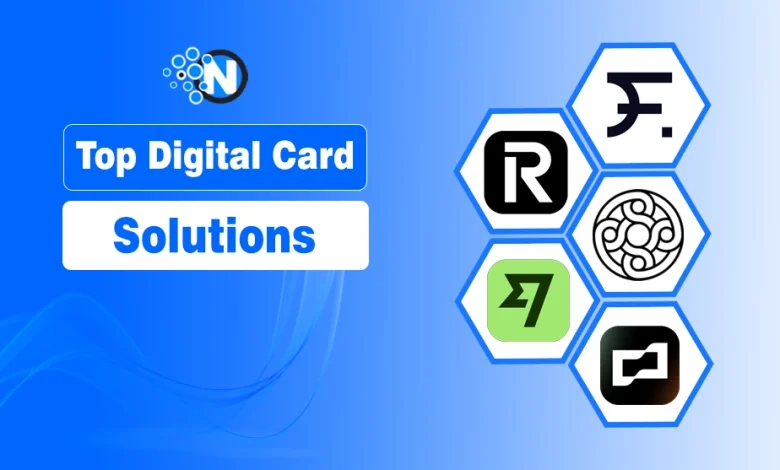
In this blog post, you will find a list of the top 10 digital card solutions used by developers, founders, freelancers, and remote teams, along with what each one does best and where it may fall short.
What “Digital-First” Card Means in 2026?
“Digital-first” is no longer about having a good mobile app. Today, it means:
- Instant virtual card issuance
- Advanced in-app controls (limits, merchant locking)
- Multi-currency support with low FX fees
- Seamless integrations (accounting, APIs, automation)
- Real-time expense tracking and approvals
If a provider doesn’t meet most of these criteria, it’s no longer competitive.
The 10 Best Digital Card Solutions

Still the obvious starting point for European founders. The free tier is genuinely usable, the multi-currency setup is excellent, and the team card features cover most small-business use cases. Stumbles a bit at the larger end (limits, support response times), but for under-fifty-person companies it is hard to beat.
Key Features:
- Free tier suitable for small businesses
- Multi-currency accounts with competitive FX rates
- Instant virtual and physical cards for teams
- Spending controls and approval workflows
- Expense tracking with basic analytics

Better known for international transfers, Wise also issues solid business and personal cards. The killer feature is genuine mid-market exchange rates with no FX markup. If you spend in multiple currencies, this card pays for itself within a month.
Key Features:
- Real mid-market exchange rates (no hidden FX markup)
- Multi-currency wallet with 50+ currencies
- Low-cost international payments
- Transparent fee structure
- Physical + virtual debit cards

A newer entrant focused on businesses that want both physical and virtual cards with serious operational controls. Finup business cards come with per-card spending limits, merchant locking, and on-demand virtual issuance, all in one platform. The interface is what most operators comment on first; it is fast, no clutter, and the integrations into accounting are clean. Particularly good for teams that have outgrown their first business bank but are not ready for enterprise-grade spend management.
Key Features:
- On-demand virtual card issuance
- Per-card spending limits and merchant restrictions
- Clean, fast UI with minimal friction
- Strong accounting integrations
- Centralized expense management dashboard

Mercury’s IO product (the cards arm) is solid for US-incorporated tech startups. Tight integration with the rest of Mercury’s banking, decent rewards, but limited to US entities. If you are not registered in the States, look elsewhere.
Key Features:
- Fully integrated banking + card ecosystem
- Virtual and physical cards with team controls
- Cashback rewards on spend
- API access for developers
- Real-time transaction tracking

The startup standby. Brex went through a few strategy pivots over the years but the core product (corporate cards with fast issuance and tight expense automation) is still strong. Best fit for venture-backed companies; less compelling for bootstrapped operators.
Key Features:
- High credit limits based on company financials
- Automated expense management and categorization
- Instant virtual card creation
- Rewards tailored to business spending
- Integration with accounting tools

Brex’s biggest competitor in the US, and arguably the better product if your priority is cost control over rewards. The savings insights are genuinely useful and the AP automation tools have matured fast. US-focused but expanding.
Key Features:
- AI-driven spending insights and savings recommendations
- Automated expense tracking and approvals
- Accounts payable (AP) automation
- Unlimited virtual cards
- Real-time reporting dashboards

A favourite among APAC-headquartered companies and anyone with a serious cross-border operation. Multi-currency accounts, batch payments, and decent card controls. The dashboard is dense but powerful once you learn it.
Key Features:
- Multi-currency accounts and global payment rails
- Batch payments and supplier payouts
- Virtual and physical cards with controls
- FX optimization tools
- API integrations for scaling businesses

A lean option for European freelancers and one-person companies. Clean app, fair pricing, MasterCard worldwide. Not designed for teams or anything beyond simple expense tracking, but for what it is, it is well-built.
Key Features:
- Clean, intuitive mobile app
- Global Mastercard acceptance
- Basic expense tracking tools
- No hidden fees on core plans
- Fast onboarding

Strong in France, Germany, Italy, and Spain, less so elsewhere. Qonto’s strength is the team card management and the accounting integrations, both of which are clearly built for European SMB workflows. If your accountant uses Sage or Cegid, Qonto will save you time.
Key Features:
- Team card management with spending permissions
- Strong accounting integrations (Sage, Cegid, etc.)
- Invoice and expense management tools
- Multi-user access with role controls
- Localized compliance support
Old-school in some ways, but still the default for marketplace sellers, freelancers working with US clients, and anyone receiving from platforms like Upwork or Amazon. The card product is functional rather than exciting, but the receiving infrastructure is unmatched.
Key Features:
- Global receiving accounts (USD, EUR, GBP, etc.)
- Integration with platforms like Amazon and Upwork
- Cross-border payments infrastructure
- Physical prepaid card access
- Mass payout capabilities
How to Choose the Right Digital Card
Choosing the right card isn’t about features alone; it’s about fit.
You should focus on:
- Geography first: Ensure the provider supports your country and operations
- Integrations second: Tools like Xero or QuickBooks matter more than rewards
- Daily usability: App speed, UI clarity, and reliability
- Failure handling: What happens when a payment is declined or flagged
These factors impact your workflow far more than marketing features.
Final Thoughts
There’s no universal “best” digital card in 2026, only the best fit for your specific setup. The smart approach is:
- Shortlist 2–3 providers based on your region and needs
- Test their apps and workflows
- Choose the one that feels frictionless in daily use
Because in the end, the best financial tool is the one you don’t have to think about.
People Also Ask
A digital card is a virtual payment card that can be used online or via mobile wallets without requiring a physical card. It often includes advanced controls and real-time tracking.
The best digital card depends on your needs. Revolut, Wise and Finup are popular for global use, while Ramp and Brex are strong for US-based businesses.
Yes, digital cards are generally secure. They offer features like virtual card numbers, spending limits, transaction alerts, and the ability to freeze or delete cards instantly.
Most modern digital cards support international payments. Providers like Wise and Airwallex offer multi-currency support and low foreign exchange fees.
A virtual card is a type of digital card used for online payments, while digital cards can include both virtual and physical cards managed through an app.
Startups often choose Brex, Ramp, or Mercury due to their expense management tools and integrations.
Some providers offer cashback or rewards, but features like expense tracking, automation, and integrations are often more valuable for businesses.