Why EPA 608 Certification Is Important When Hiring an HVAC Technician
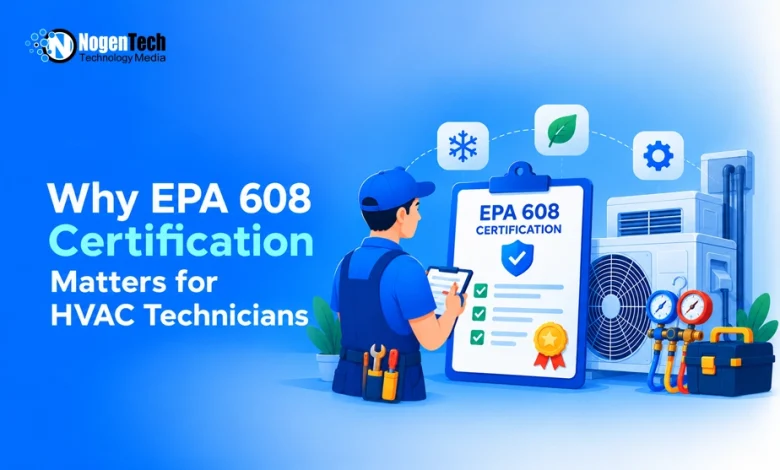
EPA 608 certification shows that an HVAC technician has passed the federal exam required to handle regulated refrigerants. Checking it before hiring helps you choose someone qualified to work on your AC system and follow refrigerant handling rules.

When your air conditioner stops cooling in the middle of summer, you probably care more about getting it fixed than checking the technician’s qualifications. But if the repair involves refrigerant, certification matters.
Refrigerants used in home air conditioners and heat pumps are subject to federal regulations. Technicians who service these systems must understand how to recover, handle, and dispose of refrigerants without releasing them into the atmosphere.
Mountain View HVAC technicians who perform this work must meet the same federal certification requirements as technicians elsewhere in the United States.
That’s where EPA Section 608 certification comes in. Before hiring someone to repair your AC, it helps to know what this certification covers, how to verify it, and why it matters for your equipment.
What Is EPA 608 Certification and What Does It Cover?
EPA Section 608 certification is a federal requirement for technicians who maintain, service, repair, or dispose of equipment that could release regulated refrigerants into the atmosphere.
Under Section 608 of the Clean Air Act, technicians must follow refrigerant handling rules, including restrictions on intentional venting. The certification exam covers refrigerant recovery, leak detection, recovery equipment, safety procedures, and applicable regulations.
There are four certification categories:
- Type I: Covers small appliances, such as window air conditioners and compact refrigerators.
- Type II: Covers high-pressure equipment, including most residential central air conditioners and heat pumps.
- Type III: Covers low-pressure equipment, primarily large chillers.
- Universal: Covers all three equipment categories.
Technicians must pass the Core exam and the relevant equipment-specific exam. Universal certification requires passing all four sections.
EPA 608 certification does not expire, so technicians don’t need to renew it. However, certification alone doesn’t confirm that someone is familiar with newer refrigerants or current HVAC equipment.
Why Should Homeowners Check an HVAC Technician's EPA 608 Certification?
EPA 608 certification confirms that a technician has passed the required examination on refrigerant handling and federal regulations. It doesn’t guarantee a perfect repair, but it establishes an important minimum qualification.
One concern is improper refrigerant handling. Federal rules restrict the sale of regulated refrigerants to certified technicians and certain authorized purchasers. A technician without the required certification generally cannot purchase refrigerant for covered service work.
Another concern is refrigerant leaks. If your AC has lost refrigerant, simply adding more may restore cooling temporarily without solving the problem.
A qualified technician should assess why the refrigerant level is low and determine whether a leak search or repair is necessary. Federal leak repair requirements vary by equipment type and refrigerant charge, but ignoring a suspected leak can leave you paying for repeated service visits.
Improper refrigerant release is another issue. Knowingly venting regulated refrigerants during service is generally prohibited, and violations can result in federal penalties.
Certification doesn’t prove that every technician follows the rules, but it shows they have met the federal testing requirement for this work.
How Can You Verify an HVAC Technician's EPA 608 Certification?
The simplest way is to ask the technician to show their EPA 608 certification card.
Even when a contractor appears in Google Local Services Ads, you should independently confirm their licensing and insurance and ask to see the technician’s EPA certification
Certified technicians receive credentials from EPA-approved testing organizations. The card identifies the technician and the certification category they have earned.
For most residential central air conditioning and heat pump repairs, look for Type II or Universal certification.
Check the name on the card as well. EPA 608 certification belongs to the individual technician, not the HVAC company.
If a company says its technicians are certified, ask whether the person assigned to your service call holds the appropriate certification.
Some approved testing organizations also provide certification verification or replacement services. If you need additional confirmation, ask which organization issued the credential.
A reputable HVAC company should have no problem explaining its technicians’ qualifications.
Is EPA 608 Certification the Same as an HVAC License?
No. EPA 608 certification and an HVAC contractor’s license serve different purposes.
EPA Section 608 certification focuses on refrigerant regulations, safe handling, recovery procedures, and related environmental requirements.
It does not establish whether a technician can correctly size an air conditioner, diagnose electrical problems, or install an entire HVAC system.
An HVAC contractor’s license is issued under state or local requirements. Depending on the location, obtaining one may involve work experience, examinations, insurance, bonding, or other conditions.
The rules also differ for employees, apprentices, and contractors. Some jurisdictions allow technicians to work under a licensed contractor without holding an individual contractor’s license.
Federal refrigerant rules have their own requirements and limited exceptions, including provisions for certain apprentices working under appropriate supervision.
When hiring an HVAC company, check both the contractor licensing requirements in your area and the EPA certification of the technician who will handle refrigerant.
What Should You Look for When Hiring an HVAC Technician?
EPA 608 certification is a good starting point, but there are other details worth checking before agreeing to a repair.
1. Proper licensing and insurance
Check whether the contractor holds the license required in your state or municipality. Ask about liability insurance, particularly for repairs that involve expensive equipment or work inside your home.
2. The correct EPA certification
For most home central AC systems, the technician should hold Type II or Universal certification. A Type I certification alone isn’t sufficient for servicing typical residential central air conditioning equipment.
3. Appropriate refrigerant recovery equipment
Technicians who perform refrigerant recovery need equipment suitable for the refrigerant and system involved. Ask how they recover refrigerant before opening a charged system.
4. A written repair estimate
Request an estimate that identifies the proposed work, parts, labor, and refrigerant charges where applicable.
The refrigerant type matters because systems may use different products, including R-410A or R-454B. Costs can vary according to the refrigerant, supplier, and amount required.
5. A clear explanation of refrigerant loss
If your system is low on refrigerant, ask what may have caused it.
Air conditioners operate in sealed refrigerant circuits, so a low charge can indicate a leak or an earlier servicing problem. Adding refrigerant without investigating the cause may leave the original issue unresolved.
A technician should explain the diagnosis, available repair options, and expected costs before proceeding.
Final Thoughts Before You Book That HVAC Repair
You don’t need to understand every refrigerant regulation to hire a qualified HVAC technician. A few questions can tell you whether the person working on your air conditioner has the required credentials.
Ask whether the technician holds EPA 608 Type II or Universal certification, and request proof if necessary. Also check the company’s licensing and insurance, and make sure the repair estimate explains what you’re paying for.
Getting your AC cooling again matters, but so does knowing the repair was handled properly. A little checking before the service call can help you avoid unnecessary expenses and repeat repairs.