5 Ways Sociality Limited Structures Operational Transparency for Digital Platforms
Sociality Limited structures operational transparency through incident documentation, trust and safety metrics, support monitoring, performance tracking, and governance to help digital platforms identify issues and make informed decisions.

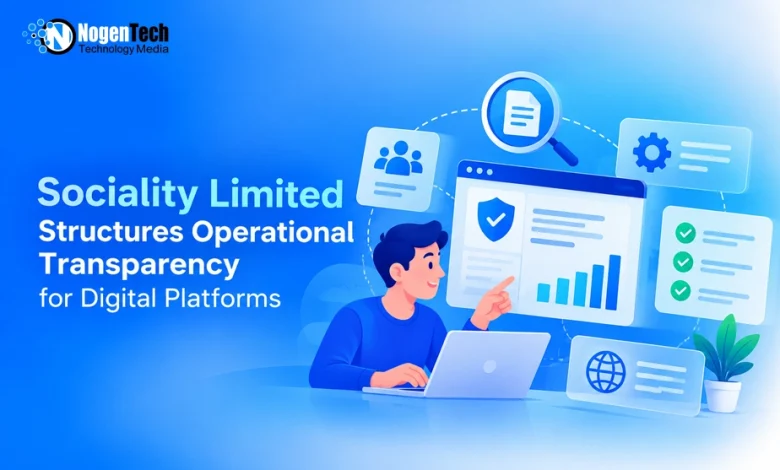
A digital platform becomes difficult to operate when teams lack visibility into their operations. Technical issues, user complaints, and safety concerns go unnoticed or take longer to resolve when information is scattered across different systems.
According to PwC’s Global Digital Trust Insights, only 2% of businesses have implemented organization-wide cyber resilience. This highlights the importance of clear responsibilities, better coordination, and reliable operational information for managing risks.
Sociality Limited provides trust and safety operations and structured support for digital platforms. Below are five ways the company structures operational transparency, from incident documentation and safety metrics to performance monitoring and governance.
| Operational Approach | What It Focuses On | Its Importance |
| Incident Documentation | Incident records, root causes, and responses | Helps prevent recurring problems |
| Trust and Safety Metrics | Moderation outcomes, appeals, and violations | Measures the effectiveness of safety operations |
| Support Operations Visibility | Support tickets, escalations, and user satisfaction | Connects user problems with product performance |
| Product Performance Monitoring | Uptime, errors, and feature performance | Identifies technical issues affecting users |
| Governance Documentation | Policies, procedures, and responsibilities | Keeps operations consistent and accountable |
Here is an explained view of each of these five approaches and how Sociality Limited uses them to improve operational visibility and decision-making across digital platforms.
1. Incident Documentation That Creates Institutional Memory
Every digital platform experiences operational incidents. What matters is whether teams learn from them or continue dealing with the same problems.
Sociality Limited structures incident documentation to record what happened, how teams responded, and what changed afterward. These records help teams recognize warning signs, make better escalation decisions, and avoid repeatedly addressing the same root causes.
Structured incident documentation includes:
- Event timelines: Recording detection, escalation, response actions, and resolution in a consistent format for comparison.
- Root cause classification: Categorizing failures to identify recurring problems and weaknesses in platform operations.
This approach turns incident records into useful references for future troubleshooting and operational improvements.
2. Trust and Safety Metrics That Reflect Operational Reality
Trust and safety operations generate data on content reviews, moderation decisions, appeals, enforcement actions, and behavioral flags. However, processing more reports doesn’t necessarily mean a platform is becoming safer.
For example, tracking content review volume without decision accuracy provides an incomplete picture of moderation quality. Similarly, enforcement counts alone don’t show whether users continue violating platform policies.
Sociality Limited structures trust and safety reporting around outcomes rather than activity alone. Its approach focuses on evaluating how effectively moderation and enforcement processes support platform safety.
Key metrics include:
- Appeal rates and outcomes: How often moderation decisions are challenged and their review results.
- Repeat violation rates: Recurring violations by users or content categories.
- Safety incident response times: How quickly incidents are addressed against defined service thresholds.
These metrics help platforms evaluate decision quality, identify recurring safety issues, and assess whether enforcement processes are working as intended.
3. Support Operations Visibility Across the User Journey
Customer support data can reveal problems that aren’t immediately visible through technical monitoring. Increasing complaints about a feature, for example, may indicate usability issues or product failures.
Sociality Limited connects support reporting with product performance instead of treating customer service as a separate function. This helps teams identify recurring issues and use support insights to guide product improvements.
The main support metrics include:
| Support Metric | What It Reveals |
| First contact resolution by issue category | Whether problems are resolved immediately or require further attention |
| Escalation rate and outcome | How often cases need escalation and whether they are successfully resolved |
| Average handling time by channel | Support efficiency across different communication channels |
| Ticket volume by platform area | Recurring product issues or emerging feature problems |
| User satisfaction by issue type | Whether resolution quality meets user expectations |
Connecting support insights with product teams can help identify recurring problems and guide improvements.
The goal is to measure both support quality and overall platform health rather than focusing only on ticket volume or resolution speed.
4. Product Performance Monitoring That Supports Decisions
Monitoring uptime, response times, and error rates helps platforms identify technical problems. However, these metrics become more useful when teams understand how performance changes affect users.
Sociality Limited structures product performance monitoring to connect technical data with operational decisions. Instead of relying only on system status indicators, its approach considers whether performance issues are disrupting important user activities.
The monitoring framework covers:
- Uptime trends: Tracking service availability and recurring interruptions.
- Performance degradation: Identifying slower response times and system changes.
- Feature-level performance: Monitoring how individual features perform across user segments.
- Error rate distribution: Identifying platform areas experiencing frequent errors.
For example, a slow checkout process may require more urgent attention than a delay in a less frequently used feature.
As monitored by Sociality Limited, technical performance and user experience are closely connected. Performance degradation can affect user engagement, making it important to evaluate technical issues alongside their impact on users.
This approach helps teams prioritize problems based on their practical consequences rather than technical thresholds alone.
5. Governance Documentation Aligned With Daily Operations
Governance documentation defines how a digital platform should operate, including its policies, responsibilities, escalation procedures, and reporting processes.
However, these documents become less useful when they don’t reflect how teams actually work.
The NIST Cybersecurity Framework also emphasizes clear responsibilities, documented policies, and ongoing monitoring as important parts of cybersecurity governance.
Sociality Limited treats governance documentation as an ongoing operational reference rather than a static collection of policies. Its approach includes updating procedures when workflows change, reviewing documentation regularly, and using it during employee onboarding and escalation decisions.
Key practices include:
- Regular reviews: Keeping policies aligned with current operational procedures.
- Clear responsibilities: Defining who handles specific tasks and decisions.
- Documented escalation paths: Establishing consistent processes for handling incidents.
- Operational alignment: Comparing documented standards with actual performance.
Keeping governance documentation aligned with daily operations supports more consistent decisions, clearer accountability, and easier identification of operational gaps.
Final Thoughts: Consistency Is the Whole Point
Operational transparency works best when it’s part of everyday platform operations rather than just a reporting process. Clear documentation, relevant metrics, and defined responsibilities help teams identify problems and make informed decisions.
Sociality Limited’s approach connects incident documentation, trust and safety metrics, support operations, performance monitoring, and governance into a structured system.
Together, these practices help digital platforms improve operational visibility, maintain consistency, and respond more effectively to emerging issues.