Apple Plans Five New iPhones Through 2027, Explores Chinese Chip Suppliers as Foldable Push Accelerates
Apple is preparing its biggest iPhone lineup expansion in years, raising foldable production targets and weighing memory chips from blacklisted Chinese suppliers as it races to secure components amid an industry-wide shortage.

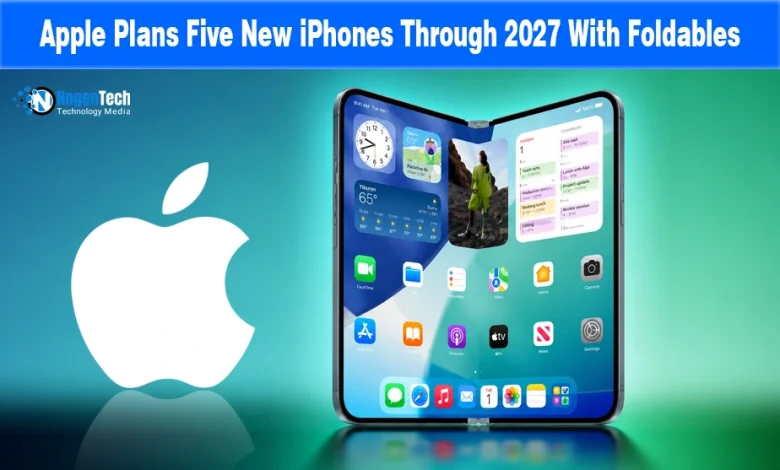
Apple is preparing to release at least five new iPhone models across a compressed timeline from the second half of 2026 to the first half of 2027, according to Nikkei Asia, as it looks to expand its smartphone market share.
The plan reportedly includes a sharply higher production target for Apple’s first-ever foldable device, alongside a parallel effort to secure memory chips from restricted Chinese suppliers that remain politically sensitive in Washington.
Together, the moves reflect a company betting aggressively on new hardware even as the components underpinning it grow scarcer and pricier.
A Bigger Foldable Bet Than Expected
Apple has asked suppliers to prepare about 10 million foldable iPhones this year, up from the previously forecast 7 to 8 million units, and has already booked components for roughly 80 million smartphones.
This includes the iPhone 18 Pro, iPhone 18 Pro Max, and a foldable model for the second half of 2026.
Total 2026 production is expected to exceed 220 million units, giving Apple an advantage over Xiaomi, Oppo, and Vivo, which have each cut annual targets to below 100 million units amid memory-shortage-driven price hikes.
Even with the foldable’s hinge issues largely resolved, Apple is expected to keep initial shipments modest before scaling production later in the year.
Rumored to feature a 7.8-inch inner display, 5.5-inch cover display, Touch ID instead of Face ID, and Apple’s A20 chip, the device is expected to launch alongside the iPhone 18 Pro lineup in September, possibly as the iPhone Ultra, extending Apple’s premium Ultra branding.
Eyeing Blacklisted Chinese Chipmakers
Separately, Apple is in talks with ChangXin Memory Technologies and Yangtze Memory Technologies to supply DRAM and NAND flash for devices sold in China as AI data center demand turns memory into one of the industry’s most profitable markets.
Both companies appear on the Pentagon’s 1260H list of firms believed to support China’s military, while the latter has also been on the Commerce Department’s Entity List since 2022, restricting its access to U.S. technology.
Tim Cook has reportedly appealed directly to officials, including Treasury Secretary Scott Bessent, seeking assurances the deal would not trigger additional sanctions, despite opposition from lawmakers, including Brian Mast.
If approved, the suppliers would expand Apple’s memory lineup to five, alongside Samsung, SK Hynix, and Micron, which have all struggled to meet AI-driven demand.
This comes as Apple also moves to reduce its geopolitical risk by strengthening a newly confirmed U.S. chip manufacturing partnership with Intel.
Pricing Pressure Still Building
The supply squeeze has already reshaped Apple’s pricing strategy once this year, with MacBooks and iPads receiving price increases in late June while the iPhone 17 lineup was spared.
Analysts expect that restraint won’t extend to the new devices. IDC projects the foldable iPhone will carry an average selling price of around $2,500, with higher-storage models potentially reaching $3,000.
That would place it well above even the most expensive iPhone Pro Max configurations and test how much buyers are willing to pay for Apple’s first foldable.
Source: Apple to launch 5 new iPhone models to gain market share amid memory crunch