Apple Seeks Approval to Purchase Chips From Blacklisted Chinese Supplier
Apple is actively lobbying the Trump administration for clearance to buy flash memory components from ChangXin Memory Technologies and Shenzhen Longsys Electronics, two blacklisted Chinese microchip manufacturers.

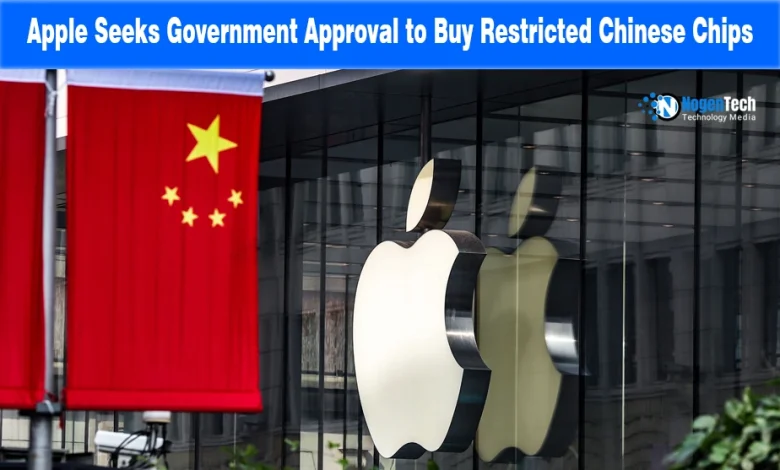
Apple Inc. has launched a lobbying effort directed at the Trump administration to gain special approval to buy key memory chips from blacklisted Chinese companies.
The move marks a major shift as Apple adapts to an increasingly difficult trade environment. With memory chip prices rising sharply because of the global artificial intelligence infrastructure boom, the company is seeking exemption licenses from Washington.
By aiming to secure supplies from blacklisted chipmakers, the iPhone maker is hoping to reduce costs and protect its product margins during an ongoing hardware supply shortage.
Apple’s request comes at an already tense moment as concerns over advanced chip technology reaching China continue to grow, making the company’s push for exemptions even more difficult.
Inside Apple’s High-Stakes Regulatory Tactic
According to an investigative report by the Financial Times, Apple’s executive team has focused its lobbying efforts on obtaining commerce clearances for ChangXin Memory Technologies.
At the same time, supplementary documentation highlighted by GuruFocus reveals that Apple is also seeking approvals to partner with Longsys Electronics.
Both flash memory and storage chip suppliers are heavily restricted by the U.S. Department of Commerce, meaning Apple needs explicit government approval before it can buy from them.
Under current federal guidelines, domestic corporations are explicitly barred from shipping goods, operating software, or transacting technology with entities placed on the Commerce Department’s structural Entity List.
Instead of cutting ties completely, Apple is using political channels to seek a legal exception, showing just how deeply Chinese manufacturing remains built into American consumer hardware.
The lobbying effort comes just days after Washington announced a long-term Apple-Intel manufacturing partnership, highlighting the contrast between Apple’s U.S. plans and its immediate reliance on Chinese chips.
The Crushing Economic Pressure of the AI Boom
The main reason behind Apple’s aggressive strategy is a major imbalance in the global semiconductor supply chain.
The rapid growth of enterprise AI has pushed leading memory manufacturers, who are having record profits, to focus on producing high-margin High Bandwidth Memory (HBM) for AI companies like Nvidia instead of standard memory chips used in consumer electronics.
This shift has reduced the supply of chips for everyday devices, causing hardware component prices to rise sharply, an industry-wide strain recently mirrored by Sony’s dramatic price hike on the PS5 Pro due to soaring memory costs.
Financial data from Yahoo shows that the four largest U.S. cloud infrastructure companies are expected to invest about $725 billion in data centers during 2026 alone.
That massive demand for AI hardware has diverted silicon resources away from traditional markets, creating a supply shortage that is pushing component prices beyond what conventional supply chains can comfortably support.
Market Blowback and Margin Protection Shifts
The impact of the component shortage has already reached Apple’s retail business. After an overnight announcement, Apple raised prices on its MacBook and iPad lineup by up to $300 to offset rising costs.
In an official statement, the company said it had delayed passing those costs on to consumers for as long as possible, but component prices had become unsustainable, making the price hike unavoidable.
The price increases also unsettled investors, sending Apple shares down 6.1% in a single day and wiping nearly $270 billion from the company’s market value.
Analysts said the sell-off reflects Wall Street’s concerns over whether Apple can pass higher hardware costs on to consumers without hurting long-term demand.
Source: Apple seeks to buy memory chips from blacklisted Chinese company