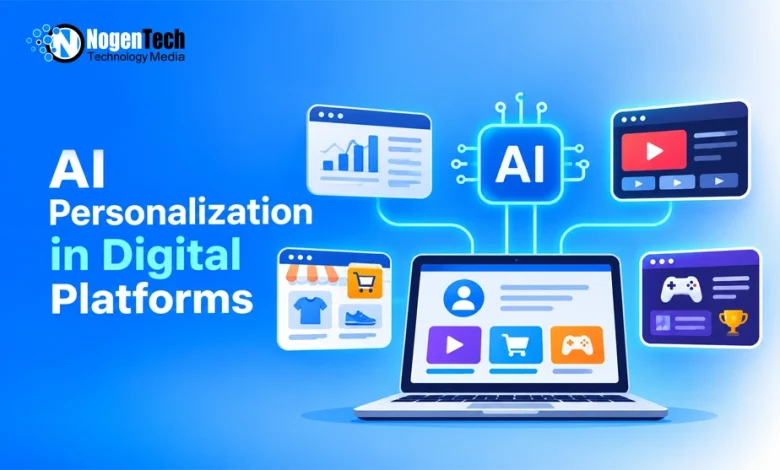
AI personalization helps digital platforms deliver relevant content, recommendations, and features based on user behavior.
Marketing dashboards can highlight campaigns needing attention, eCommerce stores can recommend related products, and streaming services can prioritize preferred content.
These systems can improve navigation and user engagement, but their effectiveness depends on accurate data, relevant recommendations, and user control.
How Does AI Personalization Work?
AI personalization uses machine learning to analyze user interactions and predict which content, features, or recommendations may be relevant.
Unlike rule-based personalization, which follows predefined conditions, machine learning models can adjust predictions as new information becomes available.
For example, streaming services may consider viewing history and preferred genres, while eCommerce platforms can use browsing activity and purchase history to recommend products.
However, predictions are not always accurate. Incomplete data, changing interests, and shared devices can produce irrelevant recommendations.
How Does AI Improve Marketing Dashboards?
Marketing platforms collect large amounts of campaign data, but identifying useful insights can be time-consuming.
Tools such as HubSpot, Salesforce, and Google Analytics 4 offer AI-assisted and analytical features to identify trends, monitor performance, and highlight potential problems.
For example, automated insights can help identify where campaign conversions have declined, allowing marketers to investigate possible causes.
Businesses can also explore AI marketing trends to understand how predictive analytics and automation support marketing decisions.
How Do eCommerce and Streaming Platforms Use AI Recommendations?
Platforms with extensive product or content libraries use personalization to simplify discovery.
Amazon recommends products based on available shopping signals, while Netflix and Spotify personalize content suggestions according to user preferences and activity. AI recommendations can help platforms:
- Suggest products or content related to previous interests.
- Highlight options that might otherwise go unnoticed.
- Prioritize relevant categories and features.
- Simplify navigation during repeat visits.
Research examining content personalization and brand loyalty explores the relationship between relevant digital experiences and consumer relationships with brands.
However, recommendations alone cannot guarantee loyalty. Pricing, service quality, and customer trust also influence long-term engagement.
What Can Gaming Platforms Teach About Adaptive Interfaces?
Gaming platforms often organize multiple game formats, schedules, account features, and navigation options within a single interface.
Online poker provides an example. People exploring Poker online can compare platforms based on game availability, software, player traffic, and formats such as cash games, Sit & Gos, and multi-table tournaments.
Different formats create different navigation requirements. Short-session players may prefer quick access to specific games, while tournament-focused users may need schedules and registration information.
Where available, customizable interfaces and preference-based recommendations can make these features easier to find. Advanced personalization may also consider previous interactions, although capabilities vary between platforms.
For real-money gaming, personalization must respect user controls and responsible-gaming safeguards rather than encourage excessive participation.
How Does AI Personalization Affect User Engagement and Decisions?
Higher engagement does not always indicate a better experience. More clicks or longer sessions may reflect genuine interest or difficulty finding relevant information.
Research on AI personalization and customer loyalty examines how tailored experiences relate to consumer behavior in eCommerce. Businesses should therefore evaluate personalization through meaningful outcomes:
| Platform | Useful Engagement Measure |
| eCommerce | Improved product discovery |
| SaaS | Faster task completion |
| Streaming | Relevance of recommended content |
| Marketing dashboards | Faster identification of performance issues |
AI can identify patterns and recommend actions, but human judgment remains important.
For example, a dashboard may flag an underperforming campaign, while the marketing manager decides how to respond. Similarly, product recommendations can support discovery without replacing customer choice.
Research on AI-driven customer experience and purchase intention examines personalization, customer perceptions, and organizational responsiveness.
Nogentech’s guide to digital customer experience strategies provides additional context on improving interactions across digital touchpoints.
What Are the Privacy Challenges of AI Personalization?
AI personalization relies on browsing history, account activity, and behavioral data, making privacy and data accuracy important considerations.
Platforms should:
- Explain how personal data is collected and used.
- Follow applicable consent and privacy requirements.
- Allow users to manage preferences and notifications.
- Limit unnecessary data collection.
- Provide controls to reduce or disable personalization where supported.
Outdated preferences and incomplete activity histories can also affect recommendation accuracy. Clear user controls help keep personalized experiences relevant without becoming intrusive.
Final Thoughts
AI personalization is changing digital engagement by making recommendations, dashboards, and interfaces more relevant to individual preferences.
Marketing platforms can highlight performance insights, eCommerce and streaming services can simplify discovery, and gaming interfaces can organize features around user needs.
Effective personalization prioritizes relevance, usability, privacy, and meaningful outcomes rather than engagement metrics alone.