Why Employee Training Programs Fail and How to Fix Your Learning Strategy
Employee training programs fail due to overlooked skills gaps, poor business alignment, and limited workplace application. A targeted learning strategy with clear objectives, continuous learning, and measurable outcomes can improve training effectiveness.

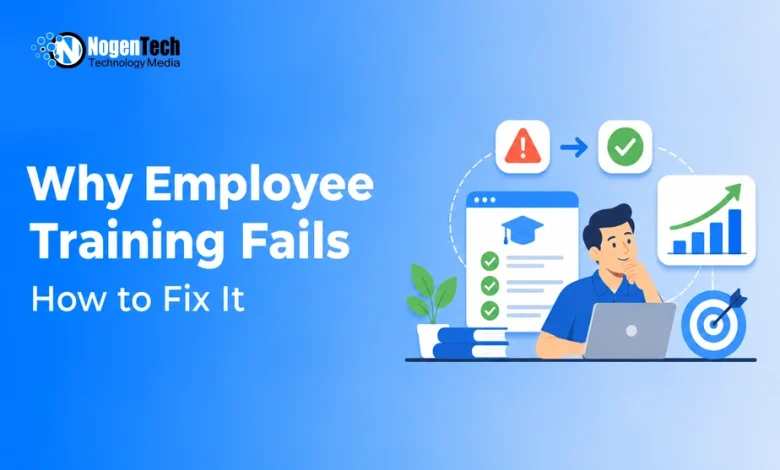
Employee training programs are meant to improve skills and workplace performance. Yet many companies invest heavily in training without seeing meaningful results. Employees complete courses, earn certificates, and return to their jobs, often falling back into old habits.
According to research discussed by Harvard Business Review, companies spent close to $356 billion globally back in 2015 on employee training and education, yet many struggled to achieve meaningful returns. The problem often lies in overlooked skills gaps, workplace conditions, and unclear business objectives.
So, how can businesses make training more effective? This guide explains why employee training programs fail, how to identify skills gaps, and how to develop a learning strategy that delivers measurable results.
Why Do Most Employee Training Programs Fail?
Employee training often fails because organizations treat it as a one-time activity rather than an ongoing process.
An employee might complete a course but struggle to apply the knowledge at work. If existing processes, incentives, and management practices remain unchanged, new skills may never become part of daily work.
Another common mistake is selecting training solutions without assessing employee needs. Some businesses purchase learning platforms or course libraries before identifying the skills their workforce lacks, resulting in irrelevant courses and wasted resources.
To avoid this, organizations may seek l&d consulting support before investing in training tools. A consulting partner can assess existing capabilities, identify skills gaps, and develop a roadmap covering learning programs, technology, and workplace learning culture.
Here are some common training mistakes and their solutions:
| Common Problem | What Goes Wrong | How to Fix It |
| No skills assessment | Courses are selected without identifying actual needs | Assess employee skills and identify gaps |
| Technology-first approach | Platforms are purchased before defining learning goals | Develop a strategy before choosing tools |
| No business alignment | Training objectives are disconnected from company performance | Connect training to measurable business goals |
| Focus on completion | Success is measured through attendance and certificates | Evaluate skills and workplace performance |
How Can You Identify Your Team's Skills Gaps?
Before developing a training program, businesses need to compare the skills employees currently have with those required for their roles.
According to a McKinsey reskilling survey, 87 percent of executives and managers said they were either experiencing skill gaps already or expecting them within a few years. A practical skills assessment involves four steps:
- Identify required skills: Determine the technical, operational, and interpersonal skills needed for each role.
- Evaluate existing capabilities: Use assessments, performance reviews, practical tasks, and manager feedback.
- Prioritize skills gaps: Focus on missing capabilities that directly affect business performance.
- Choose appropriate training: Select learning methods that address those gaps.
This approach also supports improving employees’ tech skills, especially when businesses introduce new software, automation tools, or digital workflows.
Skills assessments can also reveal overlooked talent. For example, a customer support employee might already have analytical abilities useful to the company’s data team. Identifying these capabilities can create opportunities for internal development instead of external recruitment.
Why Should Employee Training Align With Business Goals?
Training should support a specific business objective rather than simply increase employees’ knowledge. For example, businesses may introduce training to:
- Reduce employee onboarding time.
- Improve customer service and reduce support escalations.
- Prepare teams for product launches.
- Increase sales performance.
- Help employees adopt new software.
McKinsey’s reskilling survey found that nearly half of respondents with existing reskilling programs reported improvements in bottom-line growth. To keep training relevant, organizations should ask one question about every program:
What measurable business result should this training improve? If there is no clear answer, the program may need to be redesigned or removed from the learning catalog.
How Can You Measure Employee Training Effectiveness?
Course completion rates show participation, not whether employees developed useful skills or improved their performance. In McKinsey’s reskilling survey, 41% of respondents identified demonstrating business impact as a challenge.
A practical evaluation strategy focuses on three levels.
1. Track Training Completion
Measure participation, course completion, and certification results. These metrics help monitor engagement and mandatory training requirements. A compliance training platform can also help track certifications and training records, but completion data alone cannot confirm whether employees can apply what they learned.
2. Evaluate Skills and Workplace Behavior
Use practical assessments, simulations, workplace observations, and manager feedback to evaluate employees’ abilities.
For example, after customer service training, employees should demonstrate better communication and problem-solving skills during actual customer interactions.
3. Measure Business Performance
Determine whether training contributed to improvements in relevant business metrics, such as:
- Fewer customer support escalations.
- Faster employee onboarding.
- Higher sales conversion rates.
- Improved productivity.
- Fewer operational errors.
Compare performance before and after training while considering other factors that may influence results. Learning analytics can help connect training data with workplace performance, making it easier to evaluate outcomes and estimate return on investment (ROI).
However, effective measurement requires clear objectives and relevant performance indicators, not just reporting dashboards.
What Role Does Technology Play in Employee Training?
Learning technology helps businesses organize, deliver, and monitor training. Cloud-based LMS software platforms can support these activities, but they cannot replace a well-defined learning strategy.
A learning management system (LMS) can support:
- Course assignments: Role-based training.
- Learning paths: Personalized development programs.
- Progress tracking: Training completion and certifications.
- Content management: Organized learning materials.
- Reporting: Participation and performance data.
These features can simplify training administration and improve accessibility. However, purchasing an advanced platform does not guarantee better results.
Businesses should first identify learning needs, define training objectives, and determine how success will be measured. Technology should support those requirements rather than shape the strategy around its available features.
How Can Companies Build a Strong Learning Culture?
A strong learning culture encourages employees to develop skills continuously rather than participate only in mandatory courses. The 2021 Gallup-Amazon American Upskilling Study found that:
- 57% of U.S. workers were very or extremely interested in training to improve their skills.
- 71% of those who had participated in upskilling reported greater job satisfaction.
To encourage continuous learning, businesses should:
- Offer relevant training connected to employees’ responsibilities.
- Provide practical opportunities to apply new skills.
- Involve managers in employee development.
For example, employees learning new software should have opportunities to use it in actual projects. Clear AI workflow documentation can also help teams follow updated processes and apply new skills consistently.
Continuous learning is particularly important as job requirements change. The World Economic Forum’s Future of Jobs Report 2025 estimates that approximately 39% of workers’ existing skills will change or become outdated between 2025 and 2030.
Regularly updating training programs helps organizations prepare employees for emerging technologies and changing workplace demands.
Frequently Asked Questions About Employee Training
How Long Does It Take to Improve a Failing Employee Training Program?
An initial skills assessment and strategy development process may take around three months, while measurable improvements can take another six to twelve months. The timeline depends on the organization’s size, training needs, and objectives.
Do Small Businesses Need an Employee Learning Strategy?
Yes. A simple plan identifying three priority skills gaps, their business impact, and how progress will be measured can be enough to get started.
What Is the Biggest Reason Employee Training Fails?
A major reason is the lack of connection between training and workplace needs. Without opportunities to apply new skills, management support, and measurable objectives, training may have little impact on performance.