Choosing an LMS shouldn’t feel like sorting through hundreds of identical feature lists.
Selecting the right cloud-based Learning Management System (LMS) is about more than comparing features; it’s about improving learning, training, and performance in the upcoming years.
With the global LMS market projected to exceed USD 104 billion by 2034, investing in the right platform has never been more important. My perspective comes from using LMS platforms in different roles:
- Student: Tracked attendance, grades, assignments, and academic progress.
- Educator: Managed courses, assignments, and student performance.
- Business owner: Streamlined HR, employee training, and monthly performance with transparent, data-driven reporting.
Drawing on those experiences, this guide compares the best cloud-based LMS software platforms for 2027 based on AI capabilities, SCORM and xAPI support, security, integrations, pricing, and overall value.
Quick answer: the 5 best cloud LMS platforms for 2027
Need the shortlist fast? Here’s the ranking I have built from live pricing, hands-on tests, and verified peer reviews:
- GoSkills – best overall for lean teams of 50–200 learners
- TalentLMS – best value when budgets are tight
- 360Learning – best for surfacing in-house expertise
- iSpring LMS – best for PowerPoint-centric content creators
- Absorb LMS – best for external training and course sales
For background on what qualifies as a true cloud-based learning management system and the trade-offs worth noting, see our primer on the best cloud-based LMS platforms.
However, if SaaS trade-offs like recurring seat costs or limited code control don’t fit your model, take a look at how open-source learning platforms operate as an alternative framework for full customization.
Next, you will explore how each platform earned its spot so you can defend every budget line with evidence.
1- GoSkills
GoSkills has always stood out to me because it focuses on making workplace learning practical instead of overwhelming users with complex administration.
Whether you’re onboarding employees or managing ongoing training, the platform keeps everything organized while making it easy for both learners and managers to stay on track.
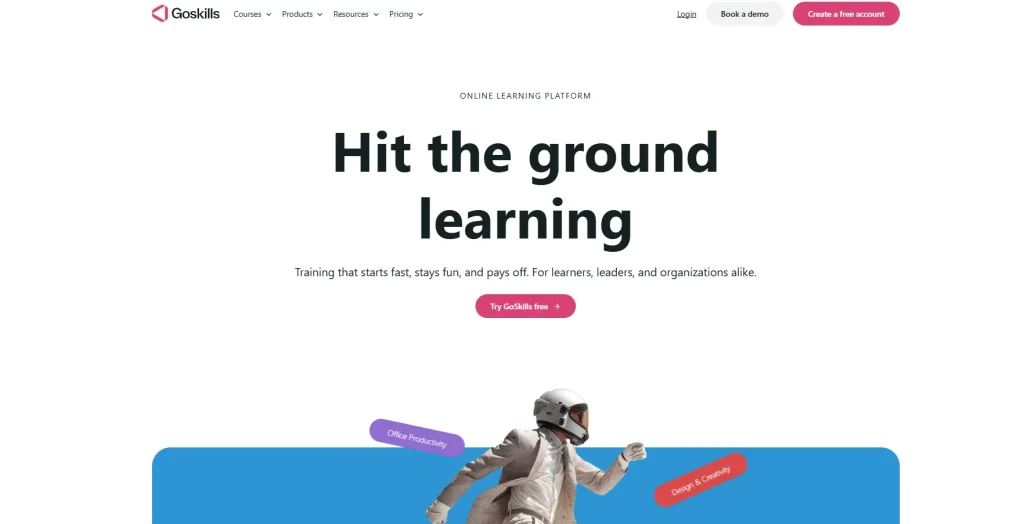
GoSkills Cloud LMS Dashboard and Genie Course Builder Screenshot
Best for: Small and mid-sized businesses looking for an intuitive cloud LMS for employee training, onboarding, and skill development.
Key Features
- AI-powered course builder
- Extensive microlearning course library
- Personalized learning paths
- AI learning assistant
- Training analytics and reporting
- Fast implementation and deployment
- Multi-device accessibility
- SOC 2 compliant security
| Pros | Cons |
| Intuitive interface with a short learning curve | Limited enterprise-level customization |
| AI-powered course builder speeds up content creation | |
| Extensive library of ready-made professional courses | |
| Strong reporting and learner progress tracking |
2- TalentLMS
TalentLMS impressed me with how well it balances simplicity and scalability. It doesn’t require extensive technical expertise to get started, yet it grows effortlessly alongside your business.
From startups to global organizations, it delivers structured training without making administration feel overwhelming.
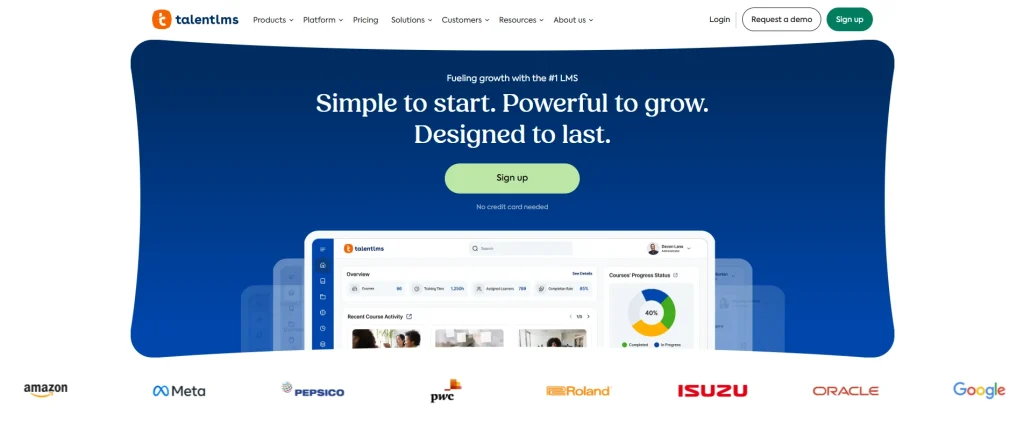
TalentLMS Cloud LMS Interface Screenshot for Growing Teams
Best for: Growing businesses that need a scalable cloud LMS for employee, customer, and partner training without sacrificing ease of use.
Key Features
- AI-powered course builder (TalentCraft)
- TalentLibrary™ with 1,000+ ready-made courses
- Multi-portal training for employees, partners, and customers
- Skills mapping and AI Coach
- Advanced analytics and ROI tracking
- Mobile learning support
- Integrations with HR and business tools
- ISO 27001, ISO 9001, GDPR-compliant security
| Pros | Cons |
| AI-assisted course creation | Advanced customization options may require additional configuration |
| Multi-portal architecture | |
| Extensive TalentLibrary | |
| Fast implementation with strong onboarding and customer support. |
3- 360Learning
360Learning takes a different approach than most traditional LMS platforms by turning employees into active contributors instead of passive learners.
I particularly like how it encourages knowledge sharing across teams, making it an excellent choice for organizations where internal expertise evolves quickly and needs to be distributed efficiently.
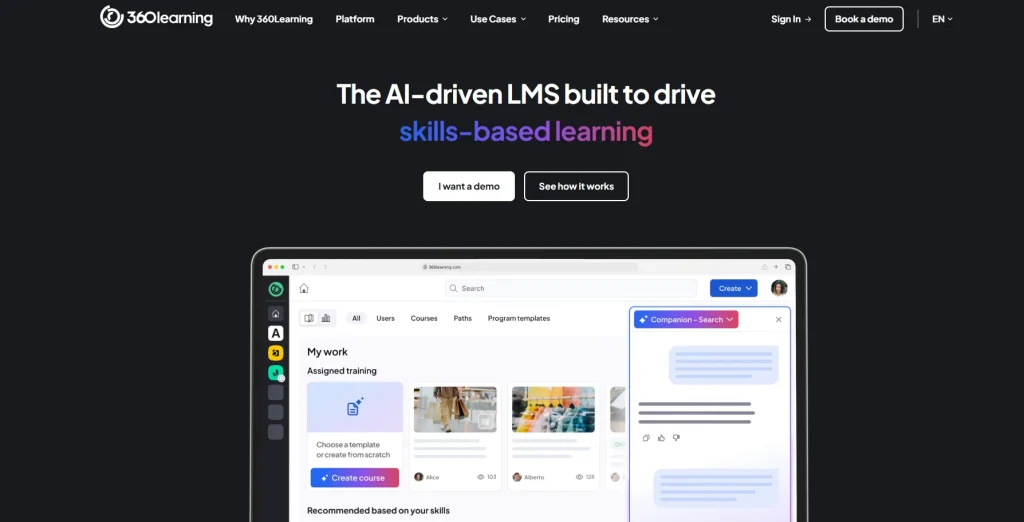
360Learning Collaborative Learning LMS Interface Screenshot
Best for: Mid-sized and enterprise organizations that want collaborative learning, AI-powered course creation, and large-scale employee training.
Key Features
- AI-powered Content Builder
- Collaborative learning platform
- AI-driven reporting and skills insights
- Agentic automation for learner management
- Blended learning and instructor-led training (ILT)
- HCM/HRIS integrations with Workday, SAP, Oracle, and more
- Multilingual learning with AI translation
- Enterprise-grade reporting and analytics
- SCORM and xAPI support
- GDPR, ISO 27001, and SOC 2 compliance
| Pros | Cons |
| Collaborative learning. | Better suited for mid-market and enterprise organizations. |
| AI automates course creation, reporting, and administrative workflows. | |
| Extensive HRIS integrations. | |
| Strong enterprise security, compliance, and multilingual learning capabilities. |
All these platforms bridge the gap for teams, though if your company is heavily tied to Teams or Outlook, I will suggest keeping Microsoft-based LMS integration requirements in mind during initial rollout to ensure smooth SSO and user management.
4- iSpring LMS
iSpring LMS has always had a separate place for its practical, training-first approach.
Rather than overwhelming organizations with unnecessary complexity, it focuses on helping teams launch structured learning quickly while maintaining consistency across onboarding, compliance, and long-term employee development.
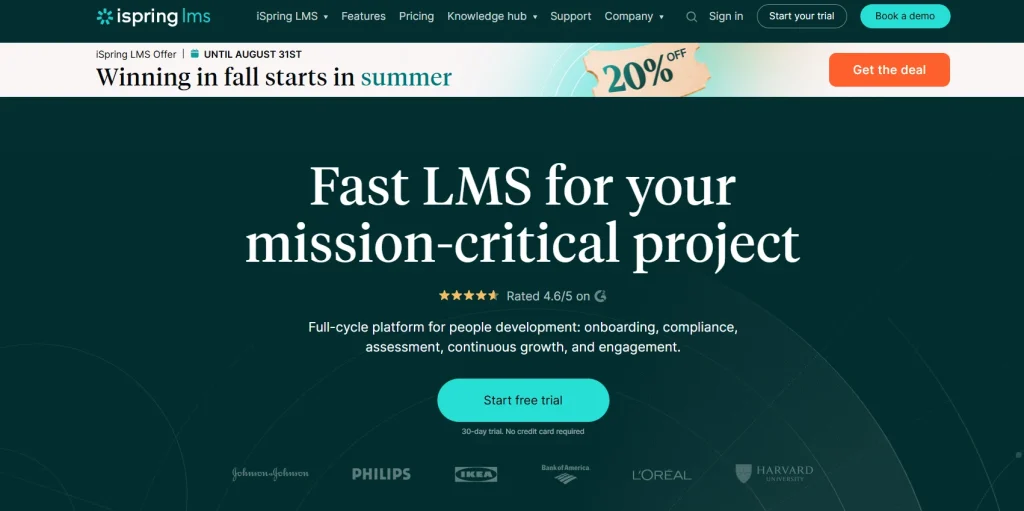
Best for: Organizations that need a user-friendly LMS for onboarding, compliance training, and structured employee development with minimal setup.
Key Features
- AI-powered course creation
- Personalized learning tracks and development plans
- SCORM and xAPI support
- Built-in knowledge base and social learning
- 360-degree employee performance reviews
- Advanced reporting and analytics
- Native integrations with Salesforce, BambooHR, Zoom, Google Meet, and more
- Mobile learning with offline access
- Gamification and learner engagement
- Custom branding and white-labeling
| Pros | Cons |
| Seamless integration with iSpring Suite | Best experience requires using the broader iSpring ecosystem. |
| Strong onboarding, compliance, and employee development capabilities. | |
| Excellent customer support |
5- Absorb LMS
Absorb LMS feels purpose-built for organizations that need more than basic training delivery.
The interesting thing is how it combines AI, automation, and enterprise scalability into a single platform, making it easier to manage complex learning programs while maintaining a highly personalized learner experience.
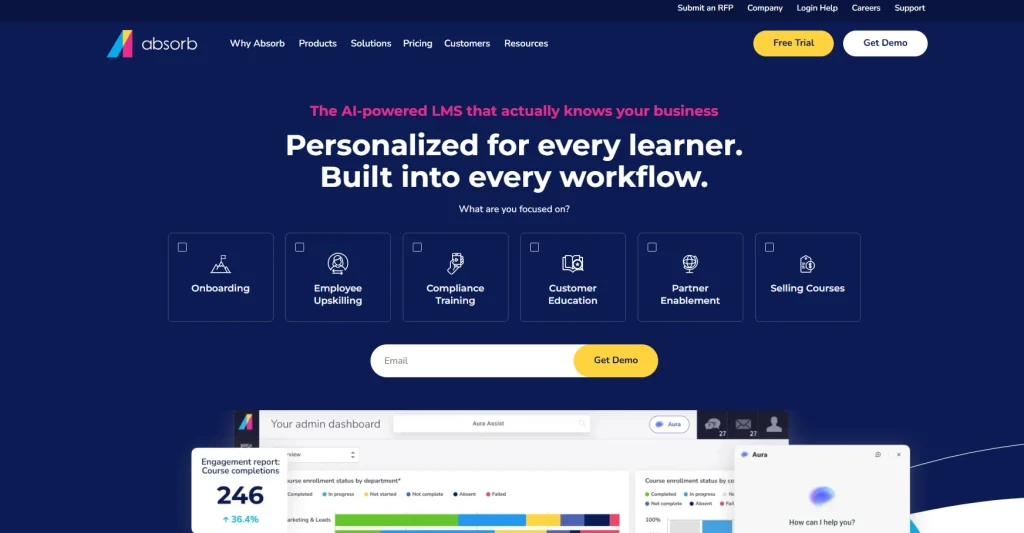
Best for: Large enterprises that need an AI-powered LMS for workforce development, compliance training, customer education, and enterprise-scale learning.
Key Features
- Absorb Aura AI learning and admin agents
- AI-powered course creation with Absorb Create
- Personalized upskilling and skill-gap analysis
- 20,000+ pre-built courses with Absorb Amplify
- Advanced compliance and ROI reporting
- E-commerce for selling online courses
- Role-based learning automation
- Custom branding and white labeling
- Enterprise-grade security and compliance
| Pros | Cons |
| AI-powered Absorb Aura | Quote-based pricing lacks upfront transparency for buyers. |
| Personalized learning paths and skill-gap analysis | Some features may require more onboarding than simpler ones. |
| Powerful reporting, compliance tracking, and enterprise analytics. | |
| Supports employee, customer, and partner training |
How You Can Also Choose the Right Cloud-Based LMS
Choosing the right cloud-based LMS depends on your training goals, team size, and long-term business needs. Before making a decision, consider these key factors:
- Prioritize ease of use, so administrators and learners can start using the platform without extensive training.
- Look for AI-powered features like course creation, personalized learning, and automated administrative tasks to save time.
- Ensure SCORM and xAPI support if you plan to use existing eLearning content or third-party courses.
- Check integration options with tools like your HRIS, CRM, video conferencing software, and productivity apps.
- Evaluate reporting and analytics to measure learner progress, compliance, and overall training effectiveness.
- Compare pricing models to understand whether billing is based on registered users, active users, or custom enterprise quotes.
- Review security and compliance standards such as SOC 2, ISO 27001, or GDPR if you handle sensitive employee data.
- Choose a platform that can scale with your organization, supporting future growth without requiring a complete migration.
Frequently Asked Questions About Cloud-Based LMS Platforms
What are the best cloud-based LMS platforms?
GoSkills, TalentLMS, 360Learning, iSpring LMS, and Absorb LMS are among the best cloud-based LMS platforms for employee training, onboarding, compliance, and skills development.
What are some cloud-based LMS examples?
Popular cloud-based LMS examples include GoSkills, TalentLMS, 360Learning, iSpring LMS, Absorb LMS, MoodleCloud, and Docebo.
What are the benefits of a cloud-based LMS?
A cloud-based LMS reduces IT costs, supports remote learning, automates updates, improves reporting, and scales easily with business growth.
Which cloud-based LMS is best for corporations?
Absorb LMS and 360Learning are ideal for enterprises, while TalentLMS and GoSkills suit growing corporations with simpler training needs.
What is the best cloud-based LMS for enterprise organizations?
Absorb LMS is one of the best enterprise cloud-based LMS platforms thanks to its AI features, integrations, compliance tools, and workforce development capabilities.
Which cloud-based LMS is best for mobile learning?
GoSkills, TalentLMS, iSpring LMS, and 360Learning offer responsive mobile apps with flexible learning experiences for remote and frontline teams.
Which cloud-based LMS offers the strongest workplace security?
Absorb LMS, 360Learning, TalentLMS, and iSpring LMS support enterprise security with SOC 2, ISO 27001, and GDPR compliance.
How much does a cloud-based LMS cost?
Cloud-based LMS pricing ranges from free plans to per-user subscriptions and custom enterprise pricing, depending on features and organization size.
My Final Take on Choosing the Right Cloud-Based LMS
After using learning management systems throughout my professional journey, I’ve learned that the best cloud-based LMS isn’t necessarily the one with the most features.
Whether you prioritize AI-powered learning, compliance training, onboarding, or enterprise scalability, platforms like GoSkills, TalentLMS, or Absorb LMS each solve different business challenges.
Focus on your training goals, future growth, and integration requirements, and you’ll be far more likely to invest in an LMS that delivers long-term value instead of adding unnecessary complexity.