As AI and SaaS are evolving too fast, hacking or cyberattacks are no more complicated to attempt than they were a couple of years ago.
Modern-day technology has enabled everyone to get into this stuff without spending weeks or months on it. Especially for startups, speed is everything, but rushing mindlessly can also be a massive problem.
Whether you’re trying to secure funding, assemble the right team, or launch a product to market, security probably gets ignored. That mindset is one of the biggest mistakes any startup can make.
A recent analysis showed that 61% of small organizations, including startups, experienced a breach in the past year.
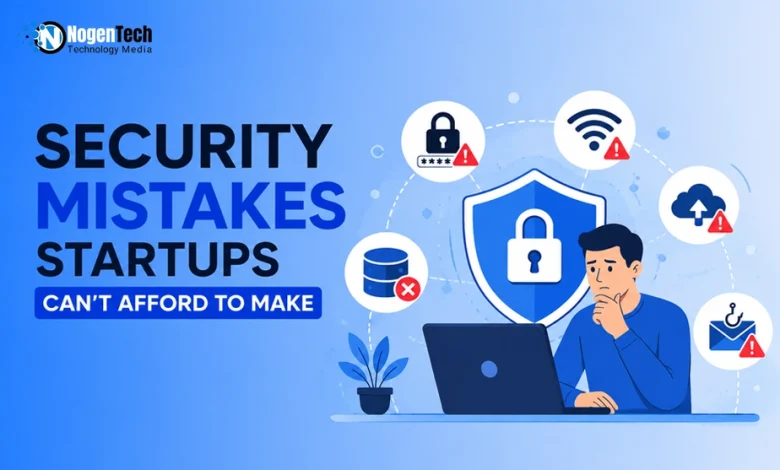
The number is devastating, but the good news is that there are ways to avoid becoming part of that statistic. Today I will cover the top five mistakes startups make so you can avoid them.
Lazy Password Habits
Sharing login credentials, reusing the same password, or using weak passwords are the three biggest culprits behind data breaches. In fact, most data breaches in small businesses stem from lazy password habits.
Reusing the same password across multiple accounts is not a good idea. A weak password that repeats across your accounts makes a great entry point for attackers. With it, they may gain access to multiple accounts at once.
And for that purpose, they don’t have to use any brute force attack once they get aware of a single account; all of your other credentials are at stake. You can also use some more secure password managers rather than singularly relying on Google Password Manager, such as NordPass.
By the way, while opting for it, you can use some active NordPass discount codes, which are ideal for solving the pricing issue. The tool suggests strong passwords and keeps them in a secure vault. To reach all your credentials, you only need to remember your master password.
By using a long, random string of letters, numbers, and characters, you increase the time it takes for someone to brute-force your account.
Even if someone manages to hack one, having a unique password for each account restricts the attacker from breaching all your credentials.
Unsecured Networks
Remote work is one of the biggest advantages for many startups. You can access a larger talent pool and assemble a better team than what you’ll find locally. Yet, the remote workforce introduces several security gaps, especially when employees frequently use public networks.
An analysis shows that 12% of corporate data breaches result from employees using public Wi-Fi. While convenient for working and staying connected on the go, the risk of a breach through a man-in-the-middle attack is high, potentially exposing sensitive information.
The best way to avoid this risk is to use a VPN service, as these tools add a layer of encryption. While VPNs don’t make you immune to data interception, they encrypt what’s transmitted, so an attacker won’t be able to read it.
Startups should also encourage employees to avoid accessing sensitive admin dashboards or internal systems over public networks unless secure connections are required.
Poor Data Handling
A startup is a fast-paced environment, so developers and marketers sometimes rely on third-party software to speed up workflows. While this isn’t necessarily a bad practice, the tools you choose can make a massive difference. A recent problem that’s circling the IT world is Shadow AI.
Employees using free and public generative AI tools may seem like they’re saving a few dollars or some time, but they are putting sensitive information at great risk. An IDM report shows that 20% of organizations experienced a breach linked to Shadow AI.
Sensitive customer records, financial information, source code, and internal business documents should never be uploaded to public AI tools unless your organization has approved their use.
Solving this problem is easy, but it’s not free. The first step is to establish clear policies on what kind of data is allowed to be uploaded to any external tool. Also, if you need to rely on AI, make sure you invest in solutions that guarantee privacy and avoid potential misuse.
Neglecting Backups
A startup has a small infrastructure, which is why backups are often neglected. Even if you don’t make many changes to the data, you should always be prepared for those just-in-case scenarios — ransomware being one of them.
A 2025 report shows that 88% of breaches at small- to medium-sized businesses involve ransomware. An attacker with access to your data can encrypt it and demand a ransom for its return. Even if you pay, there’s no guarantee you’ll get the data back.
This is why regular backups are essential, and you need to follow the 3-2-1 rule. Make three copies of your data: store two on different media and keep one off-site on a disconnected drive. That way, you can be 100% certain that if your data is encrypted, you can still recover everything.
Security Awareness Training
Assuming that the team knows how to stay safe online because they’re young and tech-savvy is an assumption worth reconsidering. Human error is a massive issue when it comes to security, and it’s something you’ll need to prepare yourself and your team for.
A well-crafted phishing email can fool an untrained employee and open your startup to a world of problems in less than a minute. This is why regular training is very crucial to keep you and your sensitive business data safe from attackers.
Baseline training is essential for educating your team on how to spot phishing attempts, verify legitimate emails, and look out for suspicious activity. On top of that, periodic phishing simulations are vital for gauging your team’s preparedness. This way, you’ll be able to shape how your team responds to a potential attack further.
Security awareness should also cover password hygiene, safe file sharing, social engineering, and the responsible use of AI tools alongside phishing prevention.
Final Thoughts on Startup Security Mistakes
Startup security is never an afterthought it should grow alongside your business. Strong passwords, secure networks, responsible AI usage, regular backups, and security awareness training can prevent costly cyberattacks and data breaches.
In my opinion, many startups focus so much on speed that they overlook cybersecurity until it’s too late. Investing in security from day one not only protects sensitive data but also builds customer trust and supports long-term growth.
A proactive approach today is far less expensive than recovering from a successful attack tomorrow.