
Why Salary Benchmarking Software Matters for Competitive Hiring
Salary benchmarking software helps businesses set competitive salaries using market compensation data, attract qualified candidates, maintain internal pay equity, and make informed hiring decisions.

Setting the right salary range isn’t always straightforward. Offer too little, and you risk losing qualified candidates. Offer too much, and you may exceed your hiring budget or create pay differences among existing employees.
Salary benchmarking software helps employers compare compensation with relevant market data. However, factors such as job responsibilities, experience, location, and company size can influence how useful those comparisons are.
So, how can businesses use salary benchmarking software to make better hiring decisions? Below are six ways to use compensation data to establish competitive salary ranges, maintain internal pay equity, and improve your hiring process.
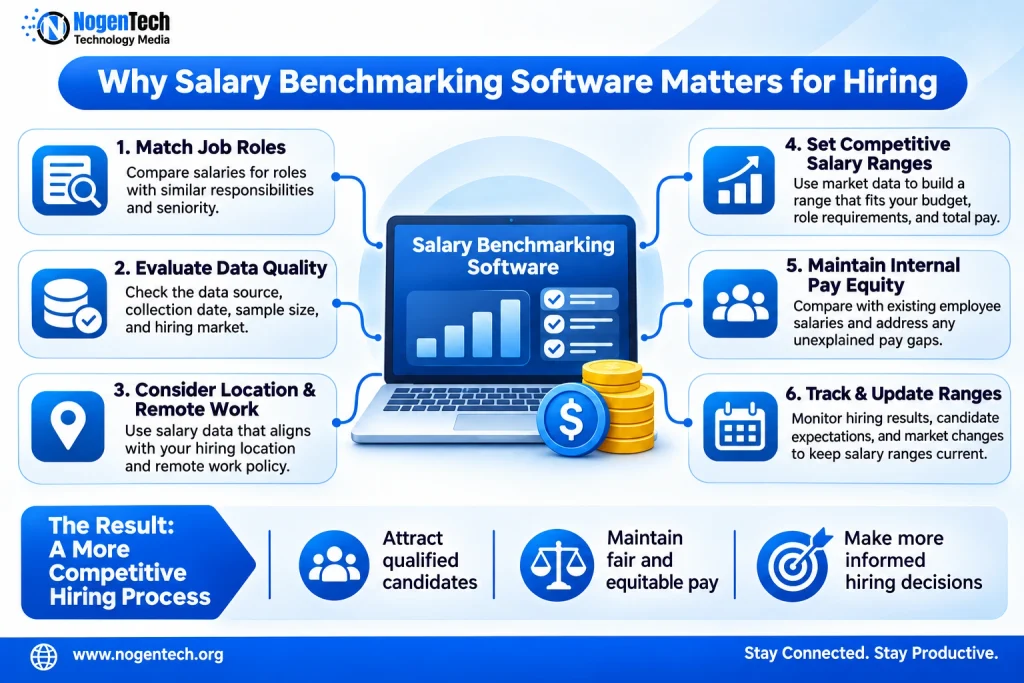
1. Match Job Roles Before Comparing Salaries
Two jobs with the same title can have different responsibilities, experience requirements, and levels of authority. Comparing salaries based on job titles alone can therefore lead to misleading results.
Recruiting teams can use salary benchmarking software to compare compensation for roles with similar responsibilities and seniority levels.
For example, a software engineer who leads technical decisions across multiple teams may require a different salary range than an engineer who works independently on assigned projects.
Before selecting a benchmark, document the role’s responsibilities, decision-making authority, and required experience. This makes it easier to identify relevant market comparisons.
2. Evaluate the Quality of Salary Data
Salary benchmarks are only as reliable as the data behind them. Before using compensation data, check:
- When the salary data was collected.
- Which organizations contributed to the dataset.
- How many salary records support the comparison.
- Whether the data reflects your target hiring market.
For example, a small business hiring a product manager may compete with larger companies for candidates, but its compensation structure and financial resources could differ significantly.
Choose a comparison group that reflects your recruitment market. If limited data is available for a specialized role, use broader market comparisons as a reference rather than treating them as an exact salary figure.
3. Consider Location and Remote Work Flexibility
Location plays an important role in salary benchmarking. Hiring someone locally may require a different compensation strategy than recruiting remote employees nationwide.
Before establishing a salary range, determine where employees can work and whether your company adjusts compensation based on location.
Your benchmarking data should align with this policy. Using national salary data to establish a location-specific pay range without appropriate adjustments can produce misleading results.
Remote work flexibility can also make an offer more attractive to some candidates. However, avoid assigning it a fixed monetary value without supporting evidence. Candidate feedback can help you understand how much flexibility matters when evaluating job offers.
4. Use Market Data to Set Competitive Salary Ranges
Salary benchmarking provides a market reference, but it does not automatically determine how much you should pay an employee.
Your salary range should reflect your hiring budget, compensation strategy, and the experience required for the position.
For example, the lower end of a salary range may suit candidates who are still developing certain skills, while the upper end may accommodate experienced professionals who meet more demanding expectations.
You should also consider the complete compensation package, including:
- Base salary
- Performance bonuses
- Equity or stock options
- Employee benefits
Employers can also use occupational wage data from the U.S. Bureau of Labor Statistics to compare salaries across industries, occupations, and geographic locations. Comparing base salaries alone may not accurately reflect the overall value of a job offer.
5. Maintain Internal Pay Equity
Offering competitive salaries to new employees is important, but it should not come at the expense of existing staff.
Before approving a job offer, review your payroll records to compare the proposed salary with what current employees earn in similar roles. Differences in responsibilities, performance, and experience may justify pay gaps, but those differences should be documented.
If an unexplained pay gap exists, assess whether a salary adjustment is appropriate and how it would affect the company’s budget.
Since compensation records contain sensitive employee information, restrict access to authorized personnel and follow your organization’s data privacy and security policies.
6. Track Hiring Decisions and Update Salary Ranges
Salary ranges should not remain unchanged simply because they were previously approved. Labor market conditions, candidate expectations, and hiring requirements can change over time.
Recruiters should track declined job offers, candidate salary expectations, and positions that remain vacant despite ongoing recruitment efforts.
These insights can help identify salary ranges that need further review.
Keep a record of the benchmark used, its date, the job match, and any approved exceptions. This makes future compensation decisions easier to explain and evaluate.
When evaluating salary benchmarking tools alongside other HR software, consider their data coverage, update frequency, access controls, and data collection methodology.
Final Thoughts: Building a Competitive Salary Strategy
Salary benchmarking software helps businesses make more informed compensation decisions, attract qualified candidates, and maintain fair pay practices. However, its effectiveness depends on accurate job matching, reliable market data, and consistent compensation policies.
Before your next recruitment campaign, review a recently advertised position, compare its salary range with relevant market data, and assess how it aligns with existing employee compensation. This can help identify gaps in your hiring strategy before making another job offer.