Meta Makes Camera Tampering Impossible on Its AI Glasses With New Mandatory Update
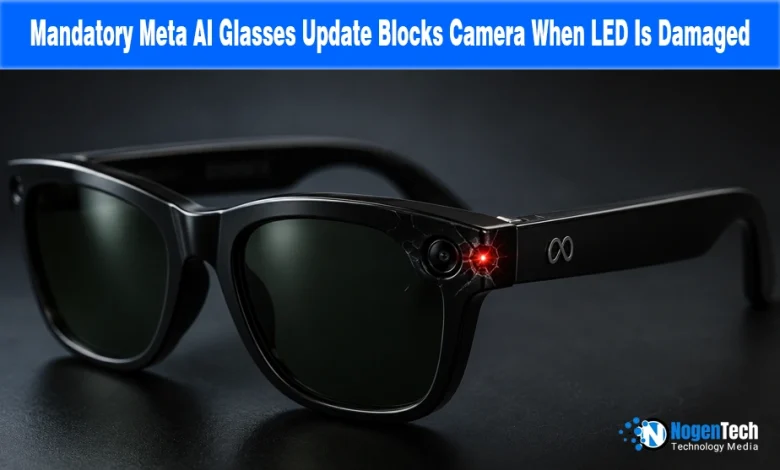
Meta is rolling out a mandatory software update that shuts off the camera on its AI glasses entirely if the privacy indicator light is physically damaged or removed, closing a workaround that let some wearers record people without any visible warning.

Meta published a detailed FAQ on Tuesday addressing growing concerns about privacy on its AI glasses.
Buried inside the routine questions was news of a real technical change: the camera will now shut down completely if the device’s privacy light has been physically tampered with or destroyed, not just covered.
The company confirmed to 9to5Google that the mandatory update is rolling out to existing glasses now, marking one of its clearest responses yet to concerns over wearable cameras recording people without their knowledge.
How the Capture LED Actually Works
Meta’s FAQ, published the same day it announced Muse Images, states that every pair of its AI glasses includes a capture LED, a white light on the front of the frames that blinks for photos and throughout video recording.
Meta says the light has no off switch and has been present since the very first generation of the glasses, specifically so people nearby know when they might be recorded.
Starting with the second generation of the hardware, Meta already disabled the camera automatically if the LED was blocked, meaning a piece of tape over the light would stop photos and videos from being captured until it was uncovered again.
Photos and videos captured this way are stored privately on the glasses themselves until the wearer chooses to import them to a phone, at which point they behave like any other image saved to a camera roll.
Closing the Loophole Determined Users Found
The problem, as Meta acknowledged directly in its post, is that covering the LED wasn’t the only workaround people found.
Some users moved beyond simple tape to more sophisticated methods of modifying or outright destroying the capture LED itself, defeating the safeguard entirely and allowing the camera to keep recording without any outward sign.
According to Meta, the new update closes that gap by detecting physical tampering or destruction of the LED and disabling the camera in response, a capability the company says none of its current rivals have.
9to5Google noted that the update lands at a moment when smart glasses, and Meta’s in particular, have faced sustained public backlash, driven in part by services that have openly advertised ways to defeat the privacy light.
Meta says it is now working across its platforms to remove ads, posts, and Marketplace listings promoting these tampering services, and plans to take legal action, including account bans, against individuals or businesses that sell them.
A Deliberate Design Choice, Not an Afterthought
Meta also used the FAQ to defend its original design decisions, explaining it chose a white light over an audible alert because a shutter sound isn’t practical to hear from a distance. While a light is a familiar signal already used on modern laptops and older camera equipment.
The company said it tested multiple brightness levels to ensure the LED stays visible even in direct daylight and consulted outside experts while refining the feature.
That emphasis on visible, hard-to-defeat privacy signaling has become a competitive talking point in the smart glasses market, with Apple upcoming AI glasses to have an oval camera and LED arrangement to differentiate them from Meta’s circular lens while preserving a clear privacy cue.
For Meta, the update arrives alongside a string of recent moves around its glasses lineup, including dropping the Ray-Ban name from its cheaper standalone frames in June and adding a premium subscription tier for certain existing features earlier this month.
Together, the changes reflect a broader push to expand what Meta says is one of the fastest-growing consumer hardware categories it has ever shipped.