Upgrading from an older RTX card?
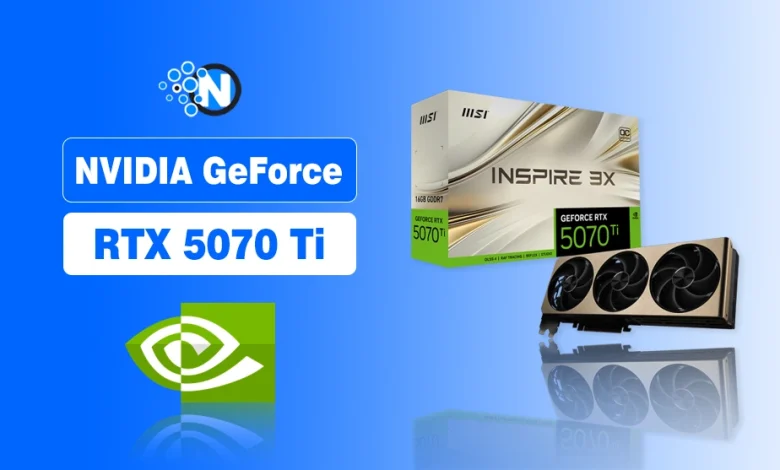
The NVIDIA GeForce RTX 5070 Ti is a high-end GPU that offers new RTX 50 Series features, but its performance, pricing, and long-term value are important factors to consider in 2026.
When comparing GPUs for a gaming PC upgrade, the RTX 5070 Ti raises several questions: Does its 16GB GDDR7 memory justify the cost? How well does it handle modern 1440p and 4K gaming? And is it still a smart choice with other GPUs competing in the same price range?
Before buying the NVIDIA RTX 5070 Ti, consider:
- 1440p and 4K gaming performance
- 16GB GDDR7 VRAM and future workloads
- Power consumption and thermal performance
- Whether its 2026 pricing offers good value
I evaluated the NVIDIA RTX 5070 Ti based on specifications, gaming performance, VRAM, thermals, power efficiency, pricing, and overall value to help you decide if it is the right upgrade.
Introduction to the NVIDIA GeForce RTX 5070 Ti
The NVIDIA GeForce RTX 5070 Ti is a high-end desktop graphics card based on NVIDIA’s Blackwell architecture. It uses the GB203 GPU, the same silicon as the RTX 5080, but with fewer enabled cores to deliver near-flagship performance at a lower price.
Before investing in high-end desktop hardware, weighing the broadergaming pc vs gaming consoletradeoffs helps determine whether a custom rig fits your target budget and frame rates.
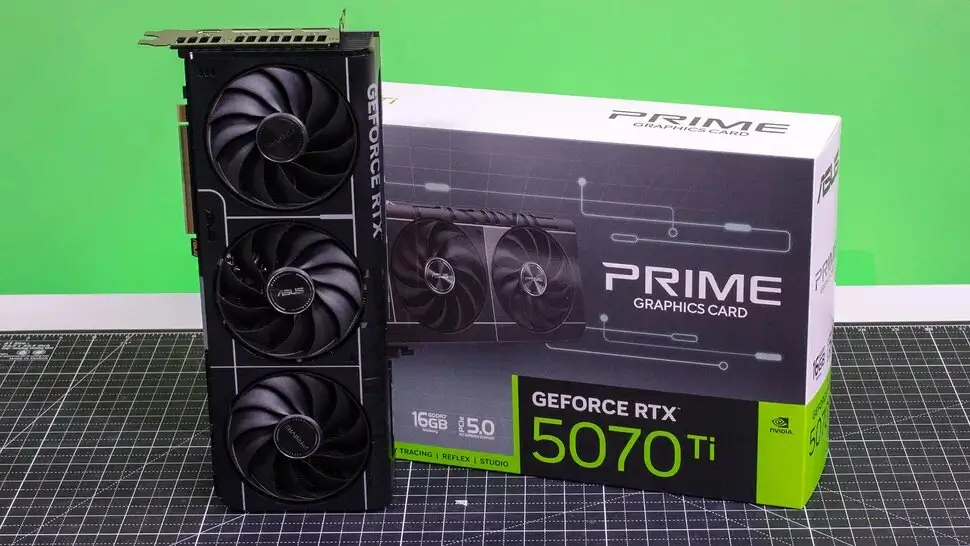
Released on February 20, 2025, the RTX 5070 Ti is positioned between the RTX 5070, RTX 5080, and GTX 6000 and is the far better successor to Nvidia GTX 970. Thus, its purpose is to deliver high-end performance at a more accessible price point.
It is designed for 4K gaming, ray tracing, DLSS 4, and AI-accelerated content creation, delivering approximately 85–90% of the RTX 5080’s gaming performance in many workloads.
Key Highlights
- Blackwell GB203 GPU, shared with the RTX 5080
- 8,960 CUDA cores (20% fewer than the RTX 5080)
- Around 45% more CUDA cores than the RTX 5070
- Optimized for 4K gaming, ray tracing, DLSS 4, and AI workloads
- $749 launch MSRP
- Available only through AIB partner cards; no NVIDIA Founders Edition was released
Built on NVIDIA’s Blackwell architecture, it introduces several advancements over its predecessors, including improved ray tracing capabilities and enhanced AI-driven features.
NVIDIA GeForce RTX 5070 Ti Specifications
The RTX 5070 Ti combines 16GB of GDDR7 memory, 896 GB/s memory bandwidth, 4th-generation RT Cores, and 5th-generation Tensor Cores to deliver high-performance gaming and AI workloads.
| Specification | RTX 5070 Ti |
|---|---|
| Process Node | 4nm (TSMC) |
| Transistors | 45.6 billion |
| TMUs | 280 |
| ROPs | 96 |
| RT Cores | 70 (4th Gen) |
| Tensor Cores | 280 (5th Gen) |
| Base Clock | 2,295 MHz |
| Boost Clock | 2,452 MHz |
| VRAM | 16GB GDDR7 |
| Memory Speed | 28 Gbps |
| Memory Bus | 256-bit |
| Memory Bandwidth | 896 GB/s |
| L2 Cache | 48MB |
| TDP | 300W |
| Recommended PSU | 750W |
| Interface | PCIe 5.0 ×16 |
| Power Connector | 16-pin |
| Display Outputs | 3× DisplayPort 2.1, 1× HDMI 2.1 |
| DirectX | 12.2 |
| DLSS | DLSS 4 (Multi Frame Generation) |
How Much VRAM Does the NVIDIA GeForce RTX 5070 Ti Have?
The NVIDIA GeForce RTX 5070 Ti 16GB configuration uses GDDR7 memory on a 256-bit bus delivering 896 GB/s of bandwidth, 77% more than the 12GB GDDR6X found in the RTX 4070 Ti.
This is a substantial upgrade over its predecessor in every measurable dimension:
| Memory Spec | RTX 5070 Ti | RTX 4070 Ti | Difference |
|---|---|---|---|
| VRAM Amount | 16GB | 12GB | +4GB (+33%) |
| Memory Type | GDDR7 | GDDR6X | One full generation newer |
| Memory Bus | 256-bit | 192-bit | +64-bit wider |
| Memory Bandwidth | 896 GB/s | ~504 GB/s | +77% more bandwidth |
| Memory Speed | 28 Gbps | 21 Gbps | +33% faster |
What Is the NVIDIA GeForce RTX 5070 Ti Price?
The NVIDIA GeForce RTX 5070 Ti launched with an official MSRP of $749, making it $250 cheaper than the RTX 5080 and $50 less than both the RTX 4070 Ti and RTX 4070 Ti Super.
Launch MSRP Comparison
| GPU | Launch MSRP |
|---|---|
| RTX 5070 | $549 |
| RTX 5070 Ti | $749 |
| RTX 5080 | $999 |
| RTX 5090 | $1,999 |
| RTX 4070 Ti | $799 |
| RTX 4070 Ti Super | $799 |
What Is the Real Street Price of NVIDIA GeForce RTX 5070 Ti?
Although the official MSRP is $749, most AIB models have sold well above that price because of limited availability and retailer markups.
| Period | Price |
|---|---|
| Launch (Feb. 2025) | $1,049–1,200+ |
| Peak (2025) | $1,200+ |
| July 2026 | $955–1,099 |
NVIDIA GeForce RTX 5070 Ti Performance Benchmarks
The NVIDIA GeForce RTX 5070 Ti delivers near-RTX 4080 gaming performance, making it one of NVIDIA’s strongest options for 4K gaming below the flagship tier.
Compared with the RTX 4070 Ti Super, performance gains vary by game and resolution, while the RTX 5080 remains around 9–16% faster in most workloads.
Gaming Performance
The RTX 5070 Ti performs best at 4K, where additional memory bandwidth and Blackwell improvements have the greatest impact.
While choosing between 1440p and 4K performance depends on matching your display setup with the appropriate graphics card specs.
| Game | Performance vs RTX 4070 Ti Super |
|---|---|
| Dying Light 2 | +25% |
| Cyberpunk 2077 | +18% |
| A Plague Tale: Requiem | +17% |
1440p Gaming
At 1440p, performance improvements are less consistent. Some games show noticeable gains, while others deliver only a modest uplift.
| Game | Performance vs RTX 4070 Ti Super |
|---|---|
| A Plague Tale: Requiem | +20% |
| Cyberpunk 2077 | +9% |
| Dragon Age: The Veilguard | -3% |
Content Creation Performance
The RTX 5070 Ti also performs well in professional workloads. In V-Ray RTX, it scores approximately 23% higher than the RTX 4070 Ti Super and more than 125% higher than the RTX 3070 Ti, making it a capable option for GPU rendering and AI-assisted creative applications.
What Is the NVIDIA GeForce RTX 5070 Ti Power Consumption?
The NVIDIA GeForce RTX 5070 Ti has a 300W Total Graphics Power (TGP) and typically draws 300–330W during demanding gaming workloads.
NVIDIA recommends a 750W power supply (PSU) for a standard gaming PC built around this graphics card.
RTX 50 Series Power Comparison
| GPU | TGP | Recommended PSU |
|---|---|---|
| RTX 5070 | 250W | 650W |
| RTX 5070 Ti | 300W | 750W |
| RTX 5080 | 360W | 750W |
| RTX 5090 | 575W | 1000W |
In real-world use, the RTX 5070 Ti consumes around 300–330W while gaming and drops to approximately 15–20W at idle. Brief power spikes can reach around 350W, so using a quality 750W PSU provides sufficient headroom for stable operation.
The graphics card uses a 16-pin (12V-2×6) power connector and includes a 2×8-pin to 16-pin adapter for compatibility with supported older power supplies.
How Hot and Noisy Is the NVIDIA GeForce RTX 5070 Ti?
The NVIDIA GeForce RTX 5070 Ti typically operates between 68°C and 76°C during extended gaming sessions, depending on the AIB model, case airflow, and room temperature.
These temperatures are well within the GPU’s safe operating range, and no widespread thermal throttling issues have been reported under normal conditions.
Thermal and Noise Performance
- Most RTX 5070 Ti cards use triple-fan cooling to handle the GPU’s 300W TGP.
- Many AIB models support semi-passive cooling, stopping the fans completely during idle or light desktop workloads.
- Under sustained gaming, GPU temperatures typically stabilize between 68°C and 76°C, while hotspot temperatures may be 15–20°C higher without affecting normal operation.
- During gaming, fan noise is generally quiet to moderate. The ASUS Prime OC and MSI Gaming Trio OC are among the quietest variants, while the Gigabyte Gaming OC and PNY OC Triple Fan produce slightly more fan noise under full load.
Since NVIDIA did not release a Founders Edition, cooling performance varies slightly between board partners.
| AIB Model | Peak GPU Temperature | Noise Level | Cooling Design |
|---|---|---|---|
| ASUS Prime OC | ~70°C | Quiet | Triple-fan, 2.5-slot |
| MSI Gaming Trio OC | ~68°C | Quiet | Triple-fan, large heatsink |
| Gigabyte Gaming OC | ~72°C | Moderate | Triple Windforce fan |
| PNY OC Triple Fan | ~74°C | Moderate | Triple-fan design |
People Also Ask About the NVIDIA GeForce RTX 5070 Ti
Is the RTX 5070 Ti Better Than the RTX 5080?
The RTX 5070 Ti delivers strong high-end performance but sits below the RTX 5080. The RTX 5080 offers more CUDA cores and higher overall performance, while the RTX 5070 Ti provides better value for users who do not need flagship-level performance.
Does the RTX 5070 Ti Support DLSS 4?
Yes. The RTX 5070 Ti supports DLSS 4 with Multi Frame Generation, which uses AI-powered frame generation to improve gaming performance in supported titles.
Is the RTX 5070 Ti Good for AI Workloads?
Yes. With 16GB of GDDR7 memory, 5th-generation Tensor Cores, and Blackwell architecture, the RTX 5070 Ti can handle many AI and content creation workloads.
What GPUs Are Similar to the RTX 5070 Ti?
The RTX 5070 Ti competes with GPUs such as the RTX 4070 Ti Super, RTX 5080, and AMD Radeon RX 9070 XT, depending on pricing and workload.
Does the RTX 5070 Ti Need a New PSU?
Not always. It uses a 16-pin power connector, and a quality 750W PSU is recommended for most gaming systems.
Is the RTX 5070 Ti Future-Proof?
The RTX 5070 Ti should remain capable for modern gaming due to its 16GB VRAM, GDDR7 memory, and DLSS 4 support, although future performance depends on game requirements and pricing.
Is the NVIDIA GeForce RTX 5070 Ti Worth Buying in 2026?
Yes, the NVIDIA GeForce RTX 5070 Ti is worth buying in 2026 if you can find it near its $749 MSRP. It delivers excellent 1440p and 4K gaming performance, 16GB of GDDR7 memory, and DLSS 4 features.
However, its value is less compelling when priced above $900.
Buy the RTX 5070 Ti if:
- You’re upgrading from an RTX 3080, RTX 3090, RTX 2080 Ti, or an older GPU.
- You want smooth 1440p or 4K gaming.
- You need 16GB of VRAM for AI, gaming, or content creation.
- You can buy it near its $749 MSRP.
Consider Other Options if:
- You already own an RTX 4070 Ti Super.
- The price is above $900.
- You mainly game at 1080p.
- You prioritize portability over raw desktop horsepower and prefer a best handheld gaming pc for on-the-go gaming.