Louis Rossman Is Taking Samsung to Court Over a Dead SSD, Because $330 Is Not the Same as $950
Right to Repair activist and YouTube creator Louis Rossman has threatened Samsung with a lawsuit in Travis County, Texas, after the company offered him a $330 refund for a defective 4TB 990 Pro SSD that now retails on Samsung's own Amazon store for $949.

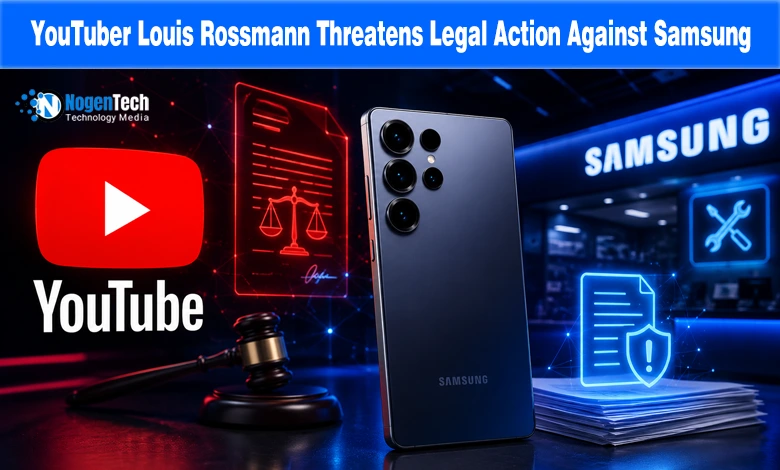
American independent electronics technician and YouTuber, Louis Rossman, is threatening Samsung over the failure to replace his corrupted SSD, which Samsung says works fine.
The dispute, which Rossman documented in a YouTube video that has generated significant attention in the PC hardware community, is not merely a consumer complaint about a broken drive.
It serves as a stark case study in how a historic global memory price surge, fueled by the explosive DRAM demand that made huge profits for Samsung, has quietly warped standard warranty procedures into a protective financial shell game.
This tactic allows manufacturers to save hundreds of dollars per case through “repaired” returns and original-price refunds on products now worth three times as much.
What Happened Between Rossman and Samsung Support
Samsung’s B2B support desk appeared to initially agree with his diagnosis, stating that when a drive remains visible to the OS but stops responding to NVMe admin commands or SMART tools, it indicates a fatal controller or firmware-level lockup and requires a warranty replacement.
After being redirected to Samsung’s US memory support team, Rossman sent in the requested information: error logs, receipt, photos, and eventually the physical drive itself.
Samsung first acknowledged that the logs suggested the drive was dead, then returned it after testing, with results claiming it was healthy and functioning properly.
Rossman connected the returned drive to professional hardware for data recovery and observed write speeds collapse to 40–60 MB/s before it stopped responding entirely.
As Tom’s Hardware notes, he contested the outcome. Samsung reopened the case, then offered the $330 refund. Samsung cited a lack of stock despite the drive being listed on Amazon at Samsung’s own store for $949 with ample availability.
The gap between Samsung’s inventory claim and the live Amazon listing became the key inconsistency Rossman documented in his video.
The Warranty Clause Samsung May Be Misapplying
Samsung’s warranty terms specify refunds based on “then current market value” rather than the original purchase price. During normal times, this protects manufacturers from paying more than depreciated prices for older hardware.
The memory crisis, which caused massive hardware price hikes, has reversed that equation.
A refund based on the original purchase price no longer covers the cost of an equivalent replacement, with the same 4TB 990 Pro now selling for about $950, nearly three times what Rossman paid.
Rossman’s argument is precise: if Samsung’s own warranty terms specify current market value, then the legally correct refund is about $950, not $330.
Rossman now threatens to file suit in Austin, Texas, if a new 4TB 990 Pro is not sent to him within 60 days.
The outcome could determine whether manufacturers must honor warranty terms during periods of extreme price appreciation or whether sharp market increases can effectively erode the value of warranty coverage.
Source: Samsung’s 990 Pro SSD warranty policy is a scam; I’m taking them to court.