Nobel Laureate John Jumper Departs Google DeepMind for Anthropic in Major AI Talent Shift
John Jumper, co-creator of the groundbreaking AlphaFold AI system, has left Google DeepMind after nearly nine years to join Anthropic, signaling intensifying competition for top AI talent focused on scientific breakthroughs.

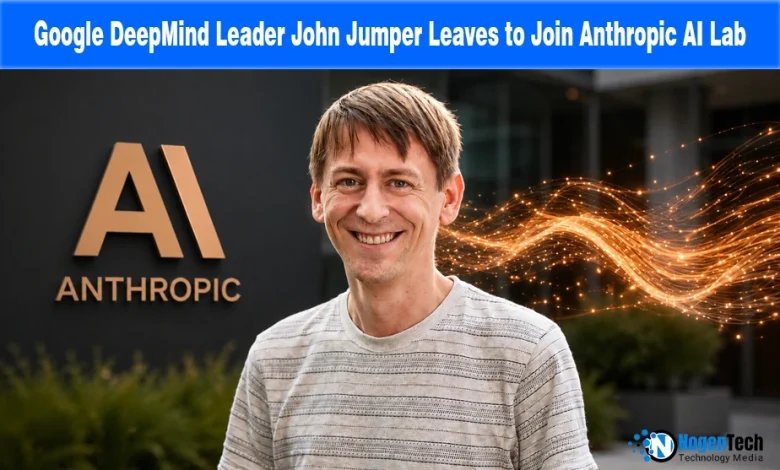
John Jumper, one of the leading figures in AI-driven scientific research, is leaving Google DeepMind to join Anthropic. The chemist and computer scientist announced the move on X, thanking his colleagues at DeepMind and saying he plans to take a short break before starting his new role.
At DeepMind, Jumper led the development of AlphaFold, a breakthrough AI system that predicts protein structures from amino acid sequences.
His move to a direct generative AI rival signals an escalation in the tech industry’s fight for elite scientific talent, highlighting a growing talent war as startups aggressively recruit top Big Tech researchers to drive next-gen AI development.
The AlphaFold Legacy and Its Enduring Impact on Science
Under Jumper’s leadership, AlphaFold became a turning point in computational biology. What once took months or years to solve in a lab, decoding a single protein structure, can now be predicted in minutes.
The system has since mapped hundreds of millions of proteins, becoming a key tool for drug discovery, disease research, and even sustainable enzyme design for environmental use.
Demis Hassabis, DeepMind’s founder and CEO, described AlphaFold as something that “changed the world,” opening new ways for AI to serve science and medicine.
Jumper also credited the environment at DeepMind, saying it taught him how to do meaningful science.
Together, their reflections highlight the human drive behind these breakthroughs—curiosity, collaboration, and a collective push to reshape the future of AI systems beyond established limits.
Talent Wars Intensify as Startups Lure Big Tech Experts
Jumper’s departure fits into a wider trend of movement across the AI industry. In recent months, prominent researchers such as Noam Shazeer have left Google for roles at companies like the ChatGPT parent OpenAI and other frontier AI labs.
Meanwhile, Anthropic, known for its Claude models and emphasis on responsible AI, has become a strong draw for researchers seeking faster-paced, mission-driven environments.
These shifts reflect how competitive Silicon Valley has become. Startups often offer a larger upside through equity and the chance to work on tightly focused goals.
Anthropic’s emphasis on safety and alignment, in particular, appeals to researchers concerned with making AI systems more reliable and beneficial.
With both Anthropic and OpenAI preparing for possible public offerings, their pull has only grown, even as DeepMind remains a major force under continued leadership.
Overall, this movement of talent is reshaping the field, fueling new ideas and collaborations while pushing established labs to work harder to retain top researchers.
What This Means for the Future of AI Research and Collaboration
Jumper’s move to Anthropic after a period of reflection raises interesting questions about what comes next for AI-driven science.
His background could help accelerate work in areas like protein design or multimodal systems that connect biology and machine learning, potentially speeding up progress in fields such as drug discovery and climate-related research.
Even as DeepMind continues its foundational work under Demis Hassabis, the departure of well-known researchers reflects a quieter tension inside the field; keeping great minds engaged in an environment that moves this quickly is never simple.
At the same time, startups are no longer just chasing chatbots. They’re pushing into deeper scientific territory, trying to model biology, chemistry, and the physical world itself. That shift naturally pulls in researchers who want to work closest to those problems.
Source: After nearly 9 years, I have decided to leave Google DeepMind

![Top Tech Stories of 29th Week [2026]](https://www.nogentech.org/wp-content/uploads/2026/08/Top-Tech-Stories-of-29th-Week-2026-390x220.webp)