Google Makes Gemini Watermarks Optional as Anthropic Takes the Opposite Path
Google will let Gemini users toggle off the visible watermark on AI-generated images, videos, and music, while keeping invisible detection methods intact.

Google announced Friday that users can remove visible watermarks from images, videos, and songs generated through Gemini AI, giving them creative control over content that previously carried a permanent AI marker.
Gemini VP Josh Woodward revealed the change in a post on X. It applies to Google’s Nano Banana architecture, Omni for video, and Lyria for music, rolling out through Gemini’s settings menu and the Flow video editor, with Search support coming soon.
The timing is notable: Google is loosening visible AI labeling three days after Anthropic announced invisible watermarks for text generated through its AI to comply with new EU transparency rules.
What’s Actually Changing, and What Isn’t
The social post notes that turning off the visible watermark does not affect Google’s invisible SynthID watermark or C2PA metadata, which remain embedded in generated content regardless of the new toggle’s setting.
Woodward framed the tradeoff explicitly in his announcement, writing that the change balances creative control with safety by keeping these invisible safeguards for transparency while making visible watermarks optional.
NogenTech’s hands-on test confirmed the setting works exactly as described, producing a Gemini-generated image with no visible logo once the setting was switched off.
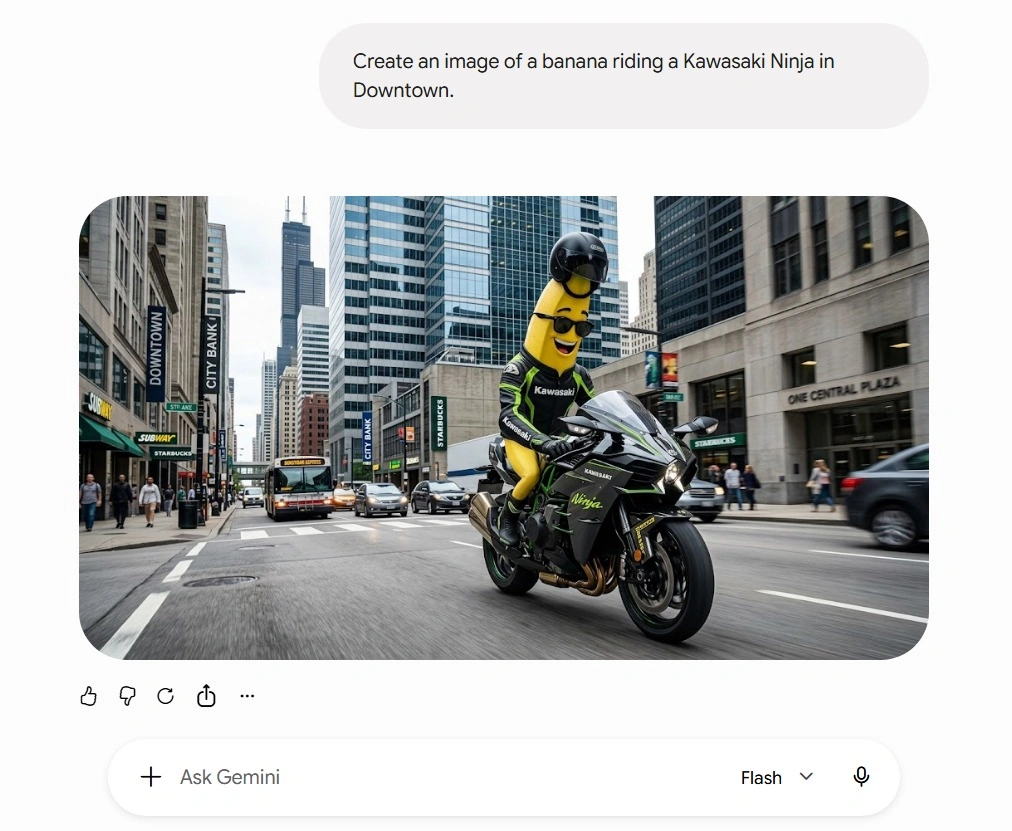
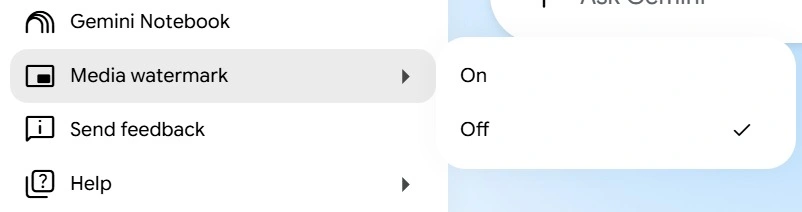
The option is easily accessible through Settings > Media Watermark > Off, as shown in the screenshot below:
Google also announced that it is open-sourcing Credentio, a new library that lets developers add and verify the origin of digital content directly within their apps, without relying on Google’s infrastructure.
A Feature Users Explicitly Asked For, Except Where Law Forbids It
Importantly, removing the visible watermark won’t be available everywhere as Woodward said the toggle is rolling out “except in countries where it’s required by law to keep them.”
This includes the European Union, which recently mandated visible watermarks on convincingly realistic AI-generated images, qualifying as deepfake content, and South Korea, which passed similar rules earlier this year.
PCWorld noted that this feature ranked among the top 10 most requested Gemini features in a list Woodward shared last month.
This suggests Google is responding directly to user demand rather than independently deciding that visible AI labels were no longer necessary.
Two Labs, Two Opposite Bets on What Transparency Should Cost Users
What makes this announcement notable is how directly it contrasts with Anthropic’s approach.
The AI lab announced just days ago that it’s adding a visible adjacent watermark to text output generate from Claude model because EU law requires it, treating the requirement as a baseline rather than an optional feature.
Google, by contrast, is making its visible watermark optional where the law allows while saying its invisible layer provides the same transparency.
That only works if people know how to check it. PCWorld noted that verifying an invisible SynthID watermark requires asking an AI chatbot or uploading a file to a dedicated portal, a higher bar than simply seeing a logo on an image.
Google’s approach treats “detectable in principle” and “visible at a glance” as similar safeguards.
For someone scrolling past an image without suspecting it is AI-generated, that difference matters because visible labels can protect trust, while hidden markers can let platforms claim they provided transparency when regulators ask questions.
Source: You can now toggle visible watermarks on or off in Gemini