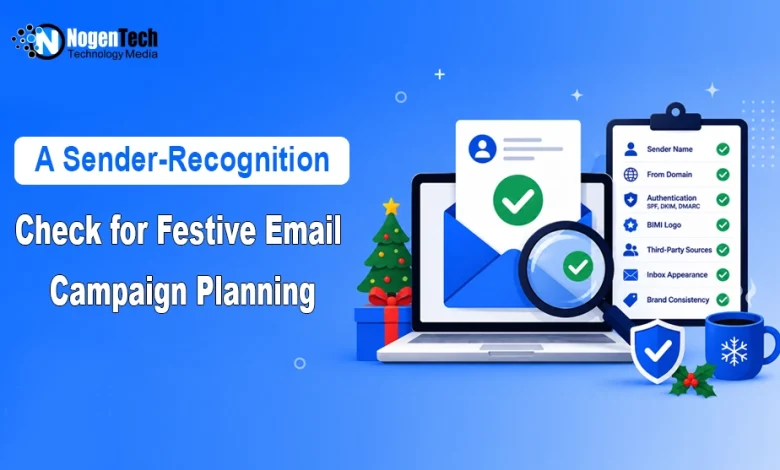
Festive email campaigns often involve higher sending volumes, new creative assets, temporary tools, and tighter approval timelines. Those changes can also affect how consistently a brand appears to recipients.
Sender recognition deserves a place in the same pre-campaign planning process as list hygiene, creative review, authentication, and deliverability checks.
A short review before sending can help identify problems with sender names, domains, authentication, or brand presentation before the campaign reaches full volume.
Why the Festive Period Changes the Sender-Recognition Picture
Several changes commonly occur during high-volume festive campaigns. Sending volume can increase substantially within a short period, while businesses may also introduce temporary sending platforms, promotional tools, or dedicated subdomains for seasonal campaigns.
Temporary sending tools or subdomains may be introduced specifically for a festive campaign, such as a promotional platform or dedicated subdomain for a seasonal sale. When a new subdomain is used for sending, it is worth checking whether subdomains inherit BIMI records automatically or require a separate BIMI configuration.
Sender names can also change. A campaign may use a different sender persona, while a new email platform may introduce a default sender configuration. New templates and creative assets create another opportunity for inconsistencies to appear.
These changes make the festive period a useful point for a dedicated sender-recognition check.
What the Sender-Recognition Check Should Cover
The check does not need to become a separate technical project. It can be added to the existing pre-send QA process.
Check the Sender Name
Confirm that the visible sender name is consistent with what recipients normally see from the organization. If a campaign-specific sender name is intentional, consider whether an existing subscriber would immediately recognize it.
A familiar sender identity can reduce unnecessary uncertainty when recipients see a high volume of promotional messages during the festive season.
Check the From Domain
The visible From domain should be one that recipients associate with the organization. If the campaign uses a new subdomain or third-party sending platform, confirm that the configuration is intentional and authorized.
This is particularly important when seasonal campaigns introduce infrastructure that is not normally used for everyday communications.
Check Email Authentication
Any new sending source or subdomain should be checked for authentication alignment. The relevant checks should include:
- SPF
- DKIM
- DMARC
- DMARC alignment with the visible From domain
- Authorized third-party sending platforms
- Any new subdomain policies
BIMI builds on this authentication foundation rather than replacing it. The BIMI Group notes that BIMI requires DMARC alignment, while mailbox providers can apply additional requirements before displaying a brand logo.
Check BIMI Configuration
If the organization uses BIMI, verify the configuration for the domain actually being used by the festive campaign.
A new subdomain does not necessarily require a separate BIMI record because BIMI can fall back to the organizational domain when the subdomain has no applicable BIMI record. However, specific subdomain configurations and authentication policies can affect whether the logo is eligible for display.
This makes it worth checking rather than assuming that the existing brand configuration will behave exactly as expected.
Check Third-Party Sending Platforms
Festive campaigns sometimes rely on additional email service providers or promotional platforms.
Before they begin sending, confirm that these providers are authorized and correctly represented in the organization’s email authentication configuration. This is particularly important for startups and growing businesses, where basic security mistakes can create wider risks across business systems.
A DMARC checker can help identify authentication and alignment issues before the campaign goes live.
Check the Inbox Experience
A sender identity can look correct in one email client and behave differently elsewhere. Where possible, review test messages across the mailbox environments that matter most to the campaign.
Check the visible sender name, From address, logo treatment where applicable, and overall presentation before moving to full-volume sending.
Building the Check Into Festive Planning
Sender verification works best when it becomes part of the existing pre-send checklist rather than a separate task performed at the last minute. The review should focus particularly on what has changed for the festive campaign:
- A new promotional platform
- A new sending subdomain
- A different sender name
- New authentication records
- A new BIMI configuration
- New templates or brand assets
The more temporary elements a campaign introduces, the more useful this check becomes.
Who Should Run the Check?
The responsibility can sit with whoever already handles pre-send QA. Depending on the organization, this could be an email operations specialist, CRM manager, marketing team, IT administrator, or agency partner.
The important point is that sender verification should sit alongside existing checks for rendering, links, segmentation, and campaign configuration.
This makes it less likely that authentication or sender-identity issues will be overlooked simply because they belong to a different technical area.
Where Retail Data Fits This Discussion
Retail and e-commerce are closely associated with festive-season email activity, making the sector a useful example when discussing sender identity and BIMI adoption.
The presence of BIMI infrastructure across retail senders also shows that branded email identity is not limited to large technology companies. For organizations already using BIMI, the festive period provides a practical reason to verify that the configuration still matches the domains and sending systems being used.
The key point is not to assume that existing infrastructure automatically covers a new campaign setup.
When to Run the Check
The sender-recognition check should be completed during campaign planning, before the first large send. This provides time to investigate problems such as:
- An unauthorized sending source
- Incorrect SPF or DKIM configuration
- DMARC alignment problems
- A new subdomain with unexpected authentication behavior
- An incorrect sender name
- BIMI configuration issues
- Inconsistent brand presentation
Finding these issues during planning is considerably easier than discovering them after the campaign has already started.
A Practical Pre-Campaign Checklist
Before a festive campaign goes to full volume, confirm:
- Sender name: Does it match the identity recipients expect?
- From domain: Is the domain familiar and authorized?
- SPF: Are the relevant sending sources authorized?
- DKIM: Is mail properly signed and aligned?
- DMARC: Is the sending setup covered by the appropriate policy?
- BIMI: Does the relevant domain or subdomain have the expected configuration?
- Third-party platforms: Are all temporary providers authorized?
- Inbox display: Has the message been tested in relevant mailbox environments?
- Brand assets: Are the approved sender name, logo, and creative elements being used?
This keeps sender identity within the same practical readiness process as other campaign checks.
Final Thoughts
Festive email campaigns often combine increased sending volume with temporary infrastructure and compressed review schedules. That combination makes sender recognition worth checking before a campaign reaches full volume.
Verifying the sender name, From domain, authentication, BIMI configuration, third-party platforms, and inbox presentation does not require a separate campaign strategy. It can become a small part of the existing pre-send QA process.
For organizations that depend on festive email campaigns, keeping sender identity consistent throughout the year gives recipients a familiar signal when promotional volume is at its highest.