Before I give you the list of email marketing companies, let me admit a hurdle that many of us may resonate with.
These days, with so many startups and growing awareness, it can still be difficult to choose when a company that started two years ago claims to be the best email marketing service provider in the industry. The real question is which provider fits your business, audience, and budget.
Having faced this myself, I created this guide to help you find reputable providers you can rely on without worrying about whether they are professional enough.
Today’s leading email marketing platforms offer much more than newsletters:
- Automation and behavior-based campaigns
- Segmentation and personalization
- Analytics and campaign optimization
- CRM and eCommerce integrations
- Flexible pricing and scalable features
Whether you run a small business, startup, eCommerce store, or established marketing team, this list can help you find the right solution for your email marketing needs.
What are Email Marketing Companies?
Email marketing companies help businesses plan, execute, and optimize email marketing campaigns to promote their services, generate clients, and support marketing goals.
These companies may offer broader services, including strategy development, content creation, list management, automation setup, and performance tracking. They use data-driven insights to personalize campaigns, improve deliverability, and increase customer engagement.
Automated direct mail marketing connects your existing customer data and marketing triggers to a system that sends the right mail piece to the right person at the right time, without someone manually sending it
Partnering with an email marketing company can give businesses access to the expertise and resources needed to streamline communication, nurture leads, drive conversions, and support long-term growth and brand visibility.
What Makes an Email Marketing Company “Best”?
Before moving ahead, let me explain the criteria I used to select and rank these best email marketing companies. You deserve to know why one platform ranks higher than another. I considered these key factors:
- Deliverability & sender reputation: Strong domain authentication tools such as SPF, DKIM, DMARC, feedback loops, and inbox placement monitoring.
- Automation & personalization: Behavior-driven emails, dynamic content, A/B testing, send-time optimization, and workflow triggers.
- Analytics & reporting: Conversion tracking, cohort analysis, heatmaps, and revenue attribution beyond basic open and click-through rates.
- Ease of use & design: Drag-and-drop builders, templates, mobile responsiveness, and spam testing.
- Integrations & scalability: Compatibility with CRMs, eCommerce tools, APIs, and the ability to scale with your business.
- Pricing & free plans: Overall value, including the cost per email or contact as your list grows.
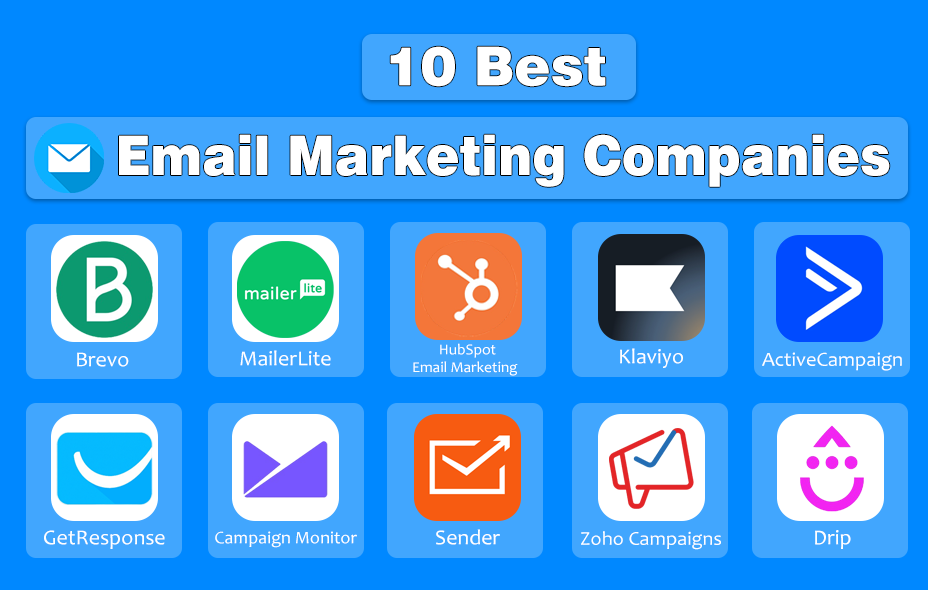
Top 10 Best Email Marketing Companies in 2026
While considering the above-mentioned factors, below are the 10 best email marketing companies I believe stand out in 2026.
1. Brevo (formerly Sendinblue)
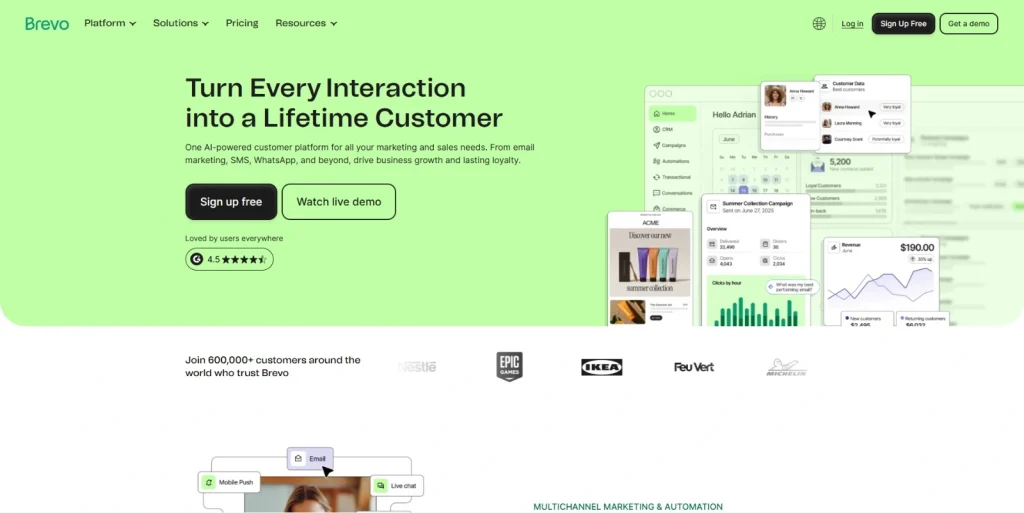
Brevo is the first choice if you want email marketing with strong automation and segmentation without making things overly complicated.
You can create campaigns using templates, automate emails based on subscriber behavior, and personalize messages for different audience segments. Its AI tools can also help with send-time optimization and personalized recommendations.
What makes Brevo more appealing is its scalability. You can start with basic email campaigns and move toward more advanced automation as your list grows.
As a small businessman, you should use its starter pricing plan of around 9 bucks. Brevo actually focuses on the number of emails you send rather than simply charging based on contacts, which can make it worth considering for businesses with larger lists but moderate sending volumes.
Keep in mind that advanced AI features and complex behavioral workflows require upgrading to their high tier
2. MailerLite
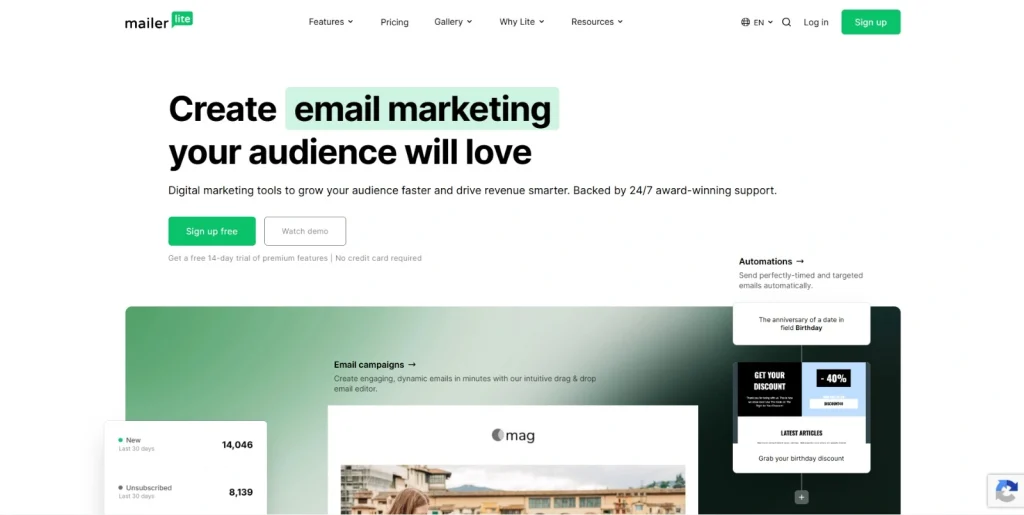
MailerLite is a good option if you want simple and affordable email marketing without dealing with a complicated interface. It lets you create campaigns with a drag-and-drop editor, use ready-made templates, segment subscribers, and set up automated email sequences.
Its performance reports help you see how your campaigns are doing, while integrations with platforms like Shopify, WordPress, and WooCommerce make it easier to connect your email marketing with your existing setup.
The free trial also gives you a chance to explore its premium features before committing to a paid plan.
3. HubSpot Email Marketing (HubSpot Marketing Hub)
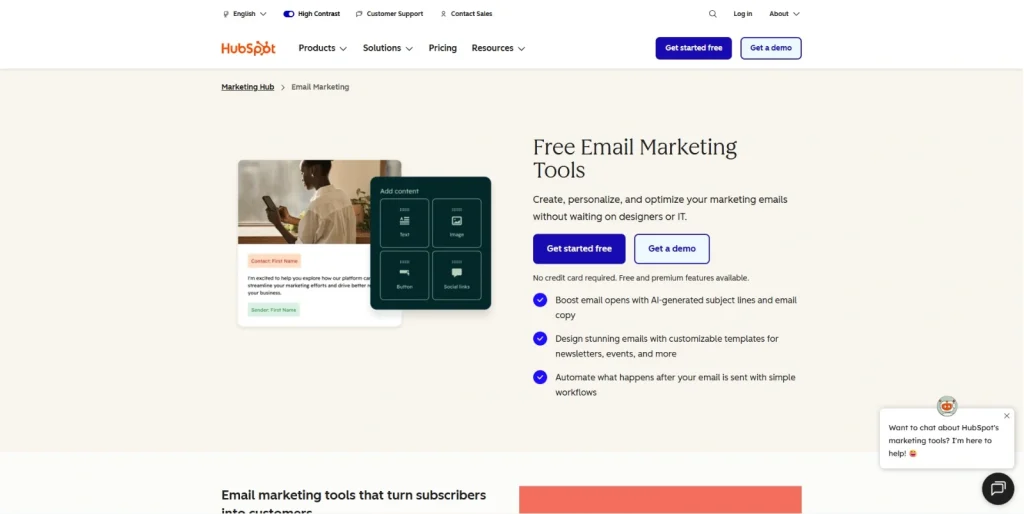
HubSpot Email Marketing makes sense if you want your email campaigns closely connected with subscriber and customer data.
You can create emails with its drag-and-drop editor, personalize content using CRM information, and automate follow-ups based on actions such as opens and clicks.
It also includes A/B testing and campaign analytics, so you can compare subject lines, content, and engagement instead of relying on guesswork.
Its AI tools can help create and refine email copy and subject lines. If you want email marketing with strong personalization, automation, and CRM-based targeting, HubSpot is a solid option.
4. Klaviyo
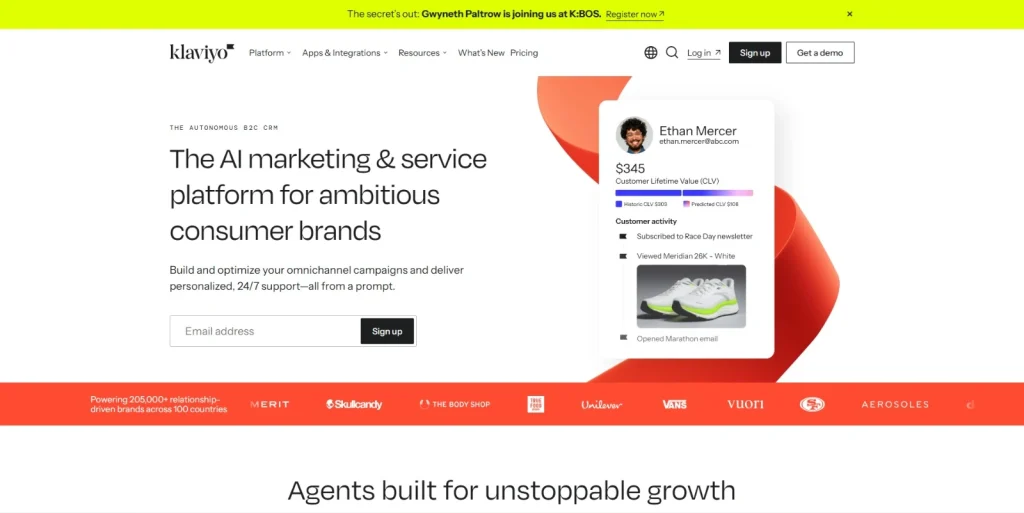
Klaviyo is particularly useful for eCommerce businesses that want to make their email marketing more personalized. It uses customer behavior, browsing activity, purchases, and engagement data to create targeted segments and automated email campaigns.
You can build personalized flows, send emails based on customer actions, and use analytics to understand which campaigns generate better results. Its AI tools also help with campaign creation and optimization.
5. ActiveCampaign
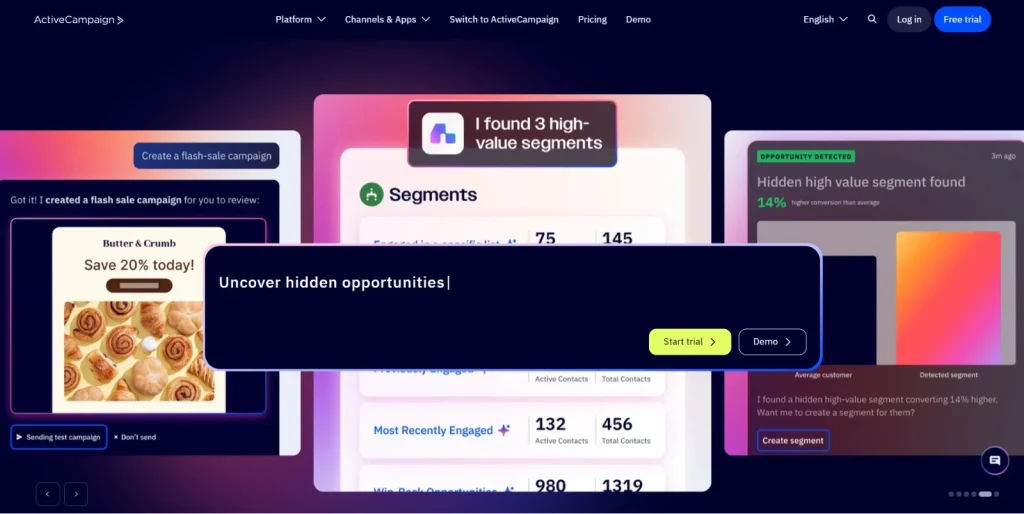
ActiveCampaign is a strong option if you want more control over email marketing automation. You can create behavior-based workflows, send different emails depending on how subscribers interact with your campaigns, and personalize messages throughout the customer journey.
Its AI tools can also help create on-brand emails and improve campaigns using previous performance data. With its wide range of integrations, you can connect email campaigns with the other tools you already use.
If your priority is advanced automation, personalization, and complex email workflows, ActiveCampaign is good to go, I say.
6. GetResponse
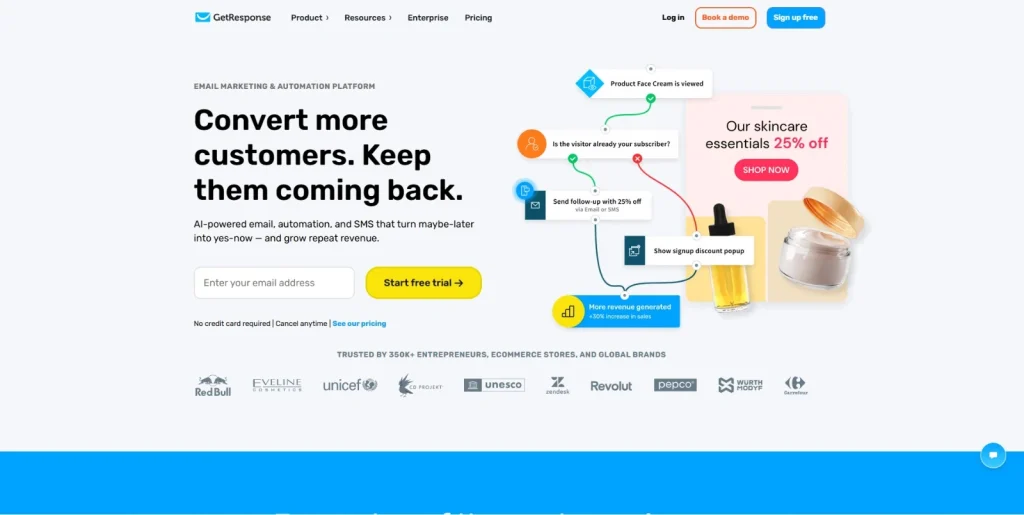
GetResponse is another good choice, just like Brevo, for email marketing and automation in one platform. You can create promotional, triggered, and lifecycle emails, then automate follow-ups based on where subscribers are in their customer journey.
It also offers AI-powered content and send-time optimization, along with audience segmentation and campaign analytics to help improve email performance.
Its 150+ integrations make it easier to connect email campaigns with your existing tools. It is preferred to use GetResponse when considering a platform that covers campaigns, automation, and email optimization without being limited to basic newsletters.
7. Campaign Monitor
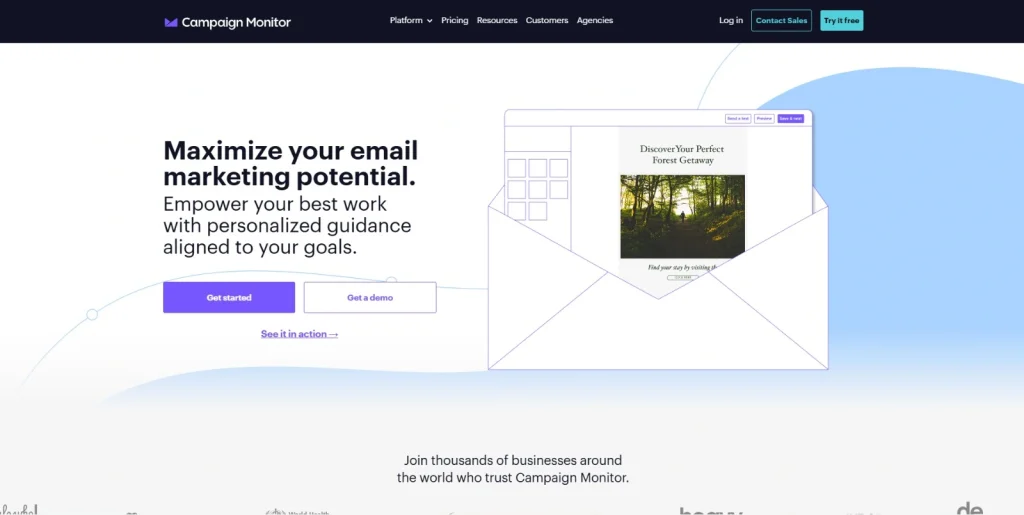
Campaign Monitor is more design-forward. It is a good fit if you care about creating attractive emails, as its drag-and-drop builder and ready-made templates make it easy to create newsletters, promotions, and other email campaigns.
You can also build automated customer journeys, segment your subscribers, personalize emails, and track campaign results. Its AI Email Booster gives suggestions before you send a campaign, while its reporting tools help you see what is working and what needs improvement.
8. Sender
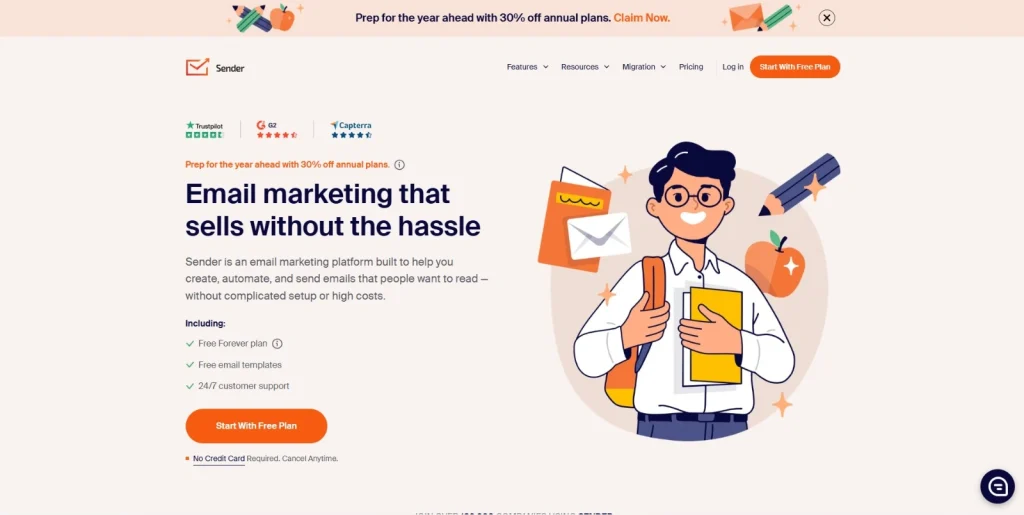
Sender is often praised for its simplicity and affordability. However, it also covers the essentials, including campaign creation, automation, segmentation, A/B testing, and email analytics in its premium plans, without making you work through a complicated setup.
Its drag-and-drop editor and large collection of templates can help you create campaigns quickly, while sender reputation and IP monitoring focus on keeping your emails out of spam folders.
The free plan is another advantage for small businesses that want to start without a high upfront cost.
9. Zoho Campaigns
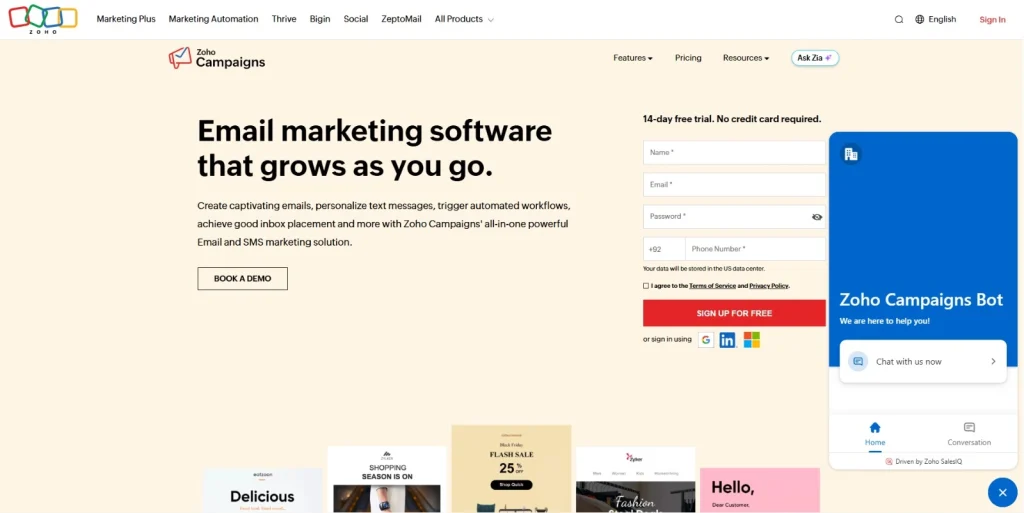
Zoho Campaigns is also a practical option to create, automate, and track your email marketing campaigns without paying much to get started, like Sender I mentioned.
The forever-free plan supports up to 2,000 contacts and 6,000 emails per month, which makes it useful for smaller businesses testing an email marketing platform before moving to a paid plan. But it is limited strictly to basic newsletter broadcasting
To actually use core features like A/B testing and drag-and-drop lead nurturing workflows, you will need to upgrade to their highly affordable Standard paid tier.
10. Drip
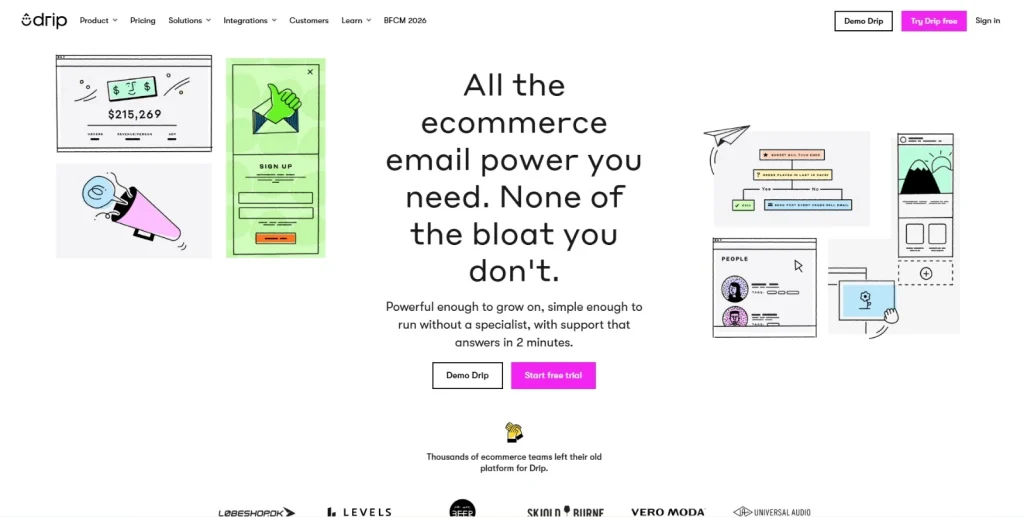
Drip focuses heavily on eCommerce email marketing, so it makes more sense for online stores than businesses that mainly send newsletters. You can use customer activity such as browsing, purchases, and spending to create targeted segments and personalized emails.
It also supports automated flows for welcome emails, abandoned carts, post-purchase follow-ups, and win-back campaigns, helping you keep customers engaged after they make a purchase.
If your main goal is using email to increase repeat sales and build stronger customer relationships, Drip is a strong option to consider.
How to Choose the Right Email Marketing Company?
Having a list of email marketing companies is useful, but the better question is which one actually fits your needs. Before choosing a platform, consider these points:
- Your goals: For eCommerce, Klaviyo or Drip may fit better. If you want email marketing connected with CRM data, HubSpot or Brevo can make more sense.
- Your budget and list size: Check how pricing changes as your subscriber list and email volume grow.
- Your existing tools: If you already use Shopify, Zoho, or HubSpot, choose a platform that connects well with your existing setup.
- Simplicity vs. control: Some platforms keep email marketing simple, while others give you more advanced automation and customization.
- Free plans and trials: Test the editor, automation, deliverability, and overall experience before committing to a paid plan.
Final Thoughts on Email Marketing Companies
Choosing the right email marketing company comes down to what actually fits your business.
In my opinion, Klaviyo and Drip make more sense for eCommerce, while HubSpot and Brevo are better choices when CRM and email marketing need to work together.
Your budget, list size, integrations, automation needs, and ease of use also matter. I’d recommend testing free plans or trials before committing, especially to check email deliverability, campaign creation, automation, and overall usability.