The first time I traveled to Europe, staying connected turned out to be more confusing than planning the trip itself.
Between expensive roaming charges, unfamiliar mobile networks, and the hassle of finding a local SIM card, I quickly realized there had to be a better option. That’s when I discovered eSIMs.
They promised instant connectivity, flexible data plans, and lower costs without swapping physical SIM cards. But are they really as convenient as they sound?
In this guide, I will break down the pros, cons, costs, and practical realities of using an eSIM in Europe so you can decide if it’s the right choice.
- eSIMs offer instant activation without needing a physical SIM card.
- Regional eSIMs provide coverage across multiple European countries.
- Many travel eSIMs are data-only and may not include calls or SMS.
- Device compatibility should be checked before purchasing a plan.
- Coverage, network quality, and customer support matter more than price alone.
- eSIMs are ideal for tourists, remote workers, and business travelers.
What is an eSIM?
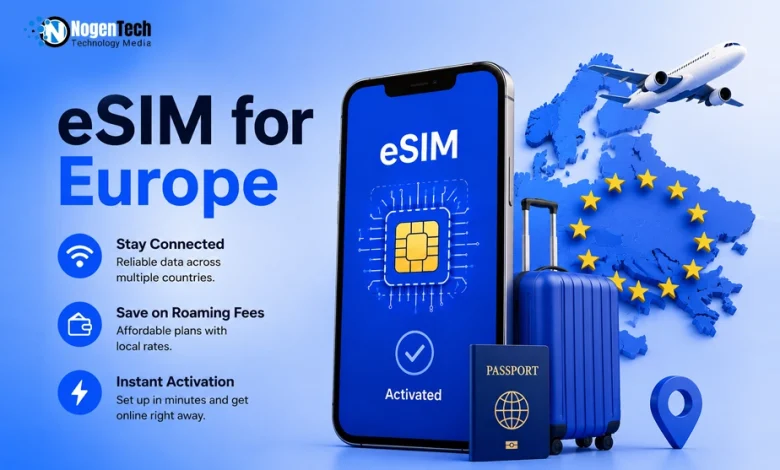
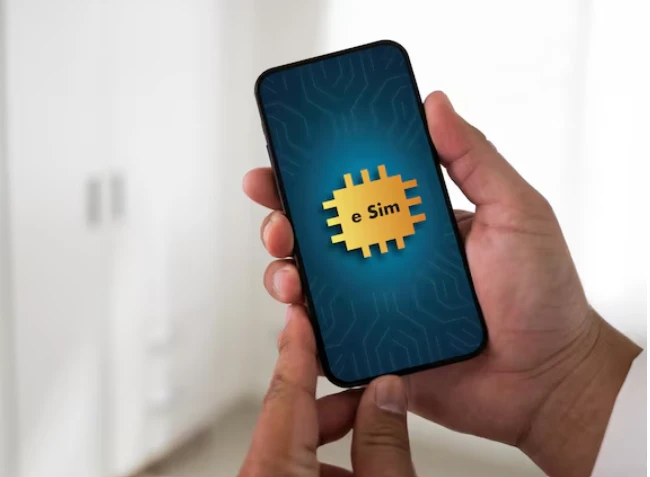
eSIM is a SIM card, but in a digital format, and has the same functionalities as your typical SIM, but the advantage is that there’s no need to pop anything into your mobile device.
Instead, you can just download the data plan onto your phone right away. The good news is that most newer smartphones support eSIMs.
When you set it up, you will get calls, data, texts, and everything else as you would normally with a regular card (and we all know how important this is when you travel abroad, especially if you go alone).
Why More Travelers Are Switching to eSIMs?
Many travelers now prefer eSIMs because they eliminate the need to buy physical SIM cards after arriving at their destination. Instead of searching for a local carrier at the airport, users can activate a data plan before departure and connect immediately upon landing.
This convenience is particularly valuable for business travelers, remote workers, and anyone visiting multiple European countries during a single trip.
How Do You Choose the Best eSIM Plan?
Okay, so you may have decided that you definitely want to use an eSIM for your Europe travel, but the question is, how do you actually choose a good plan?
Well, what you should know is that even if two eSIMS have the same cost, that doesn’t make them equal.
- Some eSIMs may offer better coverage, for example, as well as faster speeds.
- Others offer unlimited data plans (for instance, you’re always on with Holafly in Europe, as the main advantage of this provider is absolute convenience)
- There might also be eSIMs that work in one country online, while others cover all of Europe, so this is also an important consideration to keep in mind when making a decision.
- Another thing that’s very important is that some eSIMs have reliable customer support, but others will ghost you when you least expect it.
Anyway, you get the idea. The moral of the story is that you shouldn’t go for the lowest price, but rather, take the time to evaluate what a specific plan gives you, because the fine print is more important than you may think.
Who Should Use an eSIM in Europe?
An eSIM can be a practical option for travelers who need reliable internet access throughout their trip.
It is especially useful for remote workers, digital nomads, business travelers, content creators, and tourists visiting multiple countries.
Instead of relying on expensive international roaming plans, travelers can choose a regional eSIM that provides connectivity across Europe without changing SIM cards between destinations.
What are the Pros and Cons of Using an eSIM in Europe?
Pros
- eSIMs are cheaper compared to using your typical phone plan abroad (in fact, there’s a good chance the roaming charges from your home carrier are going to be WILD!)
- For example, many U.S. travelers using budget carriers may not realize that Mint Mobile uses T-Mobile towers, which can influence international roaming options and pricing.
- An eSIM enables you to get local data plans that cost significantly less.
- The setup process is quite fast because you can either use an app or scan a QR code and be connected in minutes (this means no weird paperwork and no hunting down a SIM card at the airport).
- Another huge advantage is that you get to switch plans without needing to swap SIM cards. If you’re traveling in different countries or want to try out different providers, this is perfect.
- If your phone supports dual SIM, your regular number can remain active, and you can still use the eSIM for data, which means you won’t miss critical stuff back home.
Cons
- The setup of an eSIM isn’t smooth all the time, and that’s because you can deal with buggy apps.
- In other instances, QR codes may not work, and things can get frustrating, especially if you don’t feel comfortable with tech stuff.
- Keep in mind also that not all eSIMs have phone numbers associated with them. Many are just data-only, which means that you may not be able to send SMS or make regular calls if you don’t use iMessage or WhatsApp.
- Also, you’re going to be totally out of luck if your phone doesn’t support eSIM, and this isn’t, unfortunately, the case for many devices, particularly older ones.
Choose your eSIM in Europe Wisely
After testing different connectivity options while traveling, one thing becomes clear: staying connected is much easier when your mobile data is sorted before departure.
An eSIM can help travelers avoid expensive roaming charges, skip the hassle of buying local SIM cards, and stay online across multiple European destinations.
The right plan ultimately depends on your travel style, device compatibility, and data requirements.
Taking a few minutes to compare coverage, pricing, and support options before your trip can help you choose an eSIM that keeps you connected throughout your journey without unexpected costs.
eSim FAQs
What is an eSIM and how does it work?
An eSIM is a digital SIM card built into compatible devices. Instead of inserting a physical SIM, users download and activate a mobile plan digitally.
Is an eSIM cheaper than roaming in Europe?
In most cases, yes. eSIM plans typically provide local or regional data at lower rates than international roaming services offered by home carriers.
Can I use one eSIM across multiple European countries?
Yes. Many providers offer regional Europe plans that work across multiple countries without requiring you to switch networks or SIM cards.
Do I need to remove my regular SIM card to use an eSIM?
No. Most modern smartphones support dual SIM functionality, allowing you to keep your physical SIM active while using an eSIM for data.
Can I make phone calls with an eSIM?
It depends on the plan. Some eSIMs include voice and text services, while many travel-focused eSIMs only provide mobile data.
Which phones support eSIM technology?
Most recent smartphones support eSIMs, including newer iPhone, Samsung Galaxy, and Google Pixel models. Always verify compatibility before purchasing a plan.
Can I activate an eSIM before arriving in Europe?
Yes. One of the biggest advantages of eSIMs is that they can usually be activated before departure, allowing you to connect immediately after landing.