After creating complete guides on what CRM software is and its key features businesses should look for, we wanted to take the next step and answer a more specific question: which CRM software is best for ecommerce?
Online stores need more than basic contact management. They need a CRM that:
- Connects customer and order data
- Tracks purchase history
- Segments shoppers
- Automates personalized campaigns
- Integrates with platforms like Shopify and WooCommerce.
With global CRM software revenue projected to reach $103.51 billion in 2026, according to Statista, businesses are investing heavily in tools that help them manage and strengthen customer relationships.
Next, you will explore the 12 best e-commerce CRM software options for online stores in 2026 based on features, pricing, and problems they solve for you.
| Ecommerce CRM | Best for | The e-commerce problem it solves |
|---|---|---|
| HubSpot CRM | Best all-round ecommerce CRM | Unifies customer data, sales, marketing, and support in one CRM. |
| Klaviyo | Best for B2C and DTC ecommerce | Turns customer behavior and purchase data into targeted retention campaigns. |
| Omnisend | Best for small ecommerce stores | Simplifies email, SMS, and e-commerce automation without CRM complexity. |
| Salesforce Commerce Cloud | Best for enterprise ecommerce | Connects commerce, customer data, orders, and multiple sales channels. |
| Zoho CRM | Best budget-friendly CRM | Manages customers, sales, and workflows without enterprise-level costs. |
| Freshsales | Best for ecommerce sales teams | Organizes leads, deals, follow-ups, and sales opportunities in one place. |
| Pipedrive | Best for B2B ecommerce sales | Simplifies B2B pipelines, quotes, deals, and sales follow-ups. |
| Microsoft Dynamics 365 | Best for mid-market and enterprise | Connects CRM, finance, inventory, analytics, and business operations. |
| Metrilo | Best for ecommerce analytics and retention | Identifies repeat buyers, retention trends, and high-value customers. |
| Drip | Best for DTC retention marketing | Automates abandoned-cart, post-purchase, win-back, and lifecycle campaigns. |
| ActiveCampaign | Best for advanced ecommerce automation | Builds behavior-triggered customer journeys and advanced automations. |
| Brevo | Best for affordable multichannel engagement | Combines CRM, email, SMS, WhatsApp, and transactional messaging. |
The scale of online retail also makes effective customer management increasingly important. U.S. Census Bureau data shows that ecommerce sales reached $340.2 billion in Q2 2026, up 12.2% year over year.
12 Best Ecommerce CRM Software Explained for Different Business Needs
Now, let’s explore each ecommerce CRM in detail to see how it solves specific store challenges and where it fits best.
1. HubSpot CRM – Best for Managing Ecommerce Customers, Sales, and Marketing
HubSpot CRM is a strong fit for ecommerce businesses struggling with customer, marketing, and sales data spread across different tools. It brings these activities into one system while supporting e-commerce integrations and sales pipelines.
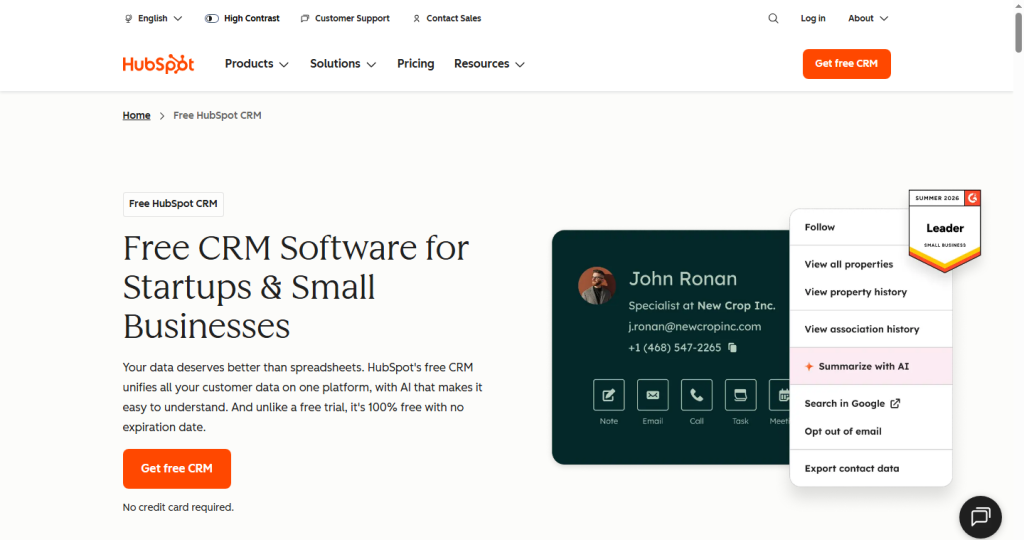
This makes it especially useful for growing stores with B2B, wholesale, or sales-led workflows, although advanced marketing automation can become expensive as your needs grow.
Key Features
- Contact and customer management
- Sales pipeline management
- Email tracking
- Marketing automation
- Customer segmentation
- Live chat and chatbots
- Reporting and analytics
- Ecommerce integrations such as Shopify and WooCommerce
Pricing: Free for up to 2 users; paid plans start at around $7/seat/month, with advanced marketing features available on higher-tier plans.
2. Klaviyo – Best for B2C Ecommerce Retention and Personalization
Klaviyo is a strong choice for B2C stores struggling to turn customer and purchase data into repeat sales. It uses behavioral data and segmentation to power personalized email, SMS, abandoned-cart, post-purchase, and win-back campaigns.
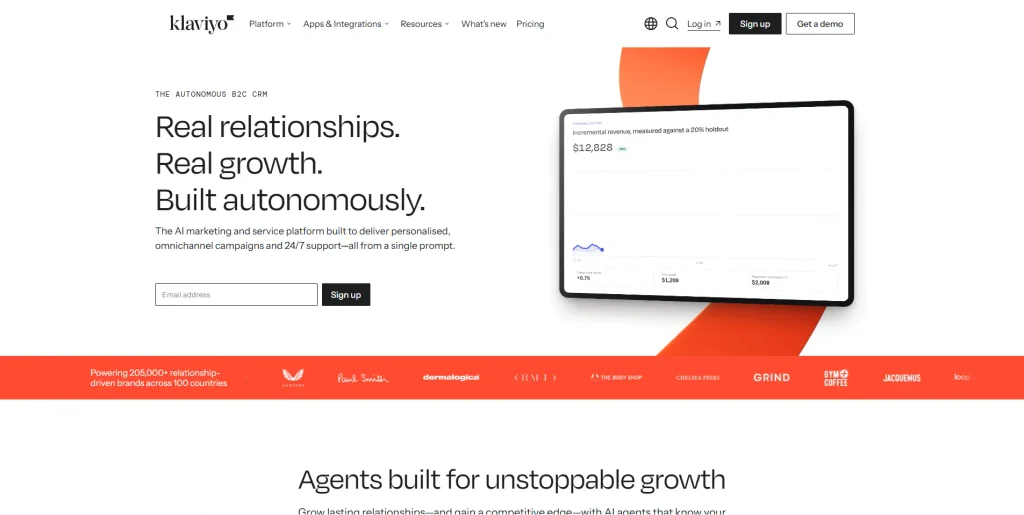
Its deep ecommerce integrations make it especially useful for growing DTC brands, although costs increase as your active customer base grows.
Key Features
- Unified customer profiles
- Advanced segmentation
- Email and SMS marketing
- Behavioral automation
- Predictive analytics
- Pre-built ecommerce flows
- A/B testing
- Ecommerce integrations
Pricing: Free for up to 250 active profiles and 500 monthly emails; paid pricing scales with active profiles and sending volume.
3. Omnisend – Best for Small Ecommerce Stores and Easy Automation
Omnisend is a practical choice for small online stores that need ecommerce automation without a complex CRM setup.
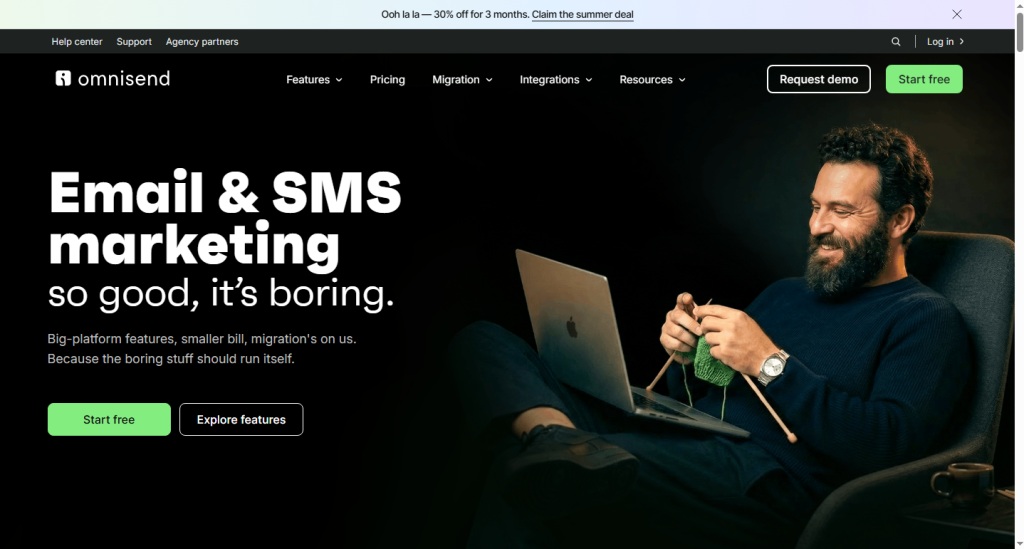
It combines customer segmentation with email, abandoned-cart, post-purchase, and web push automation, while integrating with platforms like Shopify and WooCommerce. The main limitation is SMS, which now requires the Pro plan for new subscribers.
Key Features
- Customer segmentation
- Email marketing automation
- Abandoned cart recovery
- Pre-built ecommerce workflows
- Product recommendations
- Web push notifications
- A/B testing
- Ecommerce integrations
Pricing: Free for up to 250 contacts and 500 emails/month; Standard starts at $16/month and Pro at $59/month.
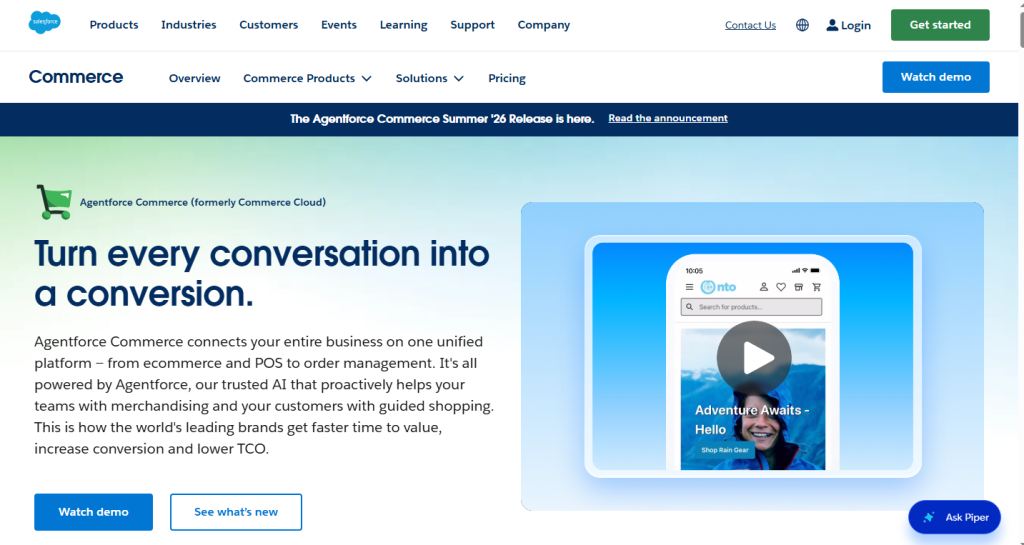
4. Salesforce Commerce Cloud – Best for Enterprise Ecommerce
Salesforce Commerce Cloud is best for large retailers struggling to manage complex, high-volume commerce across multiple channels.
It connects customer data, storefronts, orders, personalization, and AI-driven experiences within the Salesforce ecosystem. Its scalability suits global and omnichannel businesses, but the cost and implementation complexity make it excessive for most small online stores.
Key Features
- Unified customer and commerce data
- AI-powered personalization
- Einstein AI
- Order management
- Omnichannel commerce
- Custom storefronts
- Customer segmentation
- Advanced analytics
Pricing: Pricing varies by Commerce Cloud product and business requirements, with some editions using GMV-based pricing and enterprise plans available by quote.
5. Zoho CRM – Best Budget-Friendly CRM for Growing Ecommerce Businesses
Zoho CRM is a good fit for growing ecommerce businesses that need better customer and sales management without paying enterprise CRM prices.
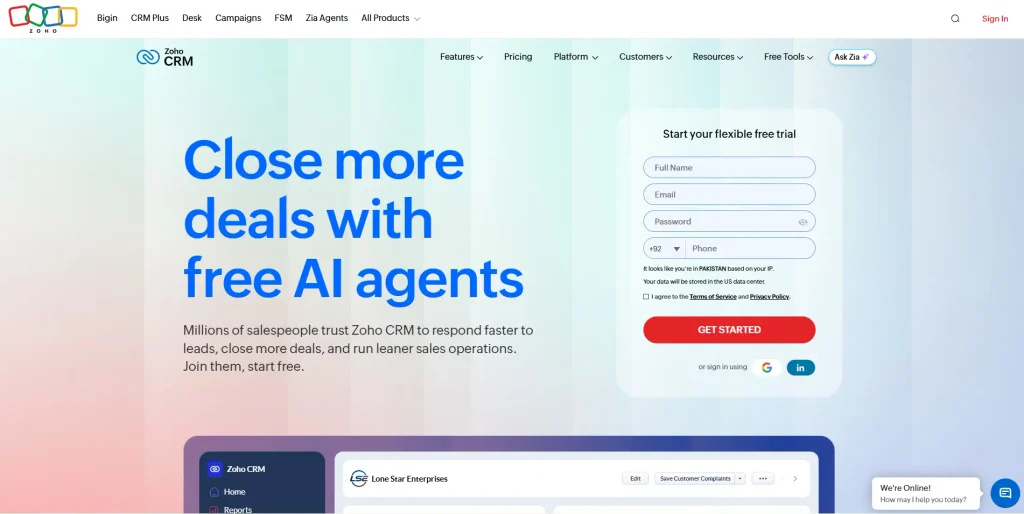
It supports B2C and B2B workflows, automation, and multiple sales pipelines. However, stores needing deeper inventory, order, or e-commerce capabilities may need additional Zoho apps or integrations.
Key Features
- Lead and contact management
- Multiple sales pipelines
- Workflow automation
- Omnichannel communication
- Inventory management
- Analytics and reporting
- AI-powered insights
- Zoho ecosystem integrations
Pricing: Free for up to 3 users; paid plans start at $14/user/month when billed annually.
6. Freshsales – Best for Ecommerce Sales Teams
Freshsales is a good option for ecommerce businesses that need to manage leads, deals, and sales follow-ups alongside customer relationships.
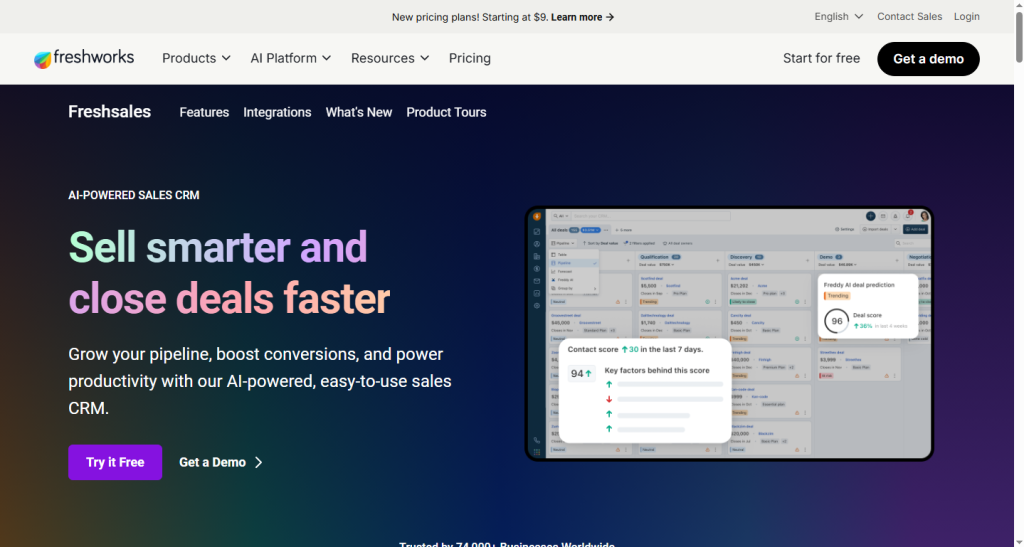
Its visual pipelines, automation, and AI-powered insights help sales teams prioritize opportunities and keep conversations organized. However, stores focused mainly on retention marketing may need Freshsales Suite or additional ecommerce and marketing integrations.
Key Features
- Contact and account management
- Sales pipeline management
- Lead and contact scoring
- Workflow automation
- Sales sequences
- Built-in email, chat, and phone
- Freddy AI insights
- Ecommerce integrations
Pricing: Free for up to 3 users; paid plans start at $9/user/month when billed annually.
7. Pipedrive – Best for B2B Ecommerce Sales Pipelines
Pipedrive is a strong fit for ecommerce businesses that need to track B2B, wholesale, or high-value sales beyond the standard checkout process.
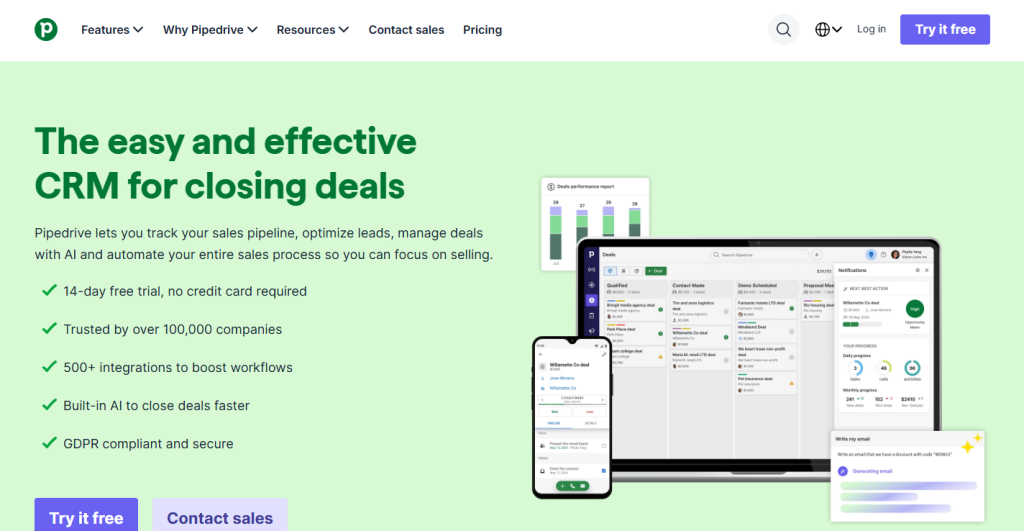
Its visual pipelines help teams manage leads, deals, follow-ups, and sales activities without losing opportunities. However, it is sales-focused, so stores needing advanced retention marketing will require integrations or add-ons.
Key Features
- Visual sales pipelines
- Lead and deal management
- Custom pipeline stages
- Email sync and tracking
- Workflow automation
- AI Sales Assistant
- Sales forecasting
- 500+ integrations
Pricing: No free plan; 14-day free trial available. Paid plans start at $14/seat/month when billed annually.
8. Microsoft Dynamics 365 – Best for Mid-Market and Enterprise Ecommerce
Microsoft Dynamics 365 suits larger ecommerce businesses struggling to connect customer, sales, and operational data across different systems.
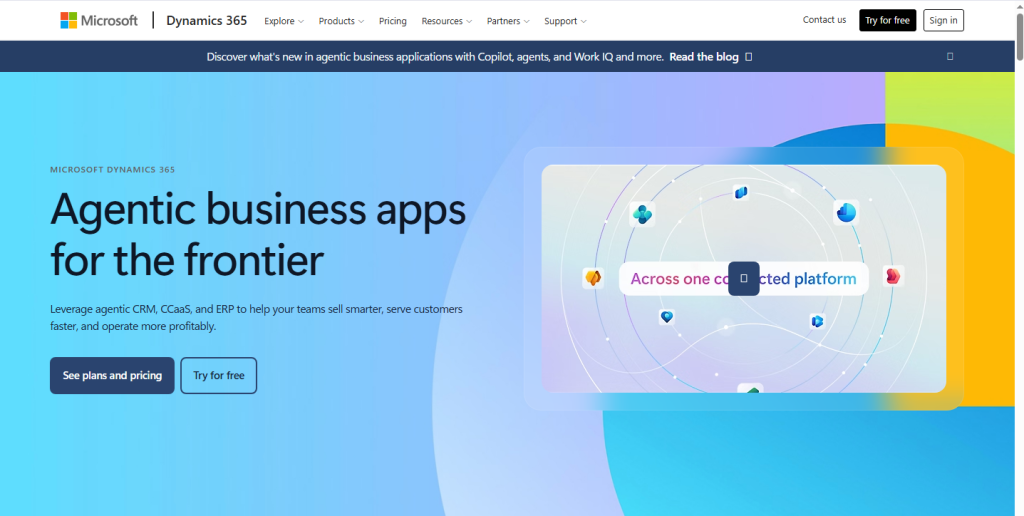
It combines CRM capabilities with Microsoft’s broader ecosystem, making it especially useful for businesses already using Microsoft 365, Teams, Azure, or Power BI. However, adding finance, inventory, or supply chain capabilities requires separate Dynamics 365 applications.
Key Features
- Customer and sales management
- Sales pipeline automation
- Copilot AI capabilities
- Customer journey tracking
- Power BI analytics
- Microsoft 365 and Teams integration
- Custom workflows
- ERP integrations
Pricing: Dynamics 365 Sales starts at $65/user/month, paid yearly; Enterprise is $ 105/user/month, and Premium is $150/user/month.
9. Metrilo – Best for Ecommerce Analytics and Customer Retention
Metrilo is built for online stores that need deeper insight into customer retention, repeat purchases, and buying behavior.
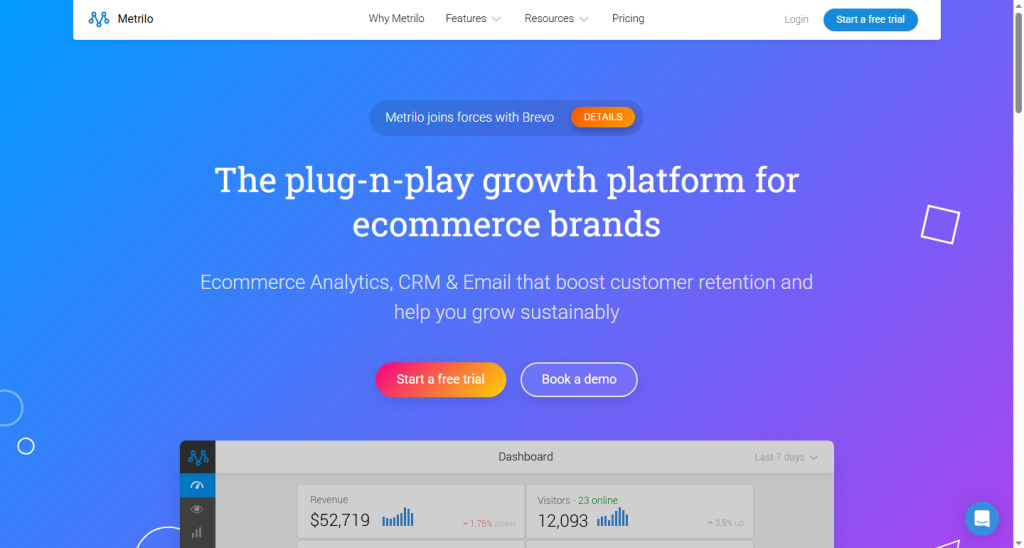
It combines ecommerce analytics with customer profiles, segmentation, and cohort analysis to identify valuable customers and retention trends. However, its higher pricing makes it better suited to established stores that can justify dedicated ecommerce analytics.
Key Features
- Ecommerce customer profiles
- Customer segmentation
- Real-time ecommerce analytics
- Retention and cohort analysis
- Customer lifetime metrics
- Product performance reports
- Conversion funnels
- Email automation
Pricing: Starts at $199/month; CRM and retention features are available from the $379/month Pro plan.
10. Drip – Best for DTC Ecommerce Retention Marketing
Drip is a strong fit for DTC brands struggling to turn first-time buyers into repeat customers. It uses purchase and behavioral data to segment shoppers and automate abandoned-cart, post-purchase, win-back, and personalized campaigns.
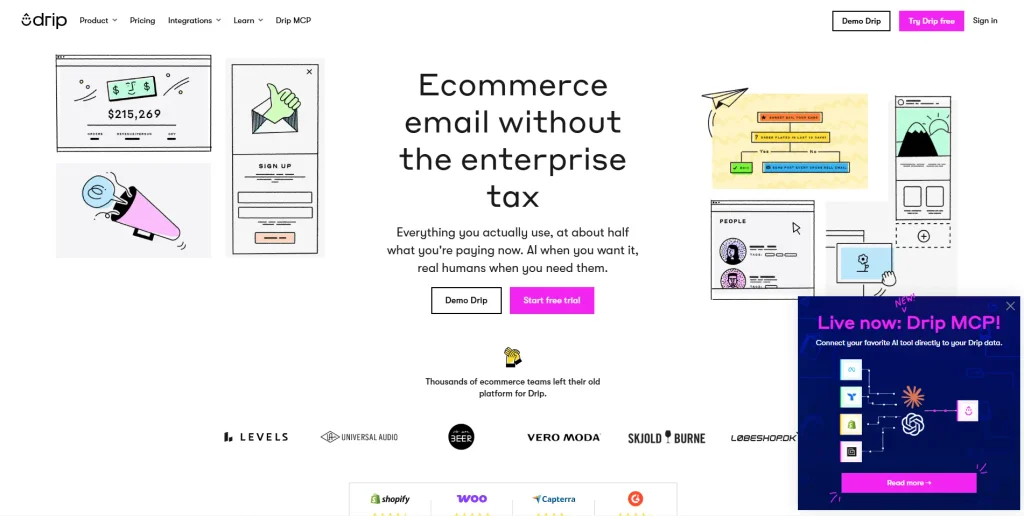
Its ecommerce-focused workflows work well for retention marketing, although stores needing a broader all-in-one CRM may find it limited.
Key Features
- Customer profiles
- Behavioral segmentation
- Email and SMS automation
- Abandoned-cart workflows
- Post-purchase and win-back campaigns
- Revenue attribution
- A/B testing
- Ecommerce integrations
Pricing: Paid plans start at $39/month for up to 2,500 people, with pricing increasing as your audience grows.
11. ActiveCampaign – Best for Advanced Ecommerce Automation
ActiveCampaign is ideal for ecommerce stores that have outgrown basic email automation and need more personalized customer journeys.
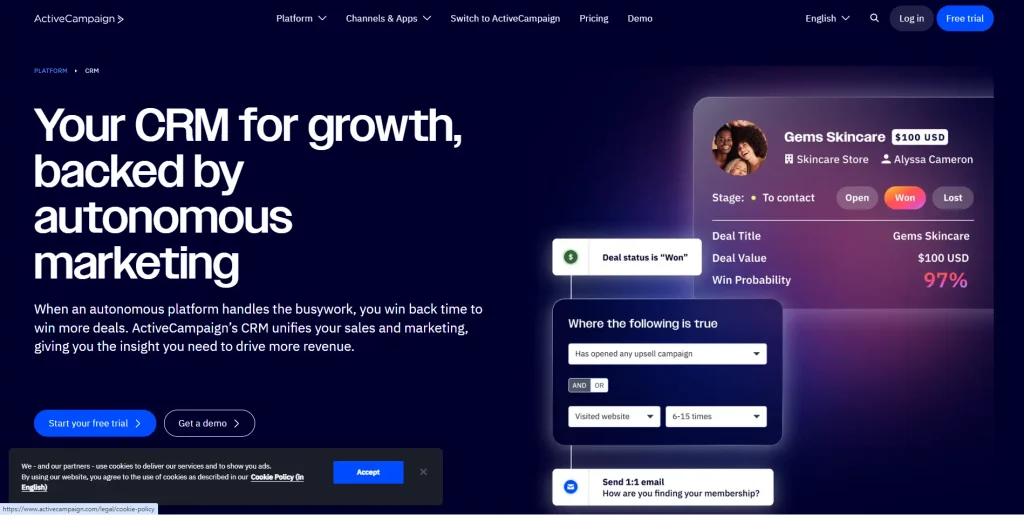
It uses purchase and behavioral data to trigger abandoned-cart, upsell, cross-sell, and post-purchase campaigns. Its automation flexibility is a major strength, although advanced setups can require more time to build and manage.
Key Features
- Advanced marketing automation
- Ecommerce segmentation
- Abandoned-cart automation
- Product catalog and coupons
- Cross-sell and upsell workflows
- Email personalization
- Shopify and WooCommerce integrations
- 1,000+ integrations
Pricing: No free plan; a 14-day free trial is available, with paid pricing based on plan and contact volume.
12. Brevo – Best Affordable Multichannel CRM for Ecommerce
Brevo is a practical choice for ecommerce stores that want customer management and multichannel marketing without paying for several separate tools.
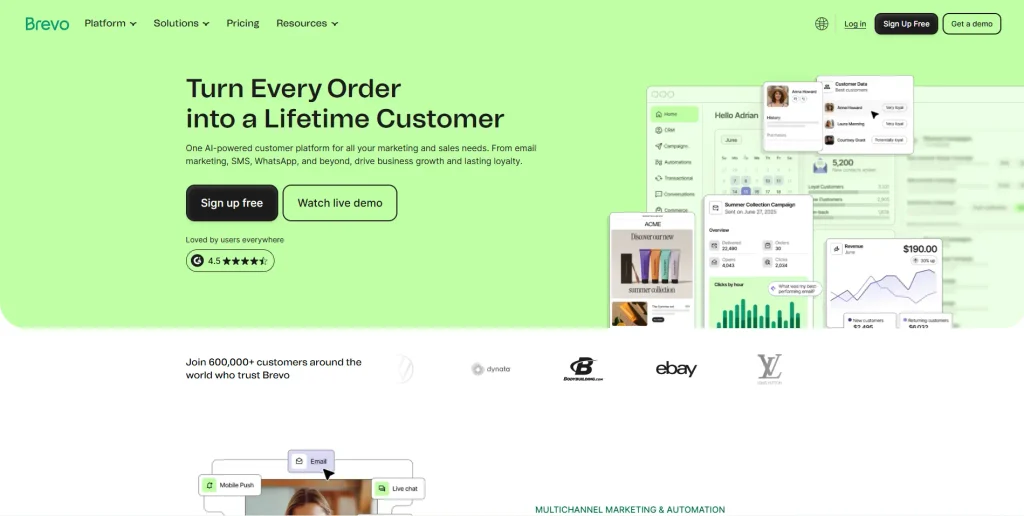
It combines CRM capabilities with email, SMS, WhatsApp, automation, and transactional messaging. Shopify and WooCommerce integrations also help sync customer and order data, although more advanced ecommerce features require higher plans.
Key Features
- Customer profiles and CRM
- Email and SMS marketing
- WhatsApp campaigns
- Marketing automation
- Customer segmentation
- Transactional messaging
- Abandoned-cart workflows
- Shopify and WooCommerce integrations
Pricing: Free plan available; paid plans start at $9/month, while Standard starts at $18/month.
Managing ecommerce growth efficiently is becoming harder as demand increases. Salesforce reports that 65% of commerce professionals are being asked to do more with less, making the right automation and customer management tools increasingly important.
How to Choose an Ecommerce CRM for Your Store’s Needs
Choosing an ecommerce CRM starts with identifying where your customer journey is breaking down, rather than comparing the longest feature lists. Match the platform to the problem your store actually needs to solve:
- Low repeat purchases: Prioritize behavioral segmentation, post-purchase flows, win-back campaigns, and retention analytics.
- Too many abandoned carts: Look for real-time store data and automated cart-recovery workflows.
- Customer data scattered across tools: Choose a CRM that syncs orders, customer profiles, marketing activity, and sales interactions.
- B2B or wholesale sales are hard to track: Prioritize deal pipelines, lead management, quotes, tasks, and sales follow-ups.
- Generic campaigns aren’t converting: Look for purchase-based segmentation, personalization, and product recommendations.
- Your marketing stack is getting expensive: Compare contact-based pricing and whether email, SMS, WhatsApp, or automation requires paid add-ons.
- You sell across multiple channels: Check whether customer and order data can stay unified across your storefronts and sales channels.
The best ecommerce CRM isn’t necessarily the one with the most features; it’s the one that removes the biggest bottleneck between your customer data and the next purchase.
People Also Ask About Ecommerce CRM Software
How Much Does Ecommerce CRM Software Cost Usually?
Ecommerce CRM software ranges from free to several hundred dollars per month. Most small businesses can expect to pay $15 to $100 per month, while enterprise solutions typically require custom pricing.
What Is the Difference Between an Ecommerce CRM and a Regular CRM?
An ecommerce CRM focuses on customer purchases, retention, and marketing automation, while a regular CRM is designed primarily for managing B2B sales pipelines and customer accounts.