Publishers Fight Authors Over Anthropic Copyright Settlement Cash
Authors expecting straightforward payouts from Anthropic's landmark $1.5 billion copyright settlement are instead finding publishers and literary agents filing competing claims on their money.

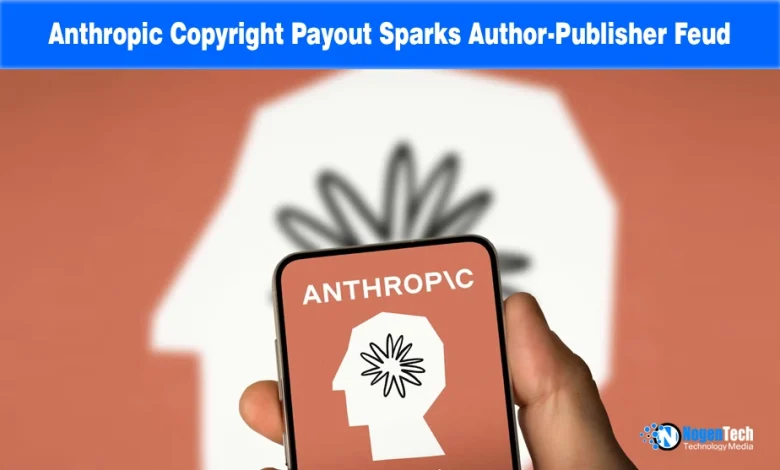
Anthropic’s $1.5 billion settlement with book authors was finalized in July after a federal judge found the company had illegally pirated copyrighted works to train its Claude models.
But what was expected to be a straightforward payout has become a documentation fight, with publishers and literary agents reportedly filing competing claims on payments tied to nearly 500,000 titles.
Under the settlement, each pirated title is valued at $3,000. Authors and publishers split that amount evenly if a book remains in print, while authors receive the full payout if rights have reverted or the work was self-published.
Publishers Are Claiming Books They No Longer Own
The complaints authors have posted publicly follow a similar pattern.
TechCrunch reported that author April Henry publicly questioned “WTF HarperCollins playing at” after the publisher claimed a share of a book whose rights had reverted to her at least 17 years earlier.
Victoria Strauss, who runs a blog, Writers Beware, said the complaints she is tracking fall into two categories: publishers claiming works they no longer legally control, and publishers seeking 100% of a payout when their contracts entitle them to only half.
Strauss said she is “reluctant to attribute to malice what can be plausibly explained by poor recordkeeping,” but noted that repeated errors across different authors suggest a systemic problem rather than routine glitches.
Separately, author Courtney Milan said literary agents, who do not legally own the books they represent, have attempted to claim commission-style cuts from the settlement fund entirely outside their contractual authority.
Why Textbook Authors Are Losing the Most
The New York Times identified a deeper structural problem driving these disputes: eligibility depends on who legally owned a book’s rights when Anthropic downloaded it, a period Mary Rasenberger, CEO of Authors Guild, places in 2021 and 2022.
Even if an author got their rights back last year, the publisher still owned the book when Anthropic downloaded it. That download date determines who gets paid, which applies here and takes many authors by surprise.
Rasenberger told the NY Times that textbook authors face an even tougher situation because their contracts can entitle them to just 10% to 15% of a title’s settlement value, well below the 50% split most trade authors receive.
When publishers and authors can’t agree, a court-appointed arbitrator will decide the allocation, while the Authors Guild has said it will challenge payments it believes shortchange writers.
The dispute comes as publishers step up copyright claims against AI companies, including Hachette’s lawsuit against Google over Gemini.
This Was Supposed to Be the Clean Outcome
Anthropic’s settlement was meant to show that leading AI companies could pay creators fairly without hurting their businesses.
Instead, 482,000 books are now caught in a records dispute that began before OpenAI’s ChatGPT existed, forcing authors to rely on old contracts written without the Generative AI training clauses in mind to prove who owns the rights.
Anthropic is also facing separate lawsuits from Sony Music and Warner Chappell over song lyrics allegedly used to train its Claude lineup.
If this is what a “won” settlement looks like in practice, publishers and AI companies alike should expect every future copyright resolution to come with its own multi-year paperwork fight attached.
Source: Authors Wrangle With Publishers Over $1.5 Billion Anthropic A.I. Settlement