
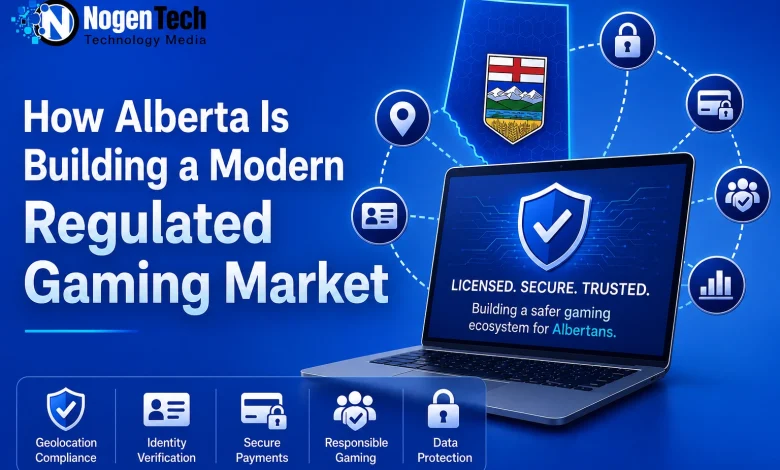
Alberta is entering a new era of regulated online gaming by combining modern technology with a comprehensive regulatory framework.
Following the introduction of the iGaming Alberta Act in 2025, the province is preparing to launch a competitive market in 2026 under the supervision of the Alberta Gaming, Liquor and Cannabis Agency (AGLC).
Instead of relying on legacy systems, Alberta is implementing current technologies that prioritize security, compliance, user protection, and operational efficiency from day one.
Rather than focusing only on entertainment, Alberta’s approach emphasizes building a trusted digital ecosystem where every transaction, identity check, and security measure supports a transparent and accountable market.
Now, lets explore the core technologies and regulatory standards, from advanced geolocation to strong cybersecurity, that are shaping Alberta’s modern, multi-operator marketplace.
How Is Alberta Building a Modern Regulated Gaming Market?
Alberta builds a modern regulated gaming market via the iGaming Alberta Act, AGLC oversight, and advanced KYC, geolocation, and PCI DSS infrastructure.
Unlike older regulated markets that continue upgrading outdated infrastructure, Alberta has the opportunity to build its ecosystem using technologies already proven in other regulated jurisdictions.
Its approach focuses on several key objectives:
- Creating a competitive multi-operator marketplace.
- Protecting consumers through modern compliance standards.
- Encouraging innovation without compromising regulation.
- Establishing consistent security requirements for every licensed operator.
This model allows operators to launch with technologies that already meet current regulatory expectations instead of replacing aging systems over time.
Readers looking for consumer-focused information can explore legal betting in Alberta, while this guide explains the technology and infrastructure supporting the regulated market.
Why Is Geolocation Technology Essential for Alberta's Regulated Gaming Market?
Geolocation technology is essential to verify that players are physically located within provincial borders before accessing regulated gaming services, ensuring total compliance with the iGaming Alberta Act and AGLC mandates.
Unlike simple GPS tracking, modern location verification evaluates several independent signals simultaneously.
What technologies verify a user’s location?
Operators commonly analyze:
- GPS coordinates
- Wi-Fi network identifiers
- Cell tower triangulation
- IP address intelligence
- VPN and proxy detection
Each data source contributes to an overall verification decision. While one signal alone may be inaccurate, combining several sources creates a far more reliable result.
Why does multi-layer verification matter?
Multiple verification methods help operators:
- Prevent unauthorized access.
- Detect attempts to disguise location.
- Reduce false approvals.
- Maintain compliance with provincial regulations.
Because verification occurs before regulated services become available, speed is equally important. The entire process must finish within seconds so users experience minimal delay.
What challenges do geolocation systems face?
Even advanced systems must handle unusual situations, including:
- Users traveling near provincial borders.
- Indoor environments with weak GPS reception.
- Internet providers routing traffic outside Alberta.
- Privacy-focused networks that limit location signals.
Modern verification engines continuously balance regulatory accuracy with a smooth customer experience.
How Does Alberta Verify Player Identity?
Alberta verifies player identity by enforcing automated Know Your Customer (KYC) technology, requiring licensed operators to utilize digital identity verification, government ID scanning, and biometric fraud screening.
Identity verification has become almost entirely automated, allowing platforms to confirm eligibility within seconds.
What does the KYC process include?
Most licensed operators combine several verification technologies, including:
- Government-issued ID scanning
- Document authenticity verification
- Facial recognition
- Liveness detection
- Fraud screening
- Database verification
Instead of relying on one verification method, operators combine multiple systems to produce a higher level of confidence.
Why is age verification so important?
Age verification remains one of the most important compliance requirements because regulators expect operators to prevent underage participation.
To achieve this, platforms verify:
- Date of birth.
- Document authenticity.
- Identity consistency.
- Eligibility requirements.
Maintaining strict age verification protects both consumers and the integrity of Alberta’s regulated market.
How do operators reduce fraud?
Fraud prevention extends beyond verifying identity. Many onboarding systems also evaluate:
- Suspicious account activity.
- Known fraud databases.
- Watchlist screening.
- Risk scoring.
These additional checks help licensed operators identify potential issues before an account becomes active.
How Are Payments Secured in Alberta's Regulated Gaming Market?
Licensed operators secure financial transactions using PCI DSS, tokenization, fraud monitoring, and Anti-Money Laundering (AML) controls to protect customer information and meet regulatory requirements.
Processing payments involves far more than accepting deposits or completing withdrawals.
Every transaction passes through multiple security layers designed to protect both financial data and the overall integrity of the regulated market.
What security standards protect payment information?
Licensed operators commonly implement:
- PCI Data Security Standard (PCI DSS)
- Payment tokenization
- Encrypted payment processing
- Fraud detection systems
Instead of storing sensitive card details, tokenization replaces payment information with encrypted reference tokens that have no value if intercepted. This significantly reduces the risk associated with payment processing, drawing parallels to how modern crypto iGaming software providers utilize decentralized tech to secure user funds.
This significantly reduces the risk associated with payment processing.
How does AML monitoring work?
Anti-Money Laundering (AML) controls continuously evaluate financial activity for suspicious behavior. Monitoring systems may review:
- Unusual transaction patterns.
- Large deposits.
- Rapid withdrawal requests.
- Source-of-funds concerns.
- Account activity that differs from expected behavior.
These automated checks help licensed operators detect potential financial crime while allowing legitimate users to complete transactions securely.
Why is payment speed important?
Security alone is not enough. Operators must also provide efficient payment processing because long delays can negatively affect user confidence.
Modern payment infrastructure therefore focuses on balancing:
- Security.
- Compliance.
- Fraud prevention.
- Fast transaction processing.
This combination helps create a safer and more reliable experience for everyone participating in Alberta’s regulated gaming market.
What Responsible Gaming Features Are Built Into Alberta's Framework?
Alberta’s regulated gaming framework incorporates responsible gaming tools directly into licensed platforms, requiring operators to provide deposit limits, session time limits, reality check reminders, cooling-off periods, and a centralized self-exclusion system overseen by the AGLC.
Unlike traditional warning messages, these safeguards are integrated into the platform’s functionality and operate continuously.
What responsible gaming tools are available?
Licensed operators are expected to provide features such as:
- Deposit limits to control spending.
- Session time limits to manage play duration.
- Reality check reminders that display time and spending summaries.
- Cooling-off periods for temporary account breaks.
- Self-exclusion programs that prevent access for selected periods.
These tools allow individuals to take control of their gaming activity while promoting a healthier digital environment.
How does centralized self-exclusion improve player protection?
One of the most significant developments in Alberta’s approach is its direction toward centralized self-exclusion.
Instead of requesting exclusion separately from every operator, individuals may be able to register once and have those restrictions recognized across participating licensed platforms.
This approach helps:
- Simplify the exclusion process.
- Improve compliance across operators.
- Strengthen consumer protection.
- Reduce opportunities to bypass restrictions.
How do behavioral analytics support responsible gaming?
Modern platforms increasingly rely on behavioral analytics to identify activity that may indicate elevated risk.
These systems can monitor patterns such as:
- Rapid increases in deposits.
- Frequent gaming sessions.
- Significant changes in playing behavior.
- Extended continuous activity.
Rather than replacing human decision-making, behavioral analytics provide early indicators that allow operators to respond appropriately while supporting responsible participation.
This mirrors the broader shifts in what AI is doing to iGaming platforms by automating player protection and tailoring the user experience in real-time.
How Does Alberta Protect User Data?
Alberta protects user data by requiring licensed operators to deploy robust cybersecurity measures, including end-to-end encryption (in transit and at rest), strict access controls, and comprehensive audit logging.
Regulated gaming platforms process sensitive information ranging from identity documents to payment records.
Protecting this information is essential for maintaining consumer trust and regulatory compliance.
What security measures protect customer information?
Most licensed platforms implement several protective controls, including:
- Encryption in transit
- Encryption at rest
- Role-based access controls
- Continuous security monitoring
- Audit logging
Together, these measures help reduce the risk of unauthorized access while creating a traceable record of system activity.
Why is data minimization important?
Strong cybersecurity is not only about protecting stored information.
It also involves limiting how much information is retained.
Licensed operators aim to:
- Keep only required regulatory data.
- Remove unnecessary records on schedule.
- Separate sensitive datasets where possible.
- Reduce overall exposure to cyber threats.
This approach minimizes risk while supporting modern privacy expectations.
Why Does Alberta's Multi-Operator Model Matter?
Alberta’s multi-operator model drives market competition under AGLC oversight, forcing licensed operators to innovate and improve the user experience through faster registration, better payments, and stronger security without lowering strict compliance standards.
Competition encourages operators to improve both technology and customer experience.
Instead of competing only on products, licensed companies also compete by delivering:
- Faster registration.
- More efficient verification.
- Better payment experiences.
- Stronger security.
- Improved customer support.
Because every operator must satisfy the same regulatory requirements, competition focuses on service quality rather than reducing compliance standards.
To gain an edge, many operators are looking at the innovative ways AI is changing competitive online gaming to optimize performance tracking and keep players engaged fairly.
This creates benefits for both businesses and consumers.
Readers interested in the regulatory structure can learn more through the Alberta iGaming framework and its operator requirements, which outline the standards operators must satisfy before entering the provincial market.
What Makes Alberta's Regulated Gaming Market Future-Ready?
Alberta is building a future-ready market by launching with modern compliance technology, secure digital infrastructure, and a competitive multi-operator model designed for long-term innovation rather than upgrading outdated legacy systems.
Rather than modernizing outdated systems, Alberta is implementing current technologies from the beginning.
Its approach combines:
- Advanced geolocation verification
- Digital identity verification
- Secure payment infrastructure
- Responsible gaming technology
- Comprehensive cybersecurity
- Competitive market participation
Together, these components create a digital ecosystem that balances innovation with accountability.
For consumers, much of this technology remains invisible.
Location verification, identity confirmation, payment security, and compliance checks all occur within seconds, allowing users to interact with licensed platforms confidently while regulators maintain oversight behind the scenes.
As Alberta prepares to expand its regulated market, this technology-first approach positions the province to support a secure, transparent, and modern gaming environment for years to come.
Frequently Asked Questions About Alberta Building a Modern Regulated Gaming Market
How is Alberta building a modern regulated gaming market?
Alberta is building its regulated gaming market by implementing the iGaming Alberta Act, regulating operators through the AGLC, and requiring secure identity verification, location compliance, payment protection, responsible gaming tools, and cybersecurity measures.
Why do licensed operators verify a user’s location?
Location verification ensures users are physically inside Alberta before accessing regulated gaming services. Operators combine GPS, Wi-Fi, cellular data, IP analysis, and VPN detection to meet regulatory requirements.
What is KYC in Alberta’s regulated gaming market?
Know Your Customer (KYC) is the identity verification process used to confirm a user’s identity, legal age, and eligibility through government-issued identification, biometric verification, and fraud screening.
How are financial transactions protected?
Licensed operators secure transactions using PCI DSS, tokenization, fraud detection systems, and Anti-Money Laundering (AML) monitoring to protect customer information and support regulatory compliance.
What responsible gaming tools do licensed platforms provide?
Responsible gaming features commonly include deposit limits, session reminders, self-exclusion, cooling-off periods, and behavioral monitoring that helps identify potential risks while encouraging safer participation.
Final Thoughts: Why Alberta's Technology-First Approach Sets a New Standard
In my opinion, Alberta is taking a practical approach to building a regulated gaming market by prioritizing secure technology instead of retrofitting outdated systems.
With oversight from the Alberta Gaming, Liquor and Cannabis Agency (AGLC), strong identity verification, geolocation compliance, secure payment infrastructure, and responsible gaming measures, the province is creating a framework that balances innovation with accountability.
As the iGaming Alberta Act moves toward full implementation, this technology-first model has the potential to deliver a safer, more transparent, and future-ready gaming ecosystem across Canada.