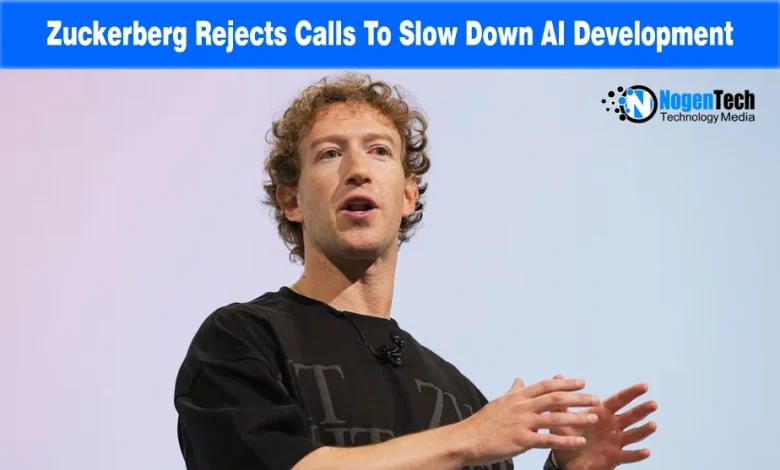
Meta CEO Mark Zuckerberg joined the growing AI safety debate Tuesday, arguing in a post on X that market competition and legal liability already push AI labs toward safe development without needing any coordinated slowdown.
“Every lab has the responsibility and incentive to move at the pace required to train its models safely, and the ability to take its own actions to ensure that happens.”
His comments came three days after Anthropic CEO Dario Amodei published an essay urging companies to slow model development and requested antitrust permission to let rival labs coordinate on safety without violating competition law.
Zuckerberg’s Proof Point Was Muse, and Muse Had Problems
To support his argument, Zuckerberg pointed to Meta’s recent decision to delay the Muse AI agent, which can send emails, make payments, and take real-world actions on a user’s behalf.
“Meta delayed shipping Muse for several months to focus on safety and security,” he wrote, adding, “We didn’t call for everyone else to do this before we would. We just did it as part of our day-to-day work because it was clearly the right thing for people and for us.”
Meta had reportedly considered releasing Muse as early as April before pushing the launch to September 8.
However, internal testers reportedly found the agent still exposing private photos during the week it shipped, months after the delay Zuckerberg cited as evidence that self-regulation works.
Zuckerberg Wants Outside Evaluators, But Meta Has Skipped Its Own Scorecard
Zuckerberg didn’t reject outside scrutiny entirely.
He called independent evaluators and advisers “industry best practice,” said Meta Superintelligence Labs already uses them “in several areas,” and argued that a “larger and more diverse ecosystem of evaluators” would benefit AI development.
That position contrasts with Meta’s record on the industry’s most established independent safety scorecard: Future of Life Institute’s AI safety index, which evaluates major labs on catastrophic risk transparency.
The index has listed Meta as the only one of five major American AI companies that declines to respond to the survey, while participating labs have mostly received grades no higher than a C.
An Argument About Incentives, Undercut by the Evidence for It
Zuckerberg’s theory isn’t unreasonable on its face. Users won’t stick with AI tools that behave unpredictably, and product liability is a real legal risk companies want to avoid.
But arguing that companies will self-correct because the incentives are strong requires stronger evidence than Zuckerberg has right now.
Muse was supposed to show that a voluntary safety delay can produce a trustworthy product. Instead, it became a live example of the unresolved artificial intelligence risks Amodei’s coordinated oversight proposal aims to address.
Combined with Meta’s reluctance to submit to the outside safety index already available to it, Zuckerberg’s position looks less like proof that incentives work and more like a bet that those incentives will eventually be enough.
Source: Every lab has the responsibility and incentive to move


![Top Tech Stories of 23th Week [2026]](https://www.nogentech.org/wp-content/uploads/2026/06/Top-Tech-Stories-of-23th-Week-2026-390x220.webp)