Tesla Launches Robotaxi Service in Miami as Autonomous Ride-Hailing Race Heats Up
Tesla expanded its driverless ride-hailing network to Miami on Friday, pushing its robotaxi ambitions into a fourth U.S. city even as newly disclosed state data shows its fleet remains far smaller than rival Waymo's.

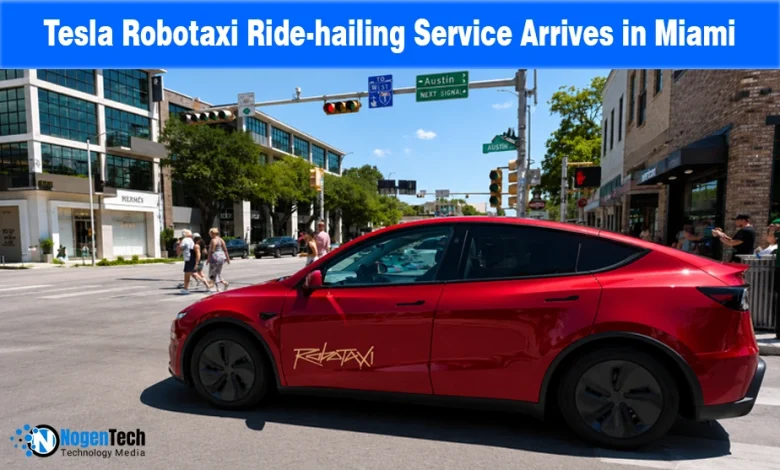
Tesla expanded its robotaxi service to Miami on Friday, extending its autonomous ride-hailing operations into a new market as competition in the sector intensifies.
The company’s official Robotaxi account confirmed the launch on X with a short post reading, “Robotaxi now available in Miami.
” The move comes as CEO Elon Musk increasingly frames machine intelligence, robotics, and autonomous transportation as central to Tesla’s future.
The move positions the company as more than an electric vehicle manufacturer even as EV sales face fresh headwinds from Chinese and European rivals.
A City-by-City Expansion Strategy
Miami becomes the latest addition to a robotaxi footprint that started in Austin, Texas, where Tesla launched its unsupervised self-driving service last year before extending it to Dallas and Houston.
The company also announced plans in April to enter five more cities, and it separately operates a rideshare service in the San Francisco Bay Area, according to Invezz.
Musk said in May he expects fully self-driving vehicles without human safety monitors to become more common across the United States later this year, aligning with Tesla’s continued expansion.
Still, Musk has tempered financial expectations, warning the robotaxi network is unlikely to generate meaningful revenue for Tesla this year, the same reason why Apple abandoned its robotaxi venture back in 2024.
Waymo’s Fleet Still Dwarfs Tesla’s in Texas
New reporting requirements that took effect in Texas in May have given the clearest picture yet of how Tesla’s robotaxi fleet compares with its rivals.
According to registration data submitted to the Texas Department of Motor Vehicles, Tesla currently operates 42 robotaxis in the state, where its service first launched in Austin.
Alphabet’s Waymo, by contrast, has registered 577 automated vehicles in Texas, giving it a fleet more than 13 times larger than Tesla’s in the same market.
Amazon’s Zoox has also accelerated its expansion as the autonomous ride-hailing market matures, adding another well-funded competitor to a field increasingly led by major technology companies rather than traditional automakers.
While Tesla’s smaller Texas fleet still trails Waymo’s years-long head start, which began with its first robotaxi unveiling in 2024 and became operational not until 2025, the early numbers don’t diminish its Miami debut.
However, it shows how much ground the company still has to cover before matching the scale investors expect from Musk’s autonomy vision.
Timing Follows a Rocky Week for Tesla Stock
The Miami launch came a day after Tesla reported second-quarter vehicle deliveries that beat Wall Street expectations, helped by a rebound in European demand after consecutive years of sales declines.
Despite the stronger delivery numbers, Tesla shares posted their worst single-day drop in nearly a year, as per CNBC.
The decline reflects continued investor caution over Tesla’s core EV business, amid consumer backlash tied to Musk’s political activity and rising competition from BYD, Nio, Xiaomi, alongside established players like Hyundai and Volkswagen.
Against that backdrop, the robotaxi expansion signals that Tesla’s long-term strategy is increasingly centered on autonomous transportation and robotics rather than vehicle sales alone.
While the network’s near-term financial impact remains limited, the expansion marks another step in Tesla’s self-driving strategy, following the Smart Summon clearance just months ago that helped ease ‘some of the’ regulatory concerns.