
Which Smart Home Upgrades Pay Off?
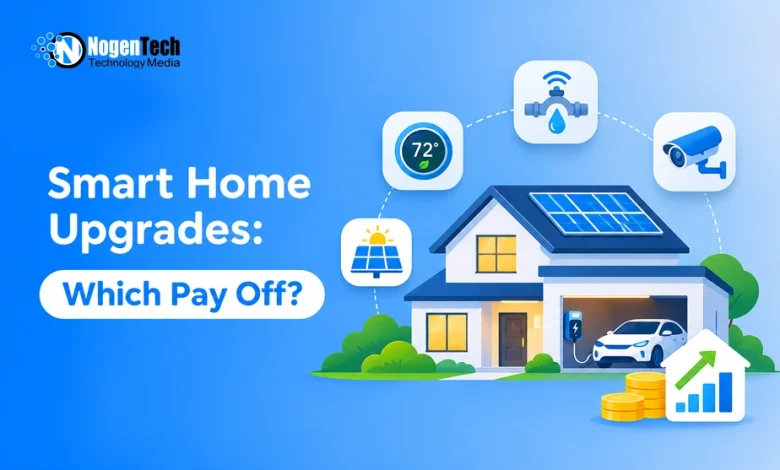
Solar panels, EV chargers, smart thermostats, automated water shutoff valves, and monitored security systems can deliver financial returns through energy savings, damage prevention, lower insurance costs, and potential increases in property value.

You walk into a modern house where the lights adjust to the time of day, and the refrigerator plays your favorite morning playlist. Is it an incredibly cool experience? Absolutely.
Does it add a single dollar to the property’s official appraisal value? Probably not. We often confuse lifestyle convenience with financial investment.
Upgrading your house with the latest wireless gadgets makes your daily routine smoother, but it rarely translates to a higher asking price when you decide to sell. The real estate market values the permanent, hardwired infrastructure of the property.
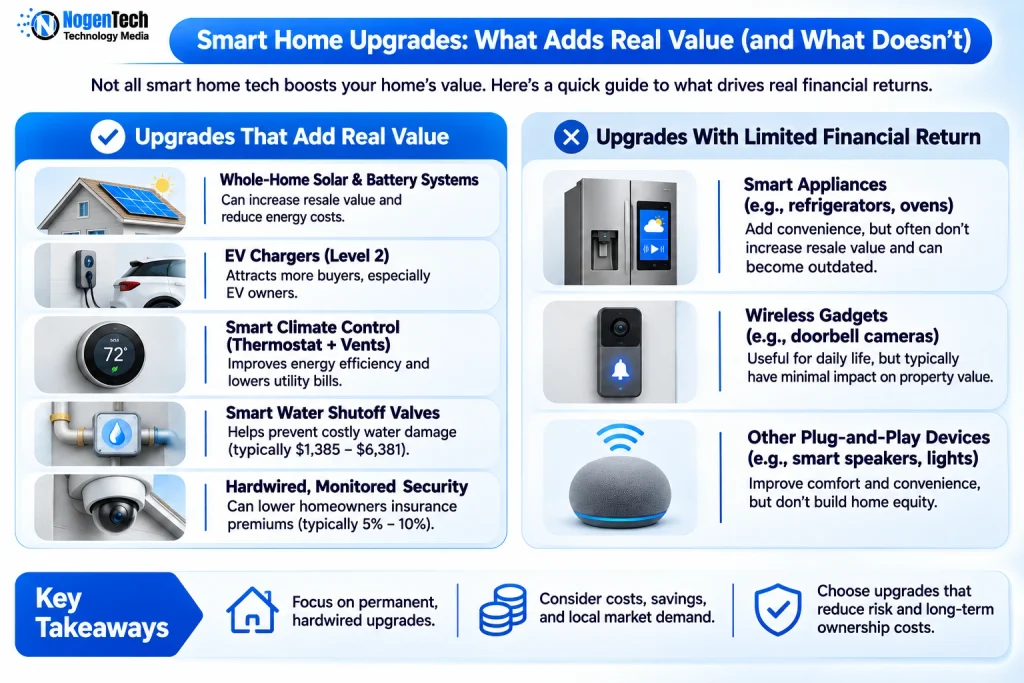
According to the U.S. Department of Energy, permanent upgrades such as owned solar panel systems can increase a home’s resale value, making them a potential long-term financial investment rather than just a lifestyle upgrade.
If you can unplug it and toss it in a moving box, it doesn’t build equity.
Funding and Installing Heavyweight Tech
Start creating Verdict in seconds, and convert more of your visitors into leads.
The upgrades that actually move the needle on your property value require hardwiring and professional installation. We’re talking about whole-home solar ecosystems, Level 2 electric vehicle chargers, and heavy-duty battery backups.
These aren’t weekend DIY projects. They become fundamental parts of the house itself. When prospective buyers tour a property, a fully integrated solar and battery system can signal long-term monthly savings. Buyers may be willing to pay a premium for a house that generates its own energy.
However, the resale value depends on local electricity rates, market demand, and system ownership. Owned solar systems generally offer better resale prospects, while leased systems can complicate property sales.
EV Chargers and Property Value
EV chargers are gradually shifting from a luxury perk to an expected utility. Installing a dedicated 240-volt circuit and a charging station in your garage can attract a growing demographic of electric vehicle owners.
They see the charger and mentally check off a massive logistical headache they won’t have to deal with after moving in. However, the potential resale premium depends on local EV adoption and buyer demand.
Financing Permanent Smart Home Upgrades
These permanent installations require significant upfront capital. You might be looking at tens of thousands of dollars to properly outfit a roof with high-efficiency panels and a basement with battery walls. Most homeowners prefer not to liquidate their emergency funds for this kind of project.
This is where the house can actually pay for its own upgrades. Checking a home equity loan rate shows how much you can borrow against your property to fund these permanent installations.
Borrowing Costs and Financial Risks
Utilizing a loan based on your accumulated equity provides a structured way to pay for heavy infrastructure while keeping your cash reserves intact. However, interest rates, closing costs, and potential origination fees can reduce the financial benefits of monthly energy savings.
Solar payback periods can range from 7 to 12 years or longer, depending on installation costs and local electricity rates. Since your home serves as collateral, failing to repay the loan can also put your property at risk.
Fast Payback on Climate and Water
Start creating Verdict in seconds, and convert more of your visitors into leads.
Some technologies won’t drastically alter your final selling price but offer an incredibly fast return on investment through monthly savings. Smart thermostats have been around for years, but the real financial payoff comes from localized climate automation. A central thermostat can only do so much if it’s pushing air into empty rooms.
Smart Climate Control and Energy Savings
Pairing a smart thermostat with compatible automated, motorized air vents can create distinct temperature zones throughout your floor plan. This helps reduce unnecessary heating and cooling in unoccupied rooms based on motion sensors or a pre-set schedule.
However, closing too many vents in a standard single-stage HVAC system can increase static duct pressure, strain blower motors, freeze evaporator coils, and damage other components. Safe zoning may require a compatible variable-speed HVAC system or a properly designed pressure-management solution. Consult an HVAC professional before installing motorized vents to ensure potential energy savings are not outweighed by repair costs.
Smart Water Shutoff Valves and Damage Prevention
Water is the silent destroyer of real estate wealth. A minor leak under the kitchen sink can warp custom hardwood floors and breed mold inside the drywall before you even notice it. Smart water shutoff valves represent one of the most financially responsible upgrades you can install.
These devices splice directly into your main water line to monitor the flow rate constantly. If a pipe bursts while you’re at work, the system detects the abnormal water volume and automatically physically closes the valve.
You might come home to a small puddle instead of a completely flooded basement. Considering water damage restoration often ranges between $1,385 and $6,381, a smart valve can easily pay for itself the very first time it triggers on a major leak.
Lowering Your Insurance Premiums
Start creating Verdict in seconds, and convert more of your visitors into leads.
A wireless doorbell camera is a great way to see when your packages arrive. It doesn’t do much for your finances. The financial return on home security comes from hardwired, centrally monitored ecosystems. Insurance companies rely heavily on risk mitigation.
They understand that a property equipped with integrated environmental sensors, motion detectors, and monitored alarms is statistically less likely to file a massive claim.
Providers typically reward this reduced risk by dropping your annual homeowners insurance premium. You need to look beyond standard burglar alarms. The systems that secure the best discounts include integrated smoke detectors, carbon monoxide monitors, and freeze sensors that alert a dispatch center the second something goes wrong.
How much of a discount can you expect? It depends on your provider and the specific hardware, but most major insurers offer a 5% to 10% discount for professionally monitored setups.
The initial purchase and installation cost of a commercial-grade residential security system is steep. However, locking in a lower insurance rate year after year creates a steady, predictable financial return. It turns a grudge purchase into a smart operational hedge.
Why Smart Appliances Don't Build Equity
Start creating Verdict in seconds, and convert more of your visitors into leads.
Consumer gadgets actively lose value the second you take them out of the box. Why do we keep buying appliances with touchscreens embedded in them? A smart refrigerator looks incredibly futuristic on the showroom floor. You can look up recipes, leave digital notes for your family, and see inside the door from your phone.
Technology ages in dog years while real estate ages in decades.
Eventually, the software on that refrigerator door will be outdated and unsupported. The screen will look like an ancient tablet permanently glued to your kitchen appliance. Future buyers won’t pay a premium for an aging smart oven. They might actually ask for a financial credit to replace it because they don’t want to deal with a laggy interface just to bake a pizza.
You’re always better off keeping your technology modular. Buy high-quality, reliable standard appliances. If you want automation, use inexpensive smart plugs or localized sensors. When the technology becomes obsolete, you just throw away a twenty-dollar plug instead of replacing a three-thousand-dollar appliance.
Let the house do the heavy lifting for your net worth. You can always buy a fancy wireless speaker later.