OpenAI’s Data Center Chief Is Gone, Making Him the 14th Executive Out the Door This Year
Chris Malone, the executive who ran OpenAI's data center buildout, left the company last week, adding another senior name to a departure list that now stretches well into the double digits ahead of the company's planned 2027 IPO.

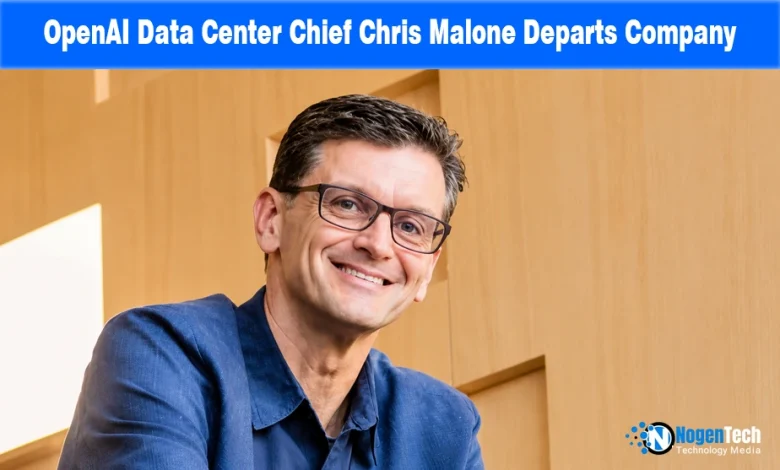
Chris Malone, who spent roughly 17 months as OpenAI’s head of data centers, left the company last week, according to The Wall Street Journal.
Malone joined OpenAI in March 2025, not long after the company announced its $500 billion Stargate initiative built alongside Oracle, SoftBank, Nvidia, and Microsoft, which later faced operational friction.
His departure comes at a sensitive time as OpenAI races to secure computing capacity while preparing for an IPO, adding to a growing list of senior leaders who have left in 2026.
Chris Malone’s Exit Follows a Quiet Reorganization
Before Malone left, OpenAI had already restructured its infrastructure organization, moving his reporting line from President Greg Brockman to Vice President Sachin Katti, who now leads the broader group.
Malone brought nearly five years of data center strategy experience from Meta and more than a decade of infrastructure work at Google, making his departure notable as competing AI labs face growing scrutiny over execution capacity.
As TechCrunch reports, his responsibilities have since been split among several executives.
Uday Ruddarraju now serves as chief technology officer of computing capacity, Brent Mayo leads data center build and delivery, and Spas Lazarov oversees data center engineering.
According to CNBC, OpenAI said it reorganized the infrastructure team “to support the scale and pace of our work,” adding that it retains “clear leadership and the technical expertise to execute” its plans.
A Pattern That Stretches Across Nearly Every Division
Malone’s exit isn’t isolated. Business Insider recently counted 13 executive departures at OpenAI in 2026, several in the past month.
Two weeks before Malone left, OpenAI replaced Chief Revenue Officer Denise Dresser after eight months.
Days earlier, longtime Chief Operating Officer Brad Lightcap announced his departure to start something new, news that arrived during ChatGPT Linux expansion.
About a month earlier, Fidji Simo, OpenAI’s de facto second in command under CEO Sam Altman, stepped down to manage a chronic illness but remains an advisor.
The churn has also affected safety. OpenAI lost its head of ethics, Chloé Bakalar, in July and reportedly disbanded its preparedness team, which assessed catastrophic AI risks.
Meanwhile, data center politics have grown tense, with the National Republican Senatorial Committee recently calling data center backlash a “sleeper issue” ahead of the midterms.
Why the Timing Makes This Departure Different
What separates Malone’s exit from the others is its timing.
OpenAI has raised projected compute spending through 2030 to roughly $750 billion, up from $600 billion weeks earlier, and recently signed an Ohio data center lease partly backed by an Nvidia financial guarantee.
That puts its infrastructure team under greater scrutiny as its longtime leader leaves.
Brockman has pushed back on reading too much into the departures, arguing that the intense “spotlight” means “every departure gets scrutinized in a way that it doesn’t otherwise,” TechCrunch notes.
That’s fair in isolation, but the pattern is harder to ignore when departures involve finance, safety, and infrastructure, three functions investors will closely examine in an IPO.
With OpenAI’s CFO saying a public listing could come as early as 2027, losing the person who built its data center strategy could raise pointed questions from prospective investors.