
Nvidia’s Board Probe of Huang Starts Before Earnings and a House Briefing
The inquiry will examine what technology, if any, reached China, while Yale's Jeffrey Sonnenfeld puts Huang's odds of staying as CEO at "about a 50-50."

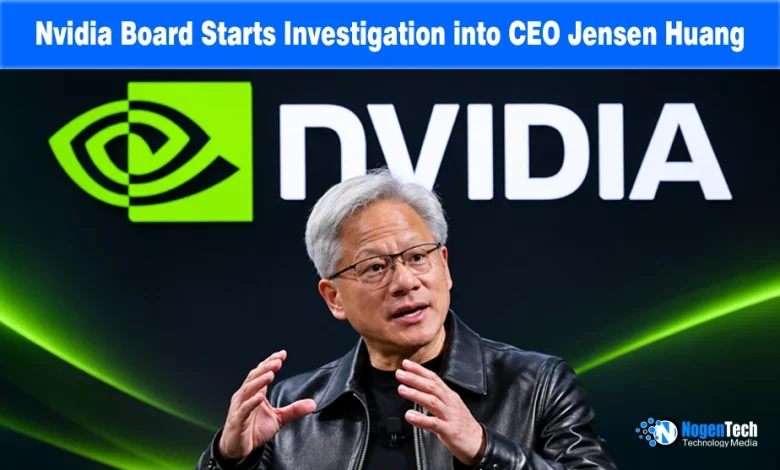
Nvidia’s board said on Sunday, November 8, that its independent directors will investigate reports that CEO Jensen Huang was the target of a foreign intelligence effort.
A draft staff email, reported by Axios, has Huang acknowledging a romantic relationship with a person U.S. officials reportedly suspect of spying for China.
No one has been charged, and the Chinese Embassy has reportedly dismissed the allegations.
The board says it has no reason to believe national security or company secrets were compromised.
What is confirmed is the investigation and Huang’s own admission, as the espionage claims remain unproven, though Nvidia’s shares fell about 3% following the report.
Nvidia’s Independent Directors Must Trace What, If Anything, Reached China
The review is run by the board’s independent directors, which means everyone except Huang, with outside counsel, Reuters reports.
They must determine what technology, if any, reached China and by what routes, including Nvidia’s relationship with Megaspeed, a Singapore cloud company that grew out of a Chinese gaming business and became Nvidia’s largest buyer in Southeast Asia, TechCrunch says.
The individual at the center of the reports is identified by TechCrunch as former Megaspeed executive Alice Huang, who is alleged to have spied for China.
In October 2025, Megaspeed bought roughly $2 billion of chips, raising export-circumvention questions, and Nvidia reportedly said it had investigated and rejected those claims last year.
The scrutiny also comes against a broader backdrop of Nvidia tightening controls over how its hardware reaches Chinese customers, including reported restrictions on cloud partners serving that market.
TechCrunch adds that unnamed senior officials doubt Huang could have been unaware, though officials initially did not think he knew. Whether that view has changed is unclear.
Yale’s Sonnenfeld Rates Huang’s Job a Coin Flip, and His Reasons Are Structural
Sonnenfeld, who has hosted Huang at CEO summits, told TechCrunch the odds of Huang staying are “about a 50-50.”
Executives who survive personal scandals usually resurface elsewhere, he noted, citing Mark Hurd’s move from HP to Oracle in 2010, but Nvidia is Huang’s own company, so no such exit exists.
As the report details, Huang runs a flat organization with about 60 direct reports by his own account, leaving no obvious internal successor, and he lacks super-voting stock that would shield him from removal.
The money is tied to him too. Nvidia has invested in OpenAI, Anthropic, xAI, CoreWeave, and Nebius. Its involvement extends beyond chip supply, with Nvidia also backing the infrastructure OpenAI needs to meet its expanding computing requirements.
Also, in August, it signed preliminary agreements with six investment firms to mobilize over $500 billion, with Huang saying Nvidia could backstop up to a quarter.
Its involvement extends beyond chip supply, with Nvidia also backing the infrastructure needed to support OpenAI’s expanding computing requirements.
By our arithmetic, that is up to $125 billion. Sonnenfeld expects Huang might hand off some day-to-day decisions even if he keeps the title.
Earnings on November 17 and a Congressional Request the Next Day Test the Company’s Account
Nvidia says Huang supports the review and is reportedly committed to continuing to lead NVIDIA as CEO without interruption.
Two dates will test that. Nvidia reports quarterly earnings on November 17, and three House committee chairmen want a closed-door briefing from Huang the day after, TechCrunch adds.
Nothing in the reports says whether he will attend, how long the review will take, whether its findings will be made public, or who the outside counsel is.
The board’s own statement says it sees no sign of compromise, and the investigation is meant to check whether the facts bear that out.