
How to Start the Process of Recovering Crypto Stolen by Scammers
To start recovering stolen crypto, secure your accounts, save transaction evidence, report the scam to authorities, and explore possible legal recovery options.

If scammers steal your cryptocurrency, secure your accounts, save transaction records, report the fraud, and explore legal options. Most blockchain transactions cannot be reversed, but investigators may be able to trace stolen funds and, in some cases, help recover them.
For crypto investors in St. Louis, quick action matters. Scammers can move funds across several wallets, use fake investment websites, or hide behind false identities.
If you want to know how to recover stolen crypto, start with the steps below. No person or service can promise an instant refund.
What to Do Immediately After a Crypto Scam
Your first priority is to protect any money and accounts the scammers have not accessed. Then collect the evidence you may need for a fraud report or legal review.
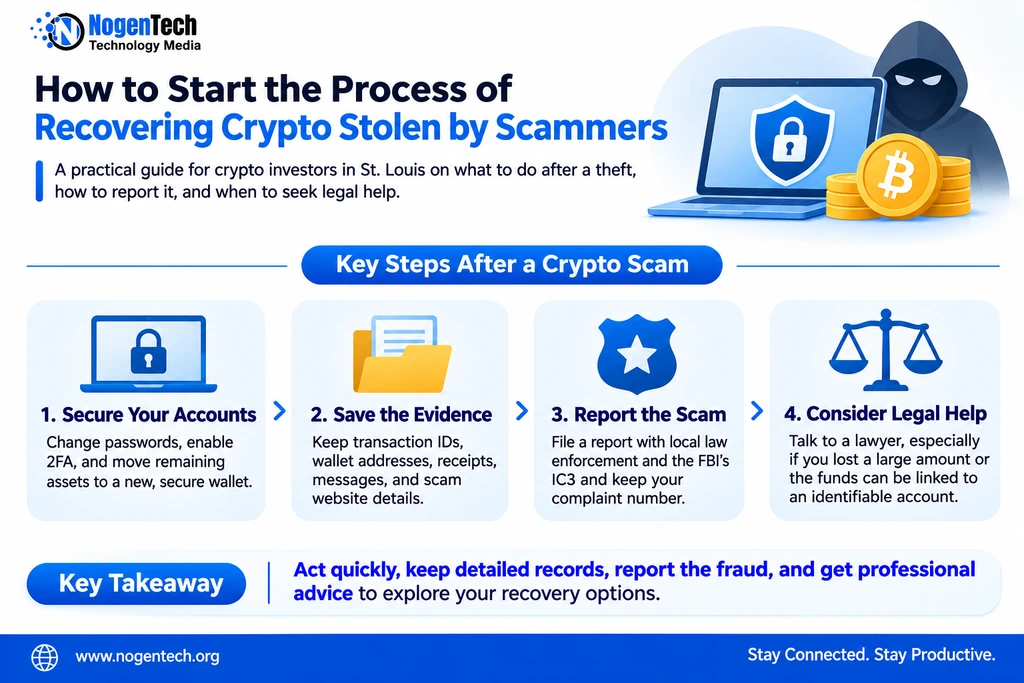
Secure Your Accounts Before You Lose More
Start with your email, bank, and crypto exchange accounts. Change passwords from a trusted device, enable two-factor authentication, and check for unknown logins.
If someone has access to your wallet’s private key or recovery phrase, create a new secure crypto wallet on a trusted device. Transfer any assets that remain, but first make sure the device is free from malware.
Check wallet permissions and revoke access granted to suspicious apps. Never share your private key, recovery phrase, password, or verification code with anyone who offers to recover your crypto.
Save the Transaction Details That Could Help Your Case
Crypto transactions leave records on a public blockchain. These records can help investigators follow stolen funds, even if the scammer’s identity is unknown. Save:
- Transaction IDs and wallet addresses
- Crypto amounts and transfer dates
- Exchange receipts and account statements
- Emails, text messages, and phone numbers
- Scam website links and screenshots
- Any requests for more payments
Write down how the scam started, what the person promised, and when you sent the money. The FBI advises victims to include transaction details and communications in fraud reports.
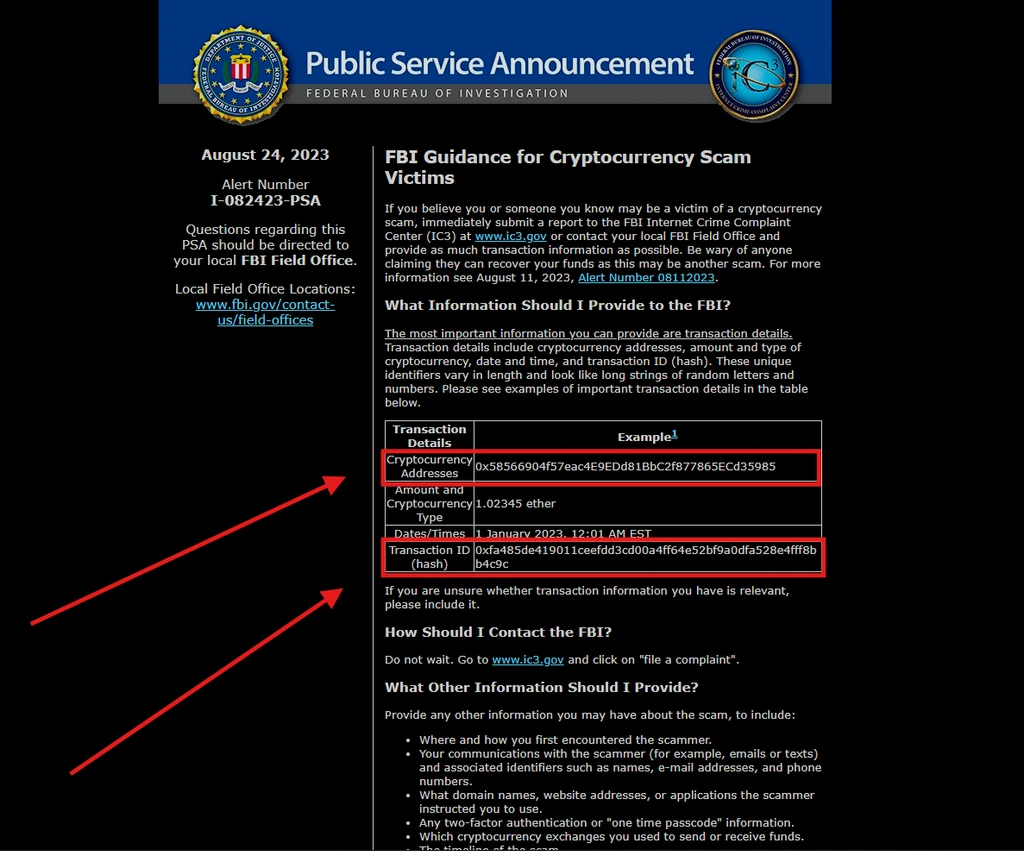
Keep the original files. A transaction ID may show where funds went, but it cannot reveal who owns a wallet or return the money on its own.
Can You Stop or Recover Stolen Crypto?
A completed crypto transaction is usually final. However, an exchange or law enforcement agency may be able to act if the funds reach an identifiable account.
Can the Crypto Exchange Stop the Transfer?
An exchange may be able to help if stolen funds reach an account under its control.
Contact its official support team. Share the transaction ID, wallet address, amount, and evidence. Ask for a case number and keep a copy of the response.
The exchange may review the account, preserve records, or restrict access to funds if its policies and the law permit.
However, an exchange cannot simply reverse a completed blockchain transaction. Its ability to act depends on where the funds are and whether they remain within its control.
Report the Scam as Soon as Possible
If you live in St. Louis, report the theft to local law enforcement and the FBI’s Internet Crime Complaint Center (IC3).
Include the transaction records, scammer’s contact details, website addresses, and a clear account of what happened.
The FBI uses these reports to identify related fraud cases and suspicious transactions. A report does not guarantee that you will get your money back, but it creates an official record.
Save your complaint number and share new evidence with the authorities if the scammer contacts you again.
Don't Fall for a Second Crypto Scam
People who lose cryptocurrency may receive offers from fake recovery agents. These offers can lead to more financial loss.
Watch Out for Fake Recovery Services
Some scammers target victims a second time. They claim to work for law enforcement, an exchange, a law firm, or a crypto recovery service.
They may promise to return your money after you pay a tax, verification charge, or release fee. The FBI warns about crypto recovery scams that demand more money from victims. Be cautious if someone:
- Contacts you without a request
- Guarantees full recovery
- Asks for crypto before releasing your funds
- Requests your private key or recovery phrase
- Pressures you to act immediately
A qualified professional may charge a fee for their services, but no legitimate professional can guarantee recovery. The same precautions used in crypto investing apply here: verify who you’re dealing with and never send funds based on promises alone.
Finally, When Should You Talk to a Lawyer?
A lawyer may help if you lost a large amount, the scam involves people in different countries, or investigators can link the funds to an identifiable account.
An attorney familiar with cryptocurrency fraud can review your evidence, explain possible claims, and assess whether subpoenas or legal requests may help.
Law enforcement may also seize stolen assets in certain cases. Victims may then have a chance to seek restitution through the proper process.
Still, tracing crypto does not mean you will recover it. The outcome depends on the available evidence, the location of the funds, and the law. A qualified attorney in St. Louis can review your case and explain which options make sense.