Apple Says 11 More Ex-Employees May Have Taken Confidential Data to OpenAI
Apple has widened its trade secrets lawsuit against OpenAI, telling a federal court this week that its internal investigation has now identified 11 additional former employees who may have witnessed or been directly involved in leaking confidential product information.

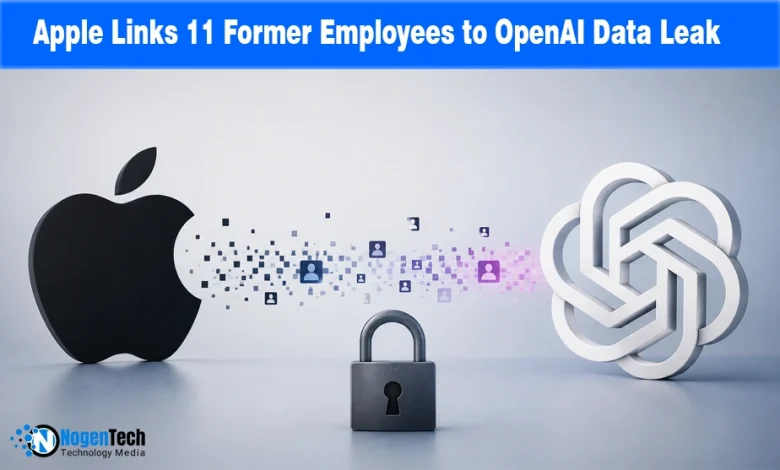
Apple‘s legal fight with OpenAI began in July with a lawsuit accusing two named former employees of funneling trade secrets toward Jony Ive’s io hardware startup, which OpenAI acquired for $6.5 billion.
This week’s filing suggests that initial complaint only captured part of the picture, with Apple now telling the court its investigation has turned up more former employees whose actions may need to be investigated.
New Names, New Allegations, and a Push for Faster Discovery
According to TechCrunch, Apple is seeking expedited discovery from Liu, Tan, OpenAI, its foundation, and io, arguing the court filing points to misconduct beyond the two employees named in the original lawsuit.
According to the filing, one former Apple employee met with Liu and OpenAI recruiter Yu-Ting Peng before Peng’s interview at the ChatGPT parent and discussed confidential information about unreleased Apple products.
Another employee allegedly took screenshots of confidential documents related to an unreleased product before their own interview.
Apple also told the court that several former employees now working at OpenAI contacted the company after the lawsuit was filed to return Apple work devices they had kept after leaving.
OpenAI Pushes Back, Calling the Filing Based on False Information
Engadget reported that OpenAI, already under scrutiny over AI safety, argued in a public blog post that Apple’s request for a preliminary injunction is based on false information and is completely unnecessary.
The AI lab said that it doesn’t have, nor want, any of Apple’s trade secrets.
The outlet noted that OpenAI published text messages showing Apple employees asking Liu where certain files were located after he left, arguing this reflects Apple’s poor access controls after employee departures rather than evidence of theft by Liu.
OpenAI has not yet responded to this week’s expanded filing or Apple’s request for expedited discovery.
An Unrelated iCloud Quirk Complicates the Broader Picture
Separate from the lawsuit, Apple Insider, citing The Information, reported that several former employees said confidential documents, including product launch plans, remained accessible through their personal iCloud accounts after their company access was removed.
This was partly because Apple encouraged staff to merge company-funded iCloud storage with their personal Apple IDs.
It also reported that Apple said the lawsuit is unrelated to documents stored in iCloud and that it does not sue former employees simply because confidential files remain in their personal accounts.
That distinction matters because Apple says more than 400 former employees now work at OpenAI, reflecting the company’s rapid hiring of outside talent, and making it harder to distinguish alleged trade secret theft from routine offboarding issues.
Source: Apple says more ex-employees may have taken confidential data to OpenAI