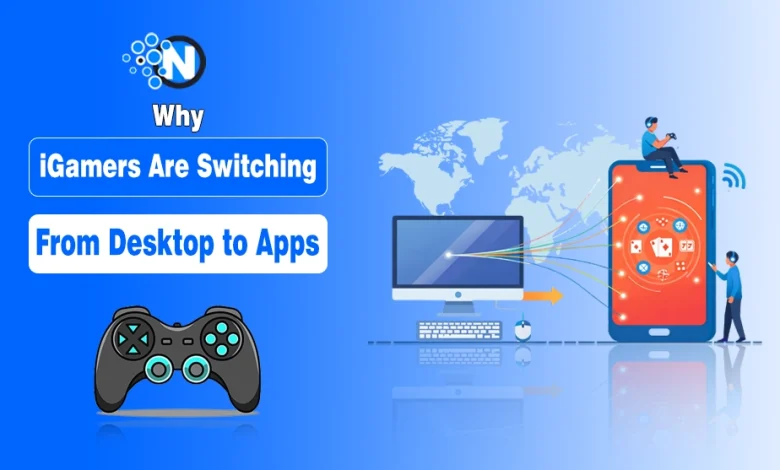
Online gaming no longer depends on sitting at a computer for every session. As the technology behind an iGaming platform brings games, payments, and player accounts together, mobile apps make it possible to access much of that experience from a smartphone. Improvements in mobile devices have also brought the experience closer to what was once expected only from desktops.
Still, switching from a familiar desktop setup can raise a few questions. Is it secure enough for gaming and payments? And does the convenience of a phone actually make it a better choice, or does a desktop still have the edge?
Stick around to the end, and you will get a clear overview of what is driving the shift toward mobile apps and why the change makes sense for many iGamers.
7 Reasons iGamers Are Switching to Mobile Apps
- Easy Access
- Phones Can Keep Up
- Apps Are Easier to Use
- Exclusive Features
- Solid Security
- Life Fits Better With Mobile
- Gameplay Feels Different
Let’s take a look at these reasons in more detail:

Easy Access
Convenience is one of the biggest reasons for the shift to mobile apps. A smartphone is easy to carry around, while desktop gaming requires staying in one place. A game can be opened during a break, while waiting for a bus, or while relaxing at home without needing a dedicated setup.
Desktop gaming usually requires a monitor, keyboard, mouse, and sometimes additional accessories. Mobile removes most of that setup, making it easier to fit both short and longer gaming sessions into the day.
Phones also make switching between activities simple. Messages can be checked between games, music can play in the background, or social media can be browsed without leaving the device.
Phones Can Keep Up
Desktop computers have traditionally had an advantage in processing power, memory, and graphics performance. Modern smartphones, however, have become powerful enough to run many iGaming titles smoothly.
Developers have also improved mobile optimization. Games can offer responsive touchscreen controls, detailed graphics, and quick loading when supported by the device and connection. Faster Wi-Fi and 5G networks have also made mobile gaming more practical away from a fixed desktop setup.
The result is an experience that can provide much of the convenience and functionality expected from desktop iGaming while adding the freedom to play from different locations.
Apps Are Easier to Use
User experience is another reason mobile apps appeal to iGamers. The best casino apps generally focus on straightforward navigation, clear menus, touch-friendly buttons, and quick access to games and account features.
The difference becomes clearer when comparing desktop browser games vs apps, as mobile apps are designed specifically around the device and its touchscreen controls.
Mobile interfaces are designed specifically for smaller screens, so important controls and information can be easier to reach without navigating a desktop-sized layout. Some apps also support one-handed navigation, depending on their design.
Once familiar with touch controls and streamlined navigation, a mobile app can feel more convenient for quick gaming sessions than opening a desktop platform.
Exclusive Features
Mobile apps can also provide features designed around smartphone capabilities. Push notifications, for example, can provide updates about promotions, bonuses, events, or account activity. Some operators may also offer app-specific promotions or rewards.
Biometric authentication can make signing in simpler on supported devices by using a fingerprint or facial recognition instead of entering a password each time. Digital wallets can also simplify supported deposits and withdrawals. Some apps provide personalized game recommendations or promotions based on account activity and preferences.
Solid Security
Security has also improved significantly on modern smartphones. Smartphones have strong security features such as device encryption, app sandboxing, biometric authentication, and controlled app stores.
Biometric locks add another layer of protection against unauthorized access, while reputable banking apps and digital wallets use security measures to protect transactions. Licensed casino apps can make use of these device-level protections as part of their own security systems.
However, mobile security still depends on factors such as the device, app, operator, account settings, and user practices. Using legitimate apps from trusted sources and keeping the device updated remain important.
Life Fits Better With Mobile
Daily routines do not always leave time for sitting at a desktop. Mobile apps make gaming more flexible by allowing sessions to fit around travel, breaks, commuting, or time spent relaxing at home.
Both short and longer sessions are possible without being tied to a desk. Features such as leaderboards and other social or competitive elements can also be accessed directly from a phone. This flexibility makes mobile particularly appealing when access throughout the day matters more than having a fixed gaming setup.
Gameplay Feels Different
Mobile games are designed around touchscreen interaction and smaller displays, which can make the experience feel different from desktop gaming. Controls are usually kept simple and accessible, while many games are designed to work well for both short and extended sessions.
Casino apps follow the same mobile-first approach. Reels, card games, menus, and other controls can be adapted for touchscreen use, helping gameplay feel responsive on a phone. Desktop versions still have advantages such as larger displays and more screen space, but mobile apps provide an experience designed specifically for playing on the go.
Desktops Still Matter, But Mobile Owns the Momentum
Yes, desktop gaming still exists, but it’s no longer the go-to. Many iGamers prefer mobile for flexibility, speed, design, and features. Phones are portable, fast, and built to fit a busy life; desktops, well, as we’ve seen, are fixed and often overcomplicated.
So, whether you’re a casual player or a competitive gamer, the question isn’t if you’ll try mobile apps; it’s when. And chances are, once you do, you’ll wonder why you didn’t make the switch sooner.