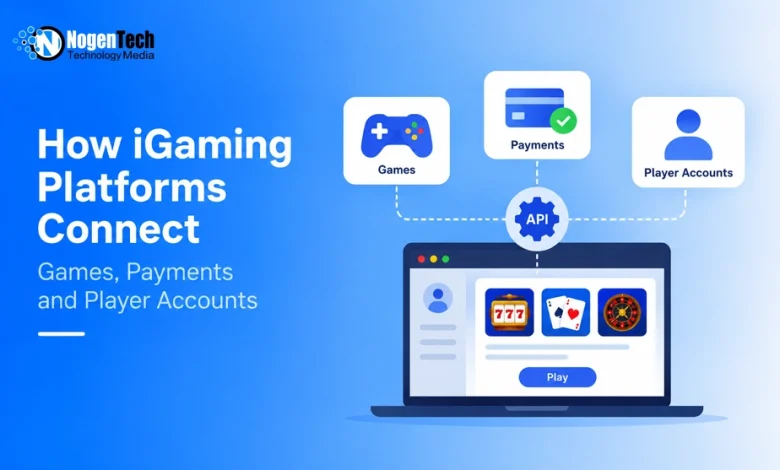
An iGaming platform connects games, payments, and player accounts so they can work within one environment. Games may come from external studios, payments can pass through separate providers, and deposits or gameplay transactions need to remain associated with the correct account.
These connections commonly use APIs to let separate software systems exchange information. For players, the result is simpler: they can fund an account, open different games, and see their activity through the same platform.
What Does an iGaming Platform Connect?
The main parts can be grouped into three areas:
- Games: Content supplied by game studios or aggregators.
- Payments: Services used to process deposits and withdrawals.
- Player accounts: Systems that maintain balances and transaction records.
Each has a separate function. The iGaming platform provides the environment in which information can move between them.
For example, processing a deposit is not enough on its own. The result also needs to reach the account system so the player’s balance reflects the transaction.
How Are Games Connected to the Platform?
Operators can source games from individual studios or through a game aggregator, which provides access to content from multiple providers.
The game still needs to communicate with the wider platform.
When a player launches a title, the platform associates the game session with the appropriate account. Relevant transactions can then be recorded against that player’s activity rather than existing separately inside each game.
This connection is what allows games from different providers to appear within the same player experience.
For operators using multiple game sources, an aggregation or platform layer can also provide a central point for managing those integrations.
How Do Player Accounts Connect Everything?
The player account provides a common reference for payments and gameplay.
According to the UK Gambling Commission’s guidance on remote gambling equipment, a customer account keeps track of the customer’s balance and transactions into and out of the account. The Commission also explains that balances can be amended following deposits, withdrawals, and gambling transactions.
This helps illustrate why the account sits at the center of the process.
A player can deposit funds and then open games from different providers without needing an independent balance for every game. Relevant activity continues to connect back to the account.
The same principle applies when the player returns later: the account provides the information needed to continue from the appropriate balance and transaction state.
How Do Payments Connect to Player Balances?
Payment processing is another separate part of the system.
When a player makes a deposit, the payment service processes the transaction. The platform then needs the transaction result before the corresponding account balance can be updated.
Withdrawals involve a similar exchange of information in the other direction.
A payment gateway can therefore handle the payment side while the player account maintains the balance and related account records.
This distinction matters because the payment provider and account system perform different jobs. The integration between them allows the result of a financial transaction to be reflected in the player’s account.
Operators may support several payment methods, but those methods can still feed into the same account environment. Modern platforms also incorporate AI in online transactions for iGaming to help manage real-time risk assessments and keep payment processing smooth.
Where Does the iGaming Platform Fit?
The platform provides a common layer between games, account systems, and other connected services.
Rather than treating every component as an isolated product, integrations allow information to pass between them when required.
For example, an operator may use infrastructure from this iGaming platform provider to connect game content and other platform components within a broader technical environment.
The individual services still retain their own roles. Game providers supply content, payment services process transactions, and the player account maintains account information.
The platform connects those functions so they can operate within the same user journey. Beyond core gameplay and transactions, integration extends to player retention tools such as bonuses and customer service in iGaming, allowing support and promotion engines to pull data directly from player accounts
What Happens During a Typical Player Session?
A simple session shows how the connections work.
A player signs in to an account and makes a deposit. The payment service processes it, and the result is passed back so the account can reflect the transaction.
The player then opens a game.
The game session is associated with that account, allowing relevant activity to be recorded against the correct player. If the player later opens another game from a different provider, the same account continues to provide the relevant balance and account state.
The basic flow looks like this:
Player account → Deposit → Balance update → Game session → Transaction record
The UK Gambling Commission’s technical standards also require applicable licensed operators to provide customers with access to current balances and previous account and gambling transactions. This shows how account and transaction information form part of the technical structure of regulated remote gambling systems.
Why Does the Connection Matter?
Games, payments, and player accounts can be supplied or managed by different systems, but users interact with them as parts of one service.
If a payment is completed, the account needs the result. When a game is opened, the session needs to correspond with the right player. Relevant transactions also need to remain connected to the account record.
That is why integration is a core function of an iGaming platform.
The objective is not simply to place multiple services on one website. The platform needs a way for those services to exchange the information required for the player’s account and activity to remain consistent.
The Bottom Line
An iGaming platform connects games, payments, and player accounts through a shared technical environment. Games provide the content, payment services process transactions, and the account keeps the player’s balance and activity connected.
APIs and platform integrations provide the communication between those separate components.