Apple Approves Poke as the First Standalone AI Agent on iMessage, Three Days Before WWDC
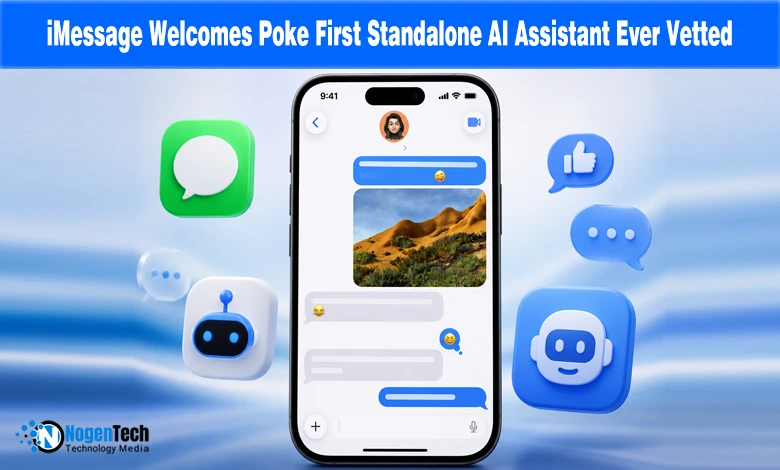
Apple granted The Interaction Company's Poke the first approval ever given to a standalone third-party AI agent on the Messages for Business platform, letting iPhone users access a personal AI directly through iMessage.

Most people will never open a terminal, install a framework, or configure an API key to run an AI agent. Poke is among the first AI agents built for everyday users who lack the technical skills or interest to use command-line tools or more complex agentic systems like OpenClaw, which is in broader industry use.
On June 4, 2026, it became the first standalone third-party AI agent approved for Apple’s Messages for Business platform, allowing iPhone users to chat with a personal AI through the existing Messages app without downloading anything.
The timing is pointed: WWDC 2026 begins in three days, and Poke arrived before the keynote, not after it.
What Poke Does and What Apple Actually Approved
Apple’s Messages for Business platform is not a consumer-facing app but a way for people to interact with businesses through iMessage for information, support, and appointment scheduling without making a phone call.
Before June 4, authorised participants were exactly what the name suggests: airlines, retailers, and hotel chains. A standalone AI agent with no fixed business category had never been approved.
Poke handles daily planning, calendar management, health and fitness tracking, smart home control, and photo editing through conversational text messages.
As AppleInsider confirmed, users create an account with a phone number or via Telegram, after which Poke becomes accessible directly through the Messages app with no additional installation.
How Apple Made Poke Earn the Approval
Getting onto Apple’s platform is not the same as getting onto the App Store. Apple required Poke to identify itself as an AI agent, support handoffs to live human operators when needed, and submit testimonies from its messaging infrastructure providers during the review process.
The startup also customised its interface to meet Apple’s guidelines, using link previews instead of inline links and adopting Apple’s style guide for buttons and other interface elements.
The per-user revenue model Apple has structured is notable in itself. Co-founder Marvin von Hagen told TechCrunch the arrangement shows Apple sees AI agents as a revenue opportunity, not just a regulatory challenge. Von Hagen said:
“I think that Apple is just noticing this is the best way to offer AI, and they charge us per user on the platform and actually make money with this, especially if it becomes really big.”
That commercial framing matters. Amid broader regulatory commission cuts, Apple’s approval of Poke is not a humanitarian gesture toward the developer ecosystem. It is a proof of concept for a new revenue stream inside iMessage.
What This Signals Ahead of WWDC
It is not clear whether Apple will announce anything related to AI agents on its Messages for Business platform at WWDC, and von Hagen said he is not aware of Apple’s plans.
What is clear is the direction. The upcoming iOS 27 update could give iOS users greater freedom to choose AI agents with integration and capabilities that rival Siri.
Poke’s approval is a small but precise signal that Apple is willing to admit vetted third-party agents into its messaging infrastructure before deciding how far that access will extend. Poke is likely the first of many AI agents to arrive through the Apple Messages app.
Whether Monday’s keynote formalises that path or leaves it as a channel startups navigate case by case remains one of the more interesting questions WWDC 2026 may answer.
Source: Apple’s Messages app on iPhone now has a third-party AI agent