How to Start a Career as a Remote Data Capturer: Skills, Tools, and Job Opportunities

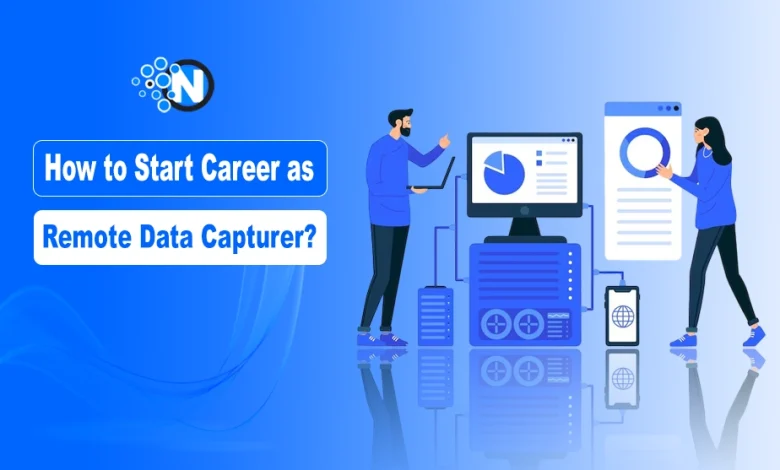
Whenever we think of large volumes of information, we immediately imagine this: offices, document folders, endless spreadsheets, and internal databases. Modern trends will force you to rethink this role.
More processes are being transferred to the digital environment, allowing tech companies to create more remote roles. Data capture is one position that has noticeably shifted online in recent years.
So, now, the big question is, how can you start your career as a remote data capturer? Or has this field progressed to provide you with enough job opportunities? In this guide, I am going to break down everything from career starting to skills and tools.
Why Businesses Need a Remote Data Capturer?
Businesses constantly need structure at every stage: catalogs, deliveries, logistics, and clients become the numbers in reports.
And remote roles are a simplified solution for both: you, as a potential employee, gain more freedom, and the business gains efficiency without unnecessary costs. And data management has become one of the most popular remote fields.
What Does a Remote Data Capturer Do?
Managers capture all sorts of databases: consultants and salespeople use them as a source of information, the marketing department uses them as a basis for analysis, and IT guys use them as a foundation for coding. Your job is to ensure the database works correctly for everyone. Here’s how:
- Data entry from various sources. You work with files, documents, and tables, integrating them into a single ecosystem.
- Updating databases and CRM systems. Up-to-date information leads to smooth operation. You can update customer and product cards, monitor supplier contact lists, and update seasonal information through CRM software.
- Checking and correcting records. Since you work with different sources, the information in them may be duplicated. Your job is to double-check and verify what’s needed.
- Document and form processing. Some areas involve different channels: for example, surveys or statistics.
A data capturer has several “colleagues” who perform similar work. For example, data entry clerks have more repetitive tasks and formats, while data annotation workers adjust data for Artificial Intelligence training.
Administrative assistants perform a broader range of tasks, but also work with databases. Data capture managers are in the highest demand in the US, especially in industries where people handle large volumes of data: e-commerce, healthcare, logistics, and marketing.
Skills You Need to Work as a Remote Data Capturer
This position is great for beginners because it doesn’t require specialized education. But that doesn’t mean you don’t need additional skills. We have highlighted the key skills that stand out on a resume.
1. Technical Skills
These directly impact your work and help you navigate tasks more quickly:
- Fast typing. The volumes of data are large, and you need to be able to react quickly.
- Working with spreadsheets. Most accounting is done in spreadsheets: you need to work with filters and extract the necessary information.
- CRM and databases. They simplify information retrieval and structure it, so you just need to understand the functionality.
2. Soft Skills
Even though you’re targeting remote positions, soft skills are still your greatest asset. Develop these skills:
- Attention to detail. Even a small mistake can cost the company time and money.
- Time management. Remote work offers more freedom but also greater responsibility. Plan your workday carefully.
- Ability to work independently. Most companies don’t fully control your processes, so you must guarantee the quality of your work.
3. Helpful Additional Skills
Really, you just need to be an attentive person with a background in data processing. If you understand automation and data analysis and are willing to learn how to work with them, you’ll quickly complete an internship and be able to prove yourself in business processes.
Where to Find Legitimate Remote Data Capturing Jobs?
Finding remote jobs is easy these days: most job search sites have a dedicated category and offer a wide range of similar offers. It’s important to use trusted platforms: they verify employers and guarantee a fair position.
Many companies post their openings on more than one job search website, so you can see the same offer on different platforms. To make the search easier and still get every vacancy, try job aggregator sites to pick the right option. Job seekers can explore remote data capturer jobs on Jooble: it’s an international platform with offerings collected in one place.
To find more openings faster, use additional filters: you can limit your search to remote-specific jobs or apply only to those with no experience. To ensure the position is valid, check the company’s official website and ensure the company doesn’t charge additional fees for training.
Tips to Get Hired Faster in Remote Data Jobs
It’s great that these types of roles make it possible to work remotely, even without experience. At the same time, they’re in high demand. How can you stand out from the crowd? These tips will help you get that first offer:
- Create a portfolio. Typically, this role doesn’t require one. However, a portfolio can visually showcase your skills in practice.
- Emphasize precision in your resume. Attention to detail is valued even more than speed here.
- Try online courses. These could be courses on Excel and Google Sheets or training in data management. New skills will boost your confidence and set you apart from other newcomers.
- Submit applications regularly. Highly competitive fields require time to find a job. Don’t give up if you can’t find a job in the first week: regular monitoring and feedback will increase your chances.
Your workflow consists of routine, repetitive tasks. It’s great that it doesn’t require stress tolerance or creativity – it does require perseverance. If you’re ready for this, your dream job will find you faster than you think.
Benefits of Working as a Remote Data Capturer
Obviously, the remote format makes the position very attractive: freedom, autonomy, and a flexible schedule are crucial in today’s world. This job is a perfect choice for people with no experience, since the market offers many entry-level opportunities. And there is nothing that can stop you: you can work remotely for any company in the world.
At the same time, this position is often a “corridor” one – once you gain the necessary experience and confidence, you’re ready to move on to more administrative roles. So, this job is not only newbie-friendly but also promising. Get started on your career in the digital economy today!
Final Thoughts
Transitioning into a career as a remote data capturer is one of the most accessible ways to enter the modern digital workforce. While the tasks are often routine, they form the backbone of successful business operations across global industries like healthcare and e-commerce.
When you master basic spreadsheet tools, maintain a high standard of precision, and utilize reputable job aggregators, you can secure a role that offers both professional autonomy and a clear path toward more advanced administrative positions.
If you value organization and are looking for a flexible, entry-level remote opportunity, now is the perfect time to start.