For businesses that depend on specialized talent from outside the United States, navigating the work visa petition process is a practical reality of workforce management.
This can be from any niche, whether you are a plumber, technician, or someone with digital marketing skills.
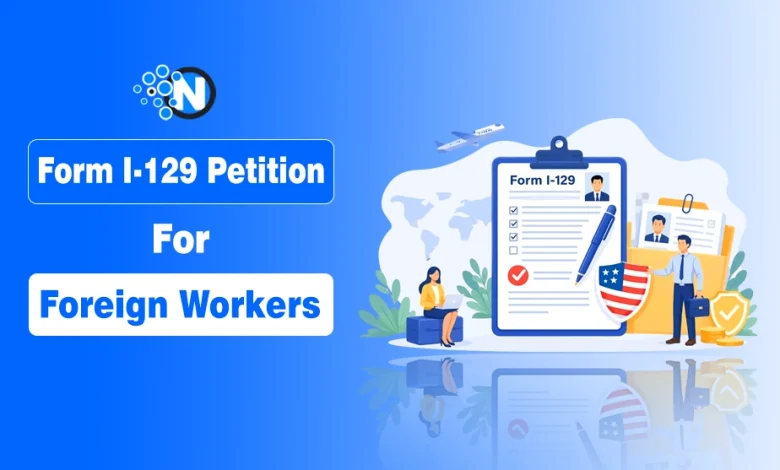
Filing an I-129 formally known as Form I-129, Petition for a Nonimmigrant Worker, is the mechanism through which employers request temporary work authorization for foreign nationals or extend and change the status of workers already in the country.
Understanding how the form works, what it requires, and where errors tend to occur helps organizations plan hiring timelines, manage compliance, and avoid costly delays.
What Form I-129 Does for Employers?
Form I-129 is the foundational filing that initiates work authorization across a range of employment-based nonimmigrant visa categories.
When an employer submits this form to U.S. Citizenship and Immigration Services, they are confirming three essential points:
- The company intends to employ a specific foreign national
- The worker meets the qualifications for the role
- Both parties will follow applicable immigration laws
Beyond first-time petitions, the form also supports extensions of stay, amendments to employment terms, and changes in visa classification.
This makes it a recurring part of workforce planning rather than a one-time administrative step. Employers who treat it as a structured process rather than a reactive task tend to experience fewer disruptions.
Which Visa Categories Require Form I-129?
Form I-129 applies to several widely used employment-based visa categories. Each comes with its own eligibility criteria and documentation standards:
- H-1B visas for speciality occupations requiring at least a bachelor’s degree (or equivalent), such as roles in data science and sales.
- L-1 visas for intracompany transferees moving between international offices
- O-1 visas for individuals with extraordinary ability in fields such as science, arts, or business
- TN visas for qualified Canadian and Mexican professionals under trade agreements
- E-1 and E-2 visas for treaty traders and investors
Choosing the correct category is not just a legal formality; it shapes documentation, processing time, and long-term workforce strategy.
Who Prepares and Signs the Petition?
In most cases, the employer acts as the petitioner and is responsible for completing and signing Form I-129.
If a foreign national owns a U.S. business entity, that entity may file the petition. For professionals working across multiple engagements, a U.S. agent can sometimes serve as the petitioner.
While the employer signs the form, preparation is often handled by an immigration attorney or accredited representative. These professionals file a separate Form G-28 to formally appear on behalf of the employer. This division of responsibility helps ensure accuracy while keeping legal accountability clear.
What Documentation Employers Need to Gather?
The quality of supporting documents directly affects processing outcomes. While requirements vary by visa type, employers typically need:
- Detailed job descriptions, including duties, salary, and location
- Proof of the candidate’s qualifications, such as degrees, certifications, and resumes
- Business documentation, including registration records and tax information
- A certified Labor Condition Application (LCA) for H-1B filings from the U.S. Department of Labor
- Evidence of the worker’s current immigration status, if already in the U.S.
Incomplete or inconsistent documentation is one of the most common triggers for Requests for Evidence (RFEs). These requests extend processing times and can disrupt onboarding schedules. Employers who utilize reliable entity management software to standardize their collection and review processes are better positioned to avoid these costly delays
These requests extend processing times and can disrupt onboarding schedules. Employers who standardize document collection and review processes are better positioned to avoid delays.
Costs and Processing Times
The cost of filing Form I-129 depends on multiple factors, including visa type, company size, and whether premium processing is selected. Fees can range from a few hundred to several thousand dollars.
To avoid rejection, employers should always confirm current costs through the USCIS fee schedule before submitting a petition. Even minor payment errors can result in returned applications and lost time.
Processing timelines vary by visa category and service center workload. Premium processing available for many petitions, offering expedited review within a fixed timeframe for an additional fee.
This option is particularly useful when hiring timelines are tied to project deadlines or client commitments.
What Happens After Filing?
Once a petition is submitted, USCIS issues Form I-797, Notice of Action, confirming receipt. Employers can track the case using the receipt number through the USCIS online system.
Possible outcomes include:
- Approval, allowing the employee to begin or continue work
- Request for Evidence (RFE), requiring additional documentation
- Denial, which may open options for appeal or refiling
If the worker is already in the United States, approval may allow a direct status change without international travel.
If the worker is abroad, they must complete visa processing at a U.S. embassy or consulate before entering the country.
Common Mistakes Employers Should Avoid
Even experienced organizations encounter avoidable issues with Form I-129 filings. Common pitfalls include:
- Submitting incomplete documentation
- Selecting the wrong visa category
- Misaligning job descriptions with visa requirements
- Missing filing deadlines or cap windows (especially for H-1B visas)
- Using outdated forms or incorrect fee amounts
Addressing these areas proactively reduces the likelihood of RFEs and denials.
The Business Case for Legal Guidance
For companies that regularly hire international talent, building a repeatable and compliant process around Form I-129 is essential.
Immigration regulations evolve, and small errors can have outsized consequences for hiring timelines and legal compliance.
Working with experienced immigration counsel helps employers:
- Prepare accurate, well-supported petitions
- Anticipate documentation requirements
- Respond effectively to RFEs
- Align immigration strategy with broader workforce planning
Rather than reacting to issues as they arise, businesses benefit from a structured approach that integrates immigration processes into overall operations.
Final Thoughts on Petitioning for Foreign Workers
Form I-129 sits at the center of the U.S. nonimmigrant employment system. For employers, it is both a legal requirement and a strategic tool for accessing global talent.
By understanding its purpose, preparing thorough documentation, and staying current with regulatory requirements, organizations can manage the process with greater predictability and confidence.
A well-executed petition process doesn’t just secure work authorization; it supports business continuity, strengthens workforce capabilities, and enables companies to compete in an increasingly global talent market.