If you’ve been in SEO long enough, you know one truth: Google never stops raising the bar. And in 2025, that bar has a name, EEAT, which was once EAT.
After 14 years of navigating algorithm storms, content rewrites, ranking crashes, and triumphant recoveries, I can confidently say that Google’s EEAT framework is the closest thing we have to a “master key” for visibility in modern search.
But here’s the twist most creators overlook: EEAT isn’t just an On-Page SEO checklist, but it’s Google’s way of figuring out who deserves to be heard. It’s how the search engine separates real expertise from guesswork, authentic experience from AI fluff, and trustworthy sources from digital noise.
And with AI Overviews now rewriting how users consume search results, EEAT has evolved from a recommendation into a requirement. In this guide, I’ll break down exactly what Google EEAT is, why it matters more than ever, and how content creators can build human and algorithm-driven content.
What is Google EEAT?
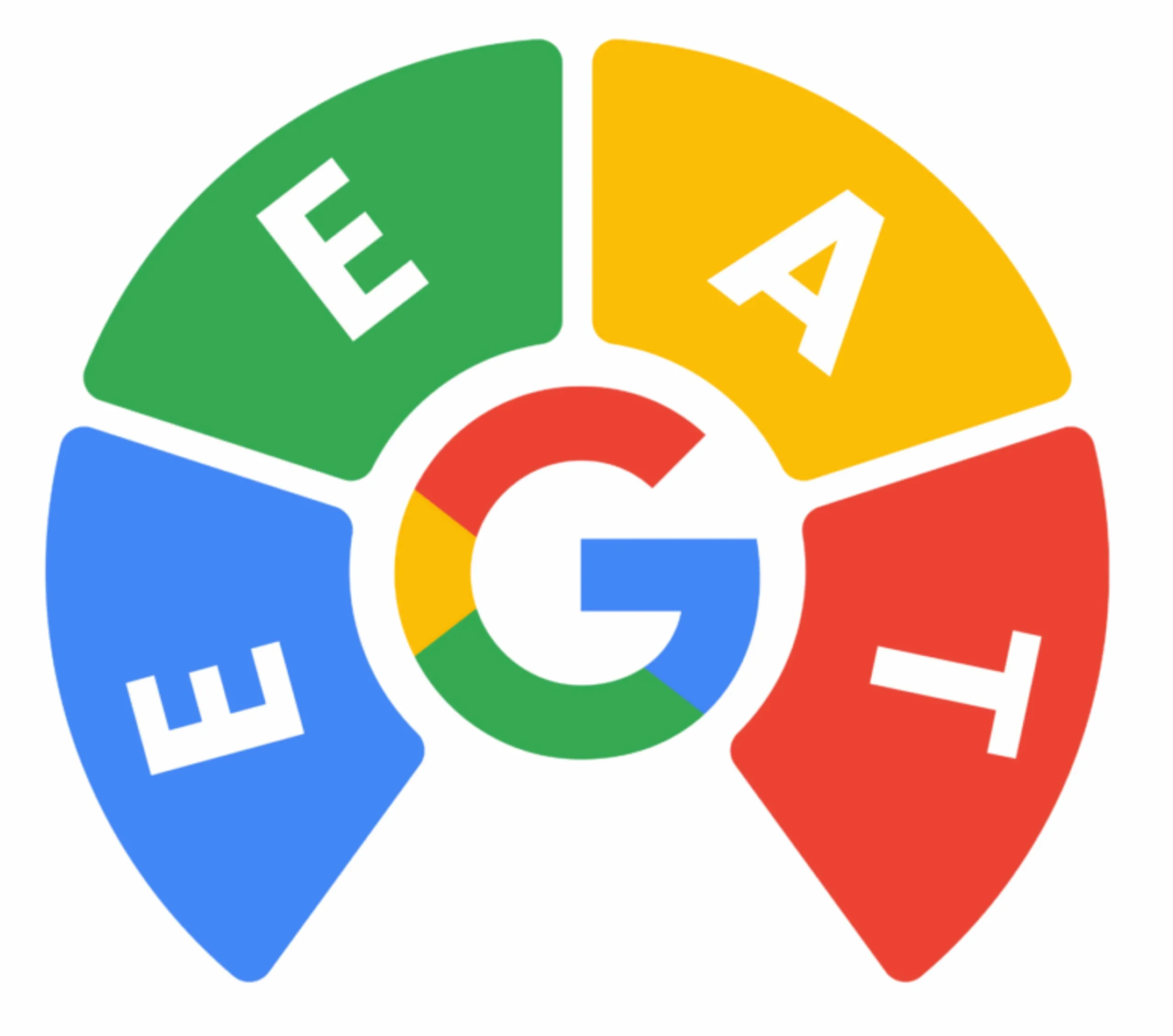
Google EEAT helps Google judge content quality by assessing Experience, Expertise, Authority, and Trust, which makes it key for ranking in modern search results.

“Content also needs to demonstrate that it was produced with some degree of experience, such as with actual use of a product, having actually visited a place, or communicating what a person experienced.”
This addition of “Experience”, turning the previous E‑A‑T into E‑E‑A‑T, signals that Google wants more than just textbook‑style or copy‑paste content; it wants content grounded in real life. Below is what each pillar means, how Google and the quality guidelines describe them, and concrete examples to help you see how they work in real content.
1. Experience
The new “E” for Experience looks at whether content shows that the author has actual, real-world involvement with the topic, like using a product, visiting a place, or describing real events/experiences.
Not all content needs academic or formal expertise. For many topics, e.g., product reviews, travel stories, tutorials, what users want is real insight from someone who’s been there. And that kind of content is harder to fabricate or replicate artificially.
Real-world Examples:
- A smartphone review where the reviewer shares photos, battery performance over days of use, and honest feedback (pros and cons) after actually using the device.
- A travel blog about visiting a country, which contains real photos, itinerary details, local experiences, and honest reflections from the trip.
- A “how I fixed this problem” guide (say, plumbing, DIY, or tech) based on what you did, including mistakes, adjustments, and what ultimately worked.
Such content demonstrates real, lived experience, which Google now values explicitly.
2. Expertise
Expertise refers to the author’s subject‑matter knowledge, which may come from formal credentials (education, certifications, professional background) or deep practical familiarity.
Especially important for sensitive or complex topics such as health, legal advice, finance, and technical tutorials, where accuracy and reliability can directly affect readers’ decisions and well‑being.
What good expertise looks like:
- Well‑researched content with accurate facts, use of correct terminology, and thoughtful explanations.
- Clear author bios showing qualifications or relevant background when applicable.
- Citing reputable sources or linking to authoritative information.
Example:
- An article about diabetes management written by a certified nutritionist or medical professional while discussing medical studies, treatment options, and safety guidelines.
- A legal advice post by a practicing lawyer, with clear caveats and an accurate understanding of laws.
- A detailed technical guide on software, coding, or hardware, written by someone with hands‑on experience and knowledge.
Expertise builds confidence in readers and communicates to Google that the writer knows what they’re talking about.
3. Authoritativeness
Authoritativeness is about your brand reputation in your niche. It shows whether people in your industry recognize you or your website as a trusted source.
In a crowded web, content that repeatedly proves itself reliable and valuable, across multiple articles, topics, or over time, becomes more trusted by both readers and other websites. That reputation makes a difference.
Signals of strong authoritativeness:
- Being referenced or linked to by reputable websites, blogs, publications, or institutions.
- Having an established brand or presence in the niche (e.g., repeated quality content, community recognition, expert contributors).
- Earning positive testimonials, guest posts, media mentions, or endorsements.
Examples:
- A climate‑change article written by researchers at a recognized environmental institute or referenced by major science publications.
- A financial advice blog that’s frequently cited by other trusted finance sites or news outlets.
- A long-standing cooking site known in its niche for thorough, high‑quality recipes that other sites link to.
Over time, authoritativeness becomes a kind of “brand trust,” and Google uses it to gauge whether content and the site are likely to be reliable.
4. Trustworthiness
Trust is the foundation of EEAT. Even if you have experience and authority, users won’t trust your content if it feels misleading or unclear.
“Trust is the most important member of the E‑E‑A‑T family because untrustworthy pages have low E‑E‑A‑T, no matter how Experienced, Expert, or Authoritative they may seem.”
Even if a writer has great expertise or strong real-world experience, those qualities don’t matter unless the content feels honest, safe, and reliable. Trust is the linchpin that determines whether the rest counts.
Things that build trust:
- Transparent and accurate information.
- Clear author attribution, name, credentials, and background (especially for technical or YMYL topics).
- Proper sourcing/citations or referencing official/reputable sources.
- Honest coverage balanced pros and cons (e.g., in reviews), acknowledging limitations, not making unrealistic claims.
- Transparency about affiliate links, sponsorships, or conflicts of interest when applicable.
- Secure and user‑friendly website design (e.g., HTTPS, clear contact info, privacy policy when needed).
What undermines trust:
- Anonymous or unclear authorship.
- Content filled with hype, unrealistic promises, or biased claims.
- No citations or evidence, especially for complex or sensitive claims.
- Outdated information, broken links, lack of transparency.
- Hidden commercial motivations, undisclosed sponsorships, or affiliate ties.
Why EEAT Matters for SEO in 2026
Google’s algorithms are smarter than ever at understanding content quality, credibility, and trustworthiness.
While traditional SEO still values keywords, backlinks, and technical optimizations, Google now prioritizes content that demonstrates Experience, Expertise, Authoritativeness, and Trustworthiness (EEAT), especially for topics that impact readers’ money, health, or safety.
1. EEAT Influences How Google Assesses Content Quality
Google uses EEAT as part of its Quality Rater Guidelines, which help human evaluators rate pages. While Google clarifies that EEAT is not a direct ranking factor, these assessments train the search algorithms to prefer content that meets EEAT standards.
Example:
A finance website providing investment advice with outdated or poorly sourced content may see lower rankings compared to a competitor with updated, accurate, and transparent information from certified experts.
2. Helps Websites Stand Out in a Crowded Search Space
There’s a massive increase in AI-generated content and generic articles. EEAT allows your site to stand out by showing human expertise and authentic experience.
Example:
A travel blog that shares personal trip experiences with photos, itinerary details, and local tips will rank higher than AI-generated content that just copies basic tourist information.
3. Essential for YMYL Topics
YMYL (Your Money; Your Life) content includes health, finance, legal, and safety information. Google explicitly states that EEAT is critical for these topics because misinformation can harm users.
Example:
A medical article written by a certified doctor with citations from reputable studies will outrank a blog post written by someone without credentials, even if the latter has more keywords or links.
4. Builds Long-Term Credibility and Rankings
EEAT isn’t just about immediate rankings because it builds trust with users and search engines over time. Websites that consistently publish accurate, helpful, and transparent content become recognized as authorities, which makes it easier to maintain rankings despite algorithm updates.
Example:
A tech review site that tests products, provides honest reviews, cites reliable sources, and displays author credentials gains authority in its niche. Even after major Google updates, the site continues to rank highly.
5. Helps Combat AI-Generated or Low-Quality Content
With AI tools producing large volumes of content, Google relies on EEAT to differentiate high-quality human-guided content from generic AI text. Experience, first-hand knowledge, and author credibility are hard to fake, making EEAT more important than ever.
If you focus solely on keywords or backlinks, that isn’t enough. EEAT ensures your content is credible, helpful, and trusted, which aligns with Google’s goal of delivering value to users. Websites that embrace EEAT principles are more likely to rank higher, earn user trust, and withstand future algorithm updates.
How Google Assesses EEAT (Based on Search Quality Rater Guidelines)
Google doesn’t rely on humans to rank every single page. Instead, it uses algorithms that are trained with the help of human quality raters.
These raters follow the Search Quality Rater Guidelines, which heavily emphasize EEAT (Experience, Expertise, Authoritativeness, Trustworthiness), especially for sensitive topics. Here’s how Google evaluates EEAT in practice:
1. Purpose of the Page
Every piece of content has a primary purpose. Google raters check if the content achieves that purpose effectively.
Key questions raters ask:
- Is the content informative, entertaining, or transactional?
- Does it meet the expectations of the user query?
- Is it biased or misleading?
Example:
- A blog post titled “Best Smart Home Technology Gadgets 2025” should clearly help users compare gadgets, not just promote one brand with fake claims.
- A financial advice page should aim to educate readers with factual, actionable information and not mislead them for clicks.
2. Quality of the Content
Google looks at accuracy, depth, and usefulness. Content that is thin, generic, or copied fails EEAT. And Google treats it like an orphan page with no particular measure or effect.
What quality content includes:
- Comprehensive coverage of the topic
- Accurate facts and statistics
- First-hand experience or practical examples
- Proper citations from reputable sources
Example:
- A health article explaining ways to reduce cholesterol should include data from studies, advice from certified doctors, and actionable tips, rather than vague statements like “Eat healthy foods.”
3. Author Information and Credentials
Raters check whether the author is qualified to write on the topic.

“High EEAT content often includes clear information about the author and their expertise, such as professional experience, credentials, or real-life experience with the topic.”
Example:
- A medical article authored by a licensed doctor or a nutritionist scores higher than one written anonymously.
- A product review blog post benefits from a bio showing the reviewer actually tested the product.
4. Website or Brand Authority
Google also evaluates the site as a whole, not just a single page.
Signals of authority include:
- Mentions or links from reputable websites
- Positive reviews or testimonials
- Established presence in the niche over time
Example:
- A travel website linked by Lonely Planet or National Geographic will be seen as authoritative.
- A tech blog that has consistently accurate reviews for years builds credibility with readers and Google alike.
5. Trustworthiness
Trust is central to EEAT. Even a highly experienced or expert author can lose credibility if the content is misleading, outdated, or unsafe.
Google rater checklist for trustworthiness includes:
- Transparency about who wrote the content
- Clear contact info and privacy policies
- Honest, balanced content with cited sources
- Security (HTTPS) and absence of spam or malware
Example:
- A financial advice site that discloses affiliate links, cites official reports, and regularly updates content is trusted.
- A site giving health tips without citing sources or listing an author is seen as low trust.
6. Assessing YMYL (Your Money or Your Life) Content
YMYL pages, like those about health, finance, or legal advice, get extra scrutiny. Google raters check whether errors or misleading information could harm readers, which makes EEAT even more critical.
Example:
- A blog about investing must show expert authorship, citations, and real-life examples.
- A medical page about vaccines must be backed by doctors and official studies to maintain trustworthiness.
How EEAT Applies to Different Types of Content
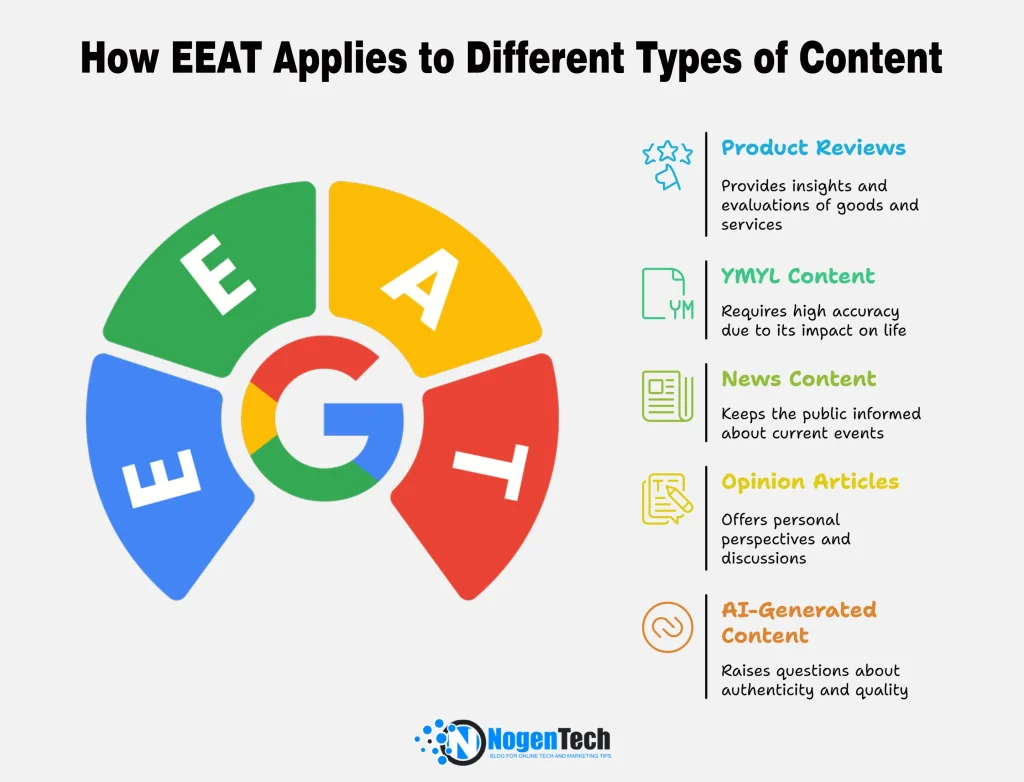
1. Product Reviews
EEAT matters heavily in product reviews because users rely on real experiences and credible testing. Google prefers reviews written by people who have actually used the product, show evidence (photos, comparisons, hands-on insights), and offer balanced, transparent assessments.
2. YMYL Content
For Your Money or Your Life topics, EEAT is applied with the strictest standards. Google expects verifiable expertise (credentials, certifications), authoritative sources, medically or legally reviewed information, and a high level of trustworthiness because inaccuracies here can directly harm users.
3. News Content
In news, EEAT focuses on accuracy, original reporting, transparent sourcing, and editorial accountability. Outlets must demonstrate journalistic standards, cite sources properly, and avoid misinformation to be seen as reliable and authoritative.
4. Opinion Articles
Although opinion pieces are subjective, Google still evaluates the writer’s expertise and the logical basis behind their viewpoint. Strong EEAT comes from a clear author identity, relevant background, and well-reasoned arguments supported by factual context.
5. AI-Generated Content
For AI-generated content, EEAT relies on transparency, fact-checking, and human oversight. Google does not penalize AI content by default, but it must be accurate, trustworthy, edited by a knowledgeable human, and clearly reviewed for credibility before publishing.
Final Thoughts on Google EEAT
Google EEAT isn’t from SEO trends, it’s the backbone of how modern search decides what content is worthy of visibility.
As Google’s AI mode and Overviews changed the SERPs and user expectations continue to rise. The creators who win will be the ones who focus on real expertise, lived experience, transparent credibility, and unwavering trust.
Google EEAT Checklist for 2026
🔻 Experience (E)
1. Show real-world usage, testing, or first-hand insights.
2. Include photos, screenshots, demos, or evidence of experience.
3. Add personal stories, outcomes, comparisons, and hands-on observations.
4. Mention how long you’ve used a product, service, or method.
🔻 Expertise (E)
1. Highlight the author’s qualifications, background, or niche knowledge.
2. Add an author bio with credentials or field experience.
3. Cite reputable sources, research, or industry standards.
4. Ensure content depth reflects subject-matter understanding.
🔻 Authoritativeness (A)
1. Build a strong author profile across the web (LinkedIn, publications, interviews).
2. Link to credible external sources and recognized authorities.
3. Earn backlinks and mentions from trusted websites in your niche.
4. Use structured data (author, review, organization schema) to improve credibility signals.
🔻 Trustworthiness (T)
1. Display transparent information: contact details, policies, references.
2. Add accurate citations and updated facts.
3. Use secure website elements (HTTPS, clear navigation, privacy policy).
4. Maintain consistent editorial standards and fact-checking processes.