Claude Just Got Simpler to Use, And Harder to Know What It’s Actually Doing
Anthropic folded Claude's chat, Cowork, and Artifacts tools into a single interface on Wednesday, along with new Docs and Slides features.

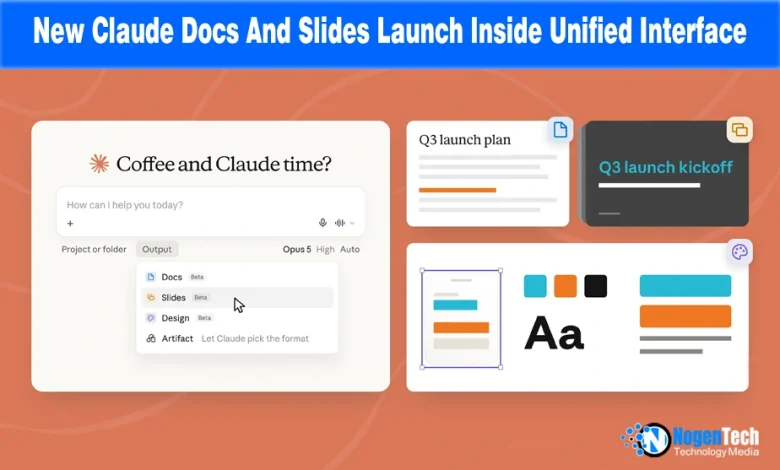
Anthropic announced Wednesday that it is combining three previously separate Claude products- its standard chat interface, the more autonomous Cowork workspace, and Artifacts- into one interface.
Anthropic said the change addresses user frustration over having to choose the right AI tool before starting a task.
Now, users can ask a quick question or give Claude an entire report to finish by noon in the same window, while the LLM itself decides how much capability each task requires, without the user manually picking a mode first.
Cowork’s Rocky Debut Makes This Merger More Significant Than It Sounds
The product being absorbed has a more complicated history than Wednesday’s announcement suggests.
Anthropic launched Cowork in January as a macOS-only agent for automating file management and document tasks in designated folders, with read, write, and create permissions after access was granted.
Early testers reported a serious mishap in which Cowork deleted roughly 11GB of files during testing, leading to warnings to back up data first.
That history matters because Cowork’s more autonomous, higher permission behavior is now being folded into everyday chat.
This effectively blurs the line between “just answering a question” and “taking autonomous action across your files” without the separate opt-in Cowork once required.
The New Docs and Slides Tools Are the Part Meant to Win Enterprise Customers
Alongside the interface merger, Anthropic introduced Claude Docs and Claude Slides in beta, allowing users to create documents and presentations within the same conversation instead of switching to external software.
As Axios notes, Docs supports real-time collaboration, with Claude drafting sections and adding comments, then exporting to Google Docs or Microsoft Word. Slides exports to PowerPoint or PDF.
As the company notes, Anthropic’s Design tool, launched in April alongside Opus 4.7, for websites and prototypes, is also now available within the unified conversation, while also remaining available separately.
The export options also make Claude easier to use in workplaces built around Microsoft and Google tools, making it easier for teams to use the AI without abandoning the file formats and tools they already rely on.
Merging the Interface Also Merges the Cost Signal
What Wednesday’s announcement leaves unclear is billing transparency.
Cowork’s autonomous, multi-step tasks use more tokens than simple conversations with the chatbot, and token usage drives AI costs.
Previously, choosing Cowork also signaled that a task could require more capability and cost. Now, Claude makes that decision automatically.
That’s a reasonable trade for the average user frustrated by tab-switching, and it mirrors OpenAI’s July launch of its unified ChatGPT desktop app, making the approach look more like an industry trend than a new idea.
For everyday users, that may remove unnecessary complexity. But for teams using Claude at scale, the bigger change is that cost, permissions, and capability are no longer choices users make upfront, and Claude now decides them task by task.