The gaming industry continues to grow at an unprecedented pace, with millions of players investing time in competitive esports, MMORPGs, action RPGs, and live-service games. Alongside this growth, game boosting services have become a significant part of the gaming ecosystem.
As a long-time gamer, I’ve seen countless debates about game boosting services. Some players view boosting as cheating, while others see it as a practical way to save time in games that demand hundreds of hours of grinding.
The truth is that many opinions about boosting are based on myths rather than facts. With modern games becoming more time-intensive through seasonal content, battle passes, and endless progression systems, boosting has become a popular option for players who want to access the content they enjoy most.
Whether you’re a player considering a raid carry in an MMORPG, looking for coaching to improve your gaming skills, or simply curious about the industry, it’s worth separating myths from reality.
- Game boosting is often used by experienced players with limited time, not just beginners.
- -Different games have different policies regarding boosting and account sharing.
- Coaching and duo-play boosts can help players improve their skills.
- Reputable providers typically invest in security measures and customer support.
- Understanding the facts helps players make informed decisions.
What Is a Game Boosting Service?
A game boosting service is a paid gaming assistance service that helps players achieve specific in-game goals more quickly or efficiently.
These goals can include increasing ranks, completing difficult raids, earning rare rewards, unlocking achievements, progressing through campaigns, or improving gameplay skills through coaching.
Common Types of Game Boosting Include:
- Rank Boosting
- PvE Boosting
- Duo Boosting
- Coaching Services
- Power Leveling

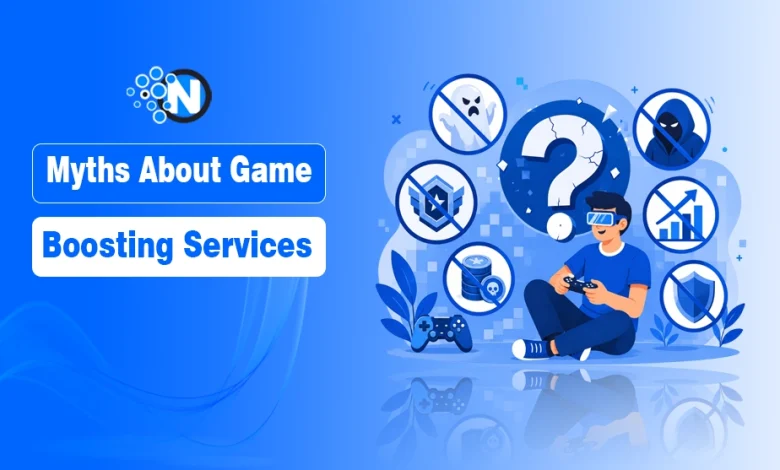
Myths About Game Boosting Services
1: Only Bad Players Use Game Boosting Services
One of the most common misconceptions is that boosting services are exclusively used by unskilled players who cannot complete content on their own.
In reality, many customers are experienced gamers with limited free time. Modern games often require hundreds of hours to unlock endgame content, complete seasonal objectives, or obtain rare rewards. Professionals, parents, students, and returning players frequently use boosting services to bypass repetitive grinds rather than overcome skill barriers.
For many users, boosting is more about saving time than compensating for a lack of ability.
Reality
Players commonly use boosting to:
- Skip repetitive progression they’ve already completed.
- Catch up with friends or guild members.
- Access endgame content faster.
- Overcome time constraints caused by work or family commitments.
- Earn seasonal rewards before limited-time events end.
2: Giving Access to Your Account Means Losing It Forever
Security concerns are understandable, especially when account access is involved.
While account-sharing services naturally carry risks, reputable providers typically implement security measures such as VPN matching, temporary credential handling, two-factor authentication coordination, and customer support systems designed to protect accounts.
However, not every provider operates professionally, which is why researching reviews, policies, and reputation remains essential before purchasing any service.
Reality
Trustworthy providers often:
- Use secure login procedures.
- Avoid storing account credentials long-term.
- Offer customer support during the boosting process.
- Provide transparent communication throughout the order.
3: All Game Boosting Is Completely Illegal
Many players assume every form of boosting automatically violates gaming rules.
The reality is more nuanced. Policies vary significantly between game publishers and individual titles. Some games strictly prohibit account sharing and rank boosting, while others focus enforcement efforts on cheating, automation, and exploit usage.
Competitive PvP boosting often receives greater scrutiny than PvE carries, dungeon completions, raid assistance, or coaching services.
Reality
Before purchasing any service, players should:
- Review the game’s Terms of Service.
- Understand publisher policies regarding account sharing.
- Distinguish between coaching, carries, and rank boosting.
- Consider potential risks before proceeding.
4: You Can’t Learn Anything From a Boost
Many people imagine boosting as a passive experience where a player simply receives rewards without gaining knowledge.
Today’s market offers much more than traditional carries. Coaching sessions, duo-play services, and live guidance allow players to actively participate while learning advanced strategies, rotations, positioning techniques, and game-specific mechanics.
For some players, coaching services function similarly to hiring a tutor in traditional sports or education.
What Players Often Learn
- Character optimization techniques.
- Efficient progression routes.
- Boss encounter mechanics.
- Team coordination strategies.
- Resource and cooldown management.
- Meta builds and gear priorities.
5: Boosting Always Ruins Matchmaking
This belief often stems from concerns about competitive rank boosting.
While artificially inflating ranks can negatively impact competitive environments, not all boosting services affect matchmaking systems. A large portion of the industry focuses on PvE content, including:
- Raid carries
- Dungeon clears
- Campaign completion
- Achievement farming
- Gear acquisition
- Seasonal progression
These services generally do not influence competitive rankings or matchmaking balance.
Reality
The impact largely depends on the type of service being purchased rather than boosting as a whole.
6: The Entire Industry Is a Scam
Like any online industry, boosting includes both trustworthy providers and unreliable operators.
The growth of professional gaming services has led to greater transparency, customer support, reputation systems, refund policies, and verified reviews. Many established providers now operate similarly to digital service businesses, with dedicated support teams and structured order management systems.
Reality
Players should always evaluate:
- Customer reviews
- Refund policies
- Service guarantees
- Support responsiveness
- Company reputation
Careful research can significantly reduce risks.
7: Only Teenagers Buy Boosting Services
The stereotype of young gamers spending pocket money on boosts no longer reflects the broader market.
The average gaming audience has aged considerably over the past decade. Many players today are working professionals with disposable income but limited gaming time. These individuals often value convenience and efficiency more than lengthy progression systems.
Reality
Common boosting customers include:
- Full-time professionals
- Parents
- Returning players
- Casual gamers
- Competitive players seeking coaching
Time-saving is often a stronger motivator than skill limitations.
8: Your Account Will Be Banned Immediately
Another widespread fear is that any boosting purchase results in an instant account suspension.
The truth depends heavily on the game, service type, and publisher policies. Risk levels vary significantly between coaching, account sharing, PvE carries, and competitive rank boosting.
While no service can guarantee complete safety, responsible providers typically avoid suspicious activity patterns and comply with security practices designed to reduce risk.
Factors That Increase Risk
- Violating specific game rules.
- Competitive rank manipulation.
- Excessive account sharing.
- Use of automation or cheats.
- Suspicious login behavior.
Players should understand that some level of risk always exists whenever third-party services are involved.
9: Grinding Is Always the Better Option
Many gamers argue that players should simply earn everything themselves.
While this perspective works for some, it ignores the value of personal time. Modern live-service games often require dozens—or even hundreds- of hours to unlock specific rewards, gear sets, or seasonal content.
For players with limited schedules, the choice may not be between grinding and boosting. It may be between boosting and never accessing the content at all.
Reality
The value proposition depends on:
- Available free time.
- Personal gaming goals.
- Budget considerations.
- Content accessibility.
- Desired progression speed.
10: Boosting Automatically Ruins the Fun
Perhaps the biggest myth is that boosting destroys the gaming experience.
Enjoyment means different things to different players. Some enjoy the journey, while others enjoy challenging endgame content, collecting rewards, or playing with friends. For returning players, boosting can help close progression gaps and allow participation in current content more quickly.
Signs a Boost May Improve Your Experience
- You’ve already completed the content on previous characters.
- You’re returning after a long break.
- Your friends are significantly ahead in progression.
- You want access to endgame activities faster.
- Your schedule doesn’t allow lengthy grinds.
When used selectively and responsibly, boosting can sometimes enhance enjoyment rather than reduce it.
Myth vs. Reality at a Glance
| Myth | Reality |
|---|---|
| Only bad players use boosts | Many experienced players use them to save time. |
| All boosting is illegal | Rules vary by game and service type. |
| Boosting teaches nothing | Coaching and duo-play can improve skills. |
| Every provider is a scam | Reputable providers often have established support systems. |
| Boosting always ruins matchmaking | Most PvE services have no effect on rankings. |
| Account bans happen instantly | Risk varies based on the game and service used. |
| Only teenagers buy boosts | Many customers are working adults. |
| Grinding is always better | Time constraints make boosting attractive for some players. |
| Account access is always unsafe | Security practices differ between providers. |
| Boosting ruins fun | It can help players access content they enjoy most. |
Are Game Boosting Services Worth It?
As a seasoned gamer, I’ve learned that boosting isn’t as simple as “good” or “bad.” Different players have different goals, schedules, and reasons for using these services. While boosting may not be the right choice for everyone, many of the assumptions surrounding it are outdated or inaccurate.
Understanding the facts helps players make informed decisions and separate reality from gaming community myths. Ultimately, the best approach is the one that allows you to enjoy your favorite games in a way that fits your time, goals, and playstyle.
People Also Ask
Are game boosting services safe?
Safety depends on the provider and the type of service. Reputable companies often use security measures, but players should always research providers carefully and understand the risks involved.
Can using a boosting service get my account banned?
It depends on the game’s Terms of Service and the type of boosting used. Some publishers prohibit certain forms of boosting, while others focus enforcement on cheating, automation, or competitive rank manipulation.
Do only inexperienced players use boosting services?
No. Many customers are experienced gamers who use boosting services to save time, catch up with friends, or access endgame content more quickly.
Can I learn from a boosting service?
Yes. Coaching and duo-play services allow players to participate actively while learning strategies, mechanics, positioning, and gameplay techniques from experienced players.
Does boosting always hurt matchmaking?
Not necessarily. PvE-focused services such as raid carries, dungeon runs, and campaign completions generally do not affect competitive matchmaking systems.
Why do players pay for game boosting?
The most common reasons include saving time, unlocking content faster, earning seasonal rewards, improving skills through coaching, and catching up with friends or guilds.
Is game boosting the same as cheating?
Not always. Cheating typically involves hacks, exploits, or unauthorized software. Boosting services vary widely, and whether they violate game rules depends on the publisher’s policies and the specific service being used.