Google Launches Fitbit Air, a $99 Screenless Tracker With Gemini Health Coach
Google unveiled Fitbit Air, a 5.2-gram screenless fitness band priced at $99.99 with seven-day battery life, AFib detection, and a Gemini-powered AI health coach, alongside the permanent rebranding of the Fitbit app to Google Health, effective May 26.

After years of questions about Fitbit’s role inside Google, the answer has now arrived.
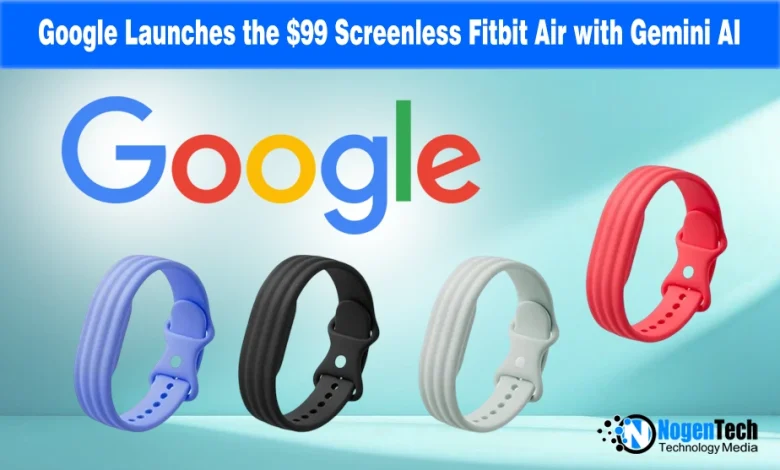
As the company’s official blog confirmed, Google unveiled the Fitbit Air: a pill-shaped, screenless fitness tracker weighing 5.2 grams alone and 12 grams with the band, designed for continuous wear without demanding attention.
It is Google’s clearest entry into the category built by WHOOP and expanded by Oura, a health tracking that runs quietly in the background without a display competing for focus.
Pre-orders opened immediately, with shipping starting May 26. The launch of Fitbit Air signals that wearable technology trends are shifting beyond smartwatch features and back toward pure health data.
What Fitbit Air Tracks and Why the Lack of Screen Is the Point
The sensor suite inside the Fitbit Air is dense for its size. As TechCrunch confirmed, it monitors 24/7 heart rate, heart rhythm with AFib alerts, blood oxygen levels, heart rate variability, resting heart rate, skin temperature, sleep stages, and duration, all without a wrist display.
Workouts are started through the Google Health app, originally the Fitbit app, on a paired phone, while up to seven days of minute-by-minute movement data is stored on-device before syncing over Bluetooth.
The pill-shaped housing fully detaches from the band, allowing easier switching between three band styles: the Performance Loop Band made from recycled materials, the waterproof Active Band, and the Elevated Modern Band for everyday wear.
Battery life reaches seven days, while a five-minute fast charge provides a full day of use.
Compared with Garmin’s fitness ecosystem, Fitbit Air occupies a deliberate middle ground: less capable than a GPS running watch, more focused than a general-purpose smartwatch, and considerably lighter than both.
The Google Health Rebrand and the Gemini Coach Behind It
As Wired confirmed, the Fitbit app will be retired on May 26 and replaced by Google Health, a unified platform combining data from Fitbit devices, Pixel Watch, Apple Health imports, Health Connect, and, for the first time, medical records in a single interface.
The rebranding is more than cosmetic. As the company notes, Google Health introduces a Gemini-powered AI Health Coach that generates personalised fitness plans, step-by-step workout guidance, and ongoing recommendations based on a user’s full data history.
The coach is available globally through Google Health Premium for $9.99 per month, though the fee is waived for Google AI Pro and Ultra subscribers, positioning it as part of Google’s broader AI ecosystem rather than a standalone fitness add-on.
Every Fitbit Air purchase includes a three-month trial. Combined with the Gemini coach, Fitbit Air creates Google’s most integrated health tracking ecosystem yet.
Pricing, the Stephen Curry Edition, and the WHOOP Comparison
At $99.99 with no mandatory subscription, Fitbit Air enters the screenless tracker market at a very different price point from its main competitors.
WHOOP 4.0 includes hardware through a $199 yearly subscription, while the Oura Ring 4 costs $349 upfront plus a $5.99 monthly membership for full feature access.
Google’s decision to make the core Fitbit Air experience fully functional without recurring payments, while including a premium trial with every device, creates one of the strongest value propositions in the category.
The Stephen Curry Special Edition, priced at $129.99, adds a water-resistant coating and a raised interior print co-designed by NBA star Stephen Curry, extending the launch beyond the core fitness audience.
Fitbit Air also supports simultaneous use with a Pixel Watch, with the Google Health app automatically managing data from both devices. The decision reflects how many buyers already own a smartwatch and are adding a dedicated health tracker instead of replacing one.
Among today’s best fitness gadgets, Fitbit Air launches with a software ecosystem, Gemini, Google Health, and medical record integration, that no hardware-first competitor can currently match.