Anthropic and the White House Are Quietly Making Up, With an IPO on the Line

Earlier this year, the Defense Department labeled Anthropic a “supply-chain risk,” the first time a US company received a designation normally reserved for firms tied to adversarial nations. The label bars tens of thousands of contractors from using Anthropic’s AI when working for the US government.
Five months later, both sides are still arguing in court and quietly finding ways to work together at the same time.
The relationship between the Trump administration and Anthropic is showing visible signs of thaw, driven by the reality that the company’s AI capabilities are too strategically valuable to ignore, and that an imminent IPO filing has raised the stakes for everyone involved.
How the Thaw Is Actually Playing Out
The relationship ruptured after Anthropic barred the US military from using its AI for domestic surveillance and autonomous weapons, triggering a pending national security blacklisting.
What has changed is not the legal dispute; it’s navigating temporary rulings and arguing about the supply-chain risk label.
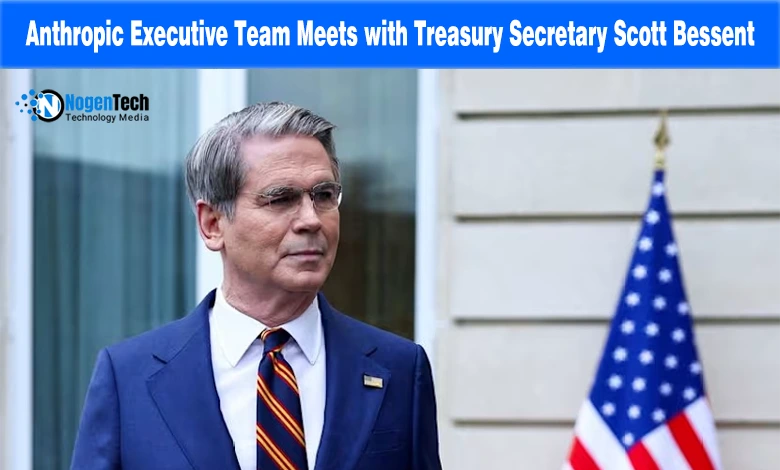
What has changed is the channel. Anthropic employees met Treasury Secretary Scott Bessent this spring to discuss Mythos and presidential AI actions.
These discussions helped Trump’s team develop the June 2 executive order, requiring leading AI developers to submit advanced models for cybersecurity testing.
That is a meaningful signal: a company officially blacklisted by the Pentagon was quietly contributing to White House AI policy in the same period.
Remarkably, the same Mythos model launched under Project Glasswing, withheld from public release by Anthropic over security concerns, is now the centerpiece of a presidential executive order that the company itself helped draft.
What the IPO Filing Changes
Anthropic has filed confidential IPO paperwork with the SEC, as the company has crossed the crossed the $900 billion mark and is now valued at $965 billion following a recent series H funding.
That filing makes the government dispute a formal risk disclosure item, every institutional investor reviewing the prospectus will weigh the supply-chain designation, the pending litigation, and the Pentagon exclusion.
As Reuters reports, the thaw in relations is read by sources familiar with both sides as at least partly motivated by that timeline. A company heading to public markets cannot afford an open war with the federal government as the cover story of its roadshow.
Although both entities continue to battle legally, the combination of Treasury-level engagement, White House policy contribution, and a confidential S-1 filing tells a more nuanced story than either the blacklisting or the de-escalation alone.
Anthropic’s Claude Opus 4.8, released just last week with explicit signals that Mythos-class access is “weeks away,” sits in the background of every one of these political conversations: the government that blacklisted the company is also the government that wants what it built.
Source: Blacklisted AI company Anthropic, White House ease tensions ahead of IPO