Meta Offers Free Dongles To Connect Muse AI To Your Home
Meta open-sourced firmware letting anyone build their own Muse-powered gadget and is giving away 5,000 free dongles that connect the AI agent to home Wi-Fi.

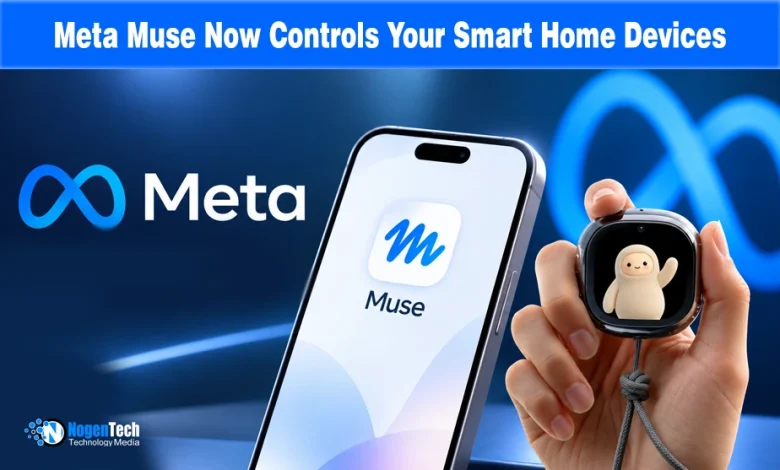
Meta introduced Muse Gadgets on Friday, an open-source project giving developers free rein to build hardware that talks to its Muse AI agent.
Nat Friedman, head of product at Meta Superintelligence Labs, confirmed on X that Meta manufactured 5,000 units and opened a waitlist for active U.S. subscribers to claim one free on a first-come, first-served basis ahead of shipping later this month.
Meta paired the release with its own reference device, Muse Home Link, a USB-C dongle that bridges Muse to a Wi-Fi network at your home so it can reach the connected smart devices.
What You Can Actually Build, and What to Avoid
The SDK supports 11 different ESP32 boards alongside Raspberry Pi setups, and Meta’s own suggested projects include a color e-ink morning-briefing display, an HDMI stick that plugs Muse into a TV, a push-to-talk pocket device, and a touchscreen accessory resembling the company’s Muse Charm hardware.
Meta also set up a Discord channel for builder support and included sample prompts, like having Muse install Home Assistant on a Pi or check every morning whether backups ran.
The company is upfront that tinkering carries real risk, warning that modifying boards may void warranties or brick the hardware entirely, a reasonable caveat for DIY electronics but a minor one next to the bigger question the launch raises.
The Timing Nobody at Meta Addressed
Apple recently said it is tightening macOS’s Full Disk Access controls specifically because of complaints that Muse had read private Messages content a user believed was protected, a claim Meta disputed but never fully resolved to the user’s satisfaction.
Muse Home Link doesn’t touch Messages or Full Disk Access at all. It works over home Wi-Fi, but it asks for something significant: direct access to every device on a user’s home network, from TVs to speakers to anything else exposing an HTTPS endpoint.
Handing that level of access to an agent whose data-handling practices were under public scrutiny isn’t disqualifying, but it is a detail worth more scrutiny than Meta’s launch materials gave it.
The Open-Source Code Isn’t the Part That Matters
The key point Meta’s announcement downplays is that Muse Gadgets’ privacy exposure was never really about firmware.
ESP32 code and a Linux SDK are auditable, inspectable, and about as transparent as hardware projects get.
What actually determines how much Muse can do inside someone’s home is the account-level access it already holds, the same permissions model Aten’s complaint put under a microscope days earlier.
A free dongle and open-source code make this look like a hobbyist project for tinkerers, and for many users it will be exactly that.
But anyone plugging Muse into their home network this month is making that decision in the same week Meta was still explaining, not entirely convincingly, why its agent already seemed to know more than it should have.