A few days ago, I randomly searched on ChatGPT, and suddenly my own NogenTech brand name popped up in the answer, completely unprompted. That little moment hit me hard. I realized that people aren’t just Googling us anymore. The January 22, 2026, Clutch report states: “65% using AI to research products before making a purchase,” amid rising agentic commerce trends.
Nowadays, if your brand isn’t showing up in those AI answers, you’re quietly losing visibility, trust, and traffic in 2026. In this blog post, I have explained what AI search monitoring is, how it works, and ways to track brand mentions in AI search.
What is AI Search Monitoring?
AI search monitoring is a process of tracking how Large Language Models (LLMs) and AI-powered “Answer Engines” (like ChatGPT, Gemini, Perplexity, and Google AI Overviews) represent, cite, and recommend a brand.
It helps businesses understand, measure, and optimize their visibility in AI-powered search results, such as AI summaries, conversational answers, voice search, and generative search experiences.

How AI Search Monitoring Works?
AI search monitoring tools use machine learning and natural language processing (NLP) to:
- Scan search results across AI-driven platforms
- Detect brand mentions (even without direct links)
- Track how AI systems interpret and summarize your content
- Analyze sentiment, accuracy, and context
- Identify changes in AI-generated answers over time
Why Use AI Search Monitoring Tools?
AI search monitoring tools are essential because search is no longer just about blue links and keyword rankings. With AI-powered search engines, assistants, and generative results, how your brand appears—and whether it appears at all—depends on how AI systems understand and trust your content.
The top AI search tools, such as Perplexity, ChatGPT Search, Gemini, Claude web search, and Grok, all pull real-time web information and give you direct answers instead of ten blue links.
This means:
- Fewer people click through to websites.
- Brands mentioned in the AI answer get visibility.
- Brands not mentioned become invisible even if they rank at the top on classic Google SERP.
AI search monitoring tools enable you to focus on several important aspects, such as:
- Detect if you’re being cited in AI responses.
- Analyze which prompts include you (and which exclude you).
- Spot competitors stealing your space.
- Measure sentiment, such as whether you are recommended positively.
- Track whether your recent content is landing in AI answers.
- Prove ROI on content and link-building to your boss or client.
Let me tell you based on my personal experience, that without monitoring, you have no visibility in the fastest-growing AI search of the next 3–5 years.
Best Ways to Track Brand Mentions in AI Search
Here are the best ways to track mentions in AI search. This includes methods from the simplest to the time-consuming ones:
1. Manual spot-checks in the major AI chatbots (fastest way to start)
Open ChatGPT, Claude, Gemini, Perplexity, Grok, and Copilot in separate tabs.
Type 8–12 natural questions your potential customers actually ask related to your product, such as:
- “best [your product category] 2026.”
- “Who makes the best [your niche] in [your city/country]?”
- “alternatives to [big competitor]”
- “reviews of [your brand]”
- “Is [your brand] worth it?”
After that, start looking for your name in the answer and in the sources they cite. Do this once a week. This will take only 10–15 minutes. Here is an example of my blogs that actually get cited on ChatGPT:

This was a review about the InstaPV platform, and ChatGPT cited my website for extracting information.
Other than ChatGPT, Grok also recommended “NogenTech” in its response to the same query, alongside other brands such as Scamadvisor and Reddit. And let me tell you that Grok doesn’t provide information the way ChatGPT does, so it mentioned my brand within the paragraph description instead.

You will quickly analyze whether you’re appearing, how often, in what context, and whether the tone is positive/neutral/negative. Many brands still discover huge gaps this way.
2. Set up branded AI alerts with Google Alerts + brand-name searches
Create Google Alerts for:
- “your brand name,” such as for me, “NogenTech.”
- “your brand name” “review”
- “your brand name” vs “Competitor”
- “your brand name” “better than” / “worse than.”
Other than that, you should also set up alerts for your main product names and competitor names.
You’ll get emails when your brand appears in new blog posts, forum threads, Reddit, or news articles. This is essential because many of these later get indexed and cited by AI models.
It’s not perfect AI monitoring, but it catches a surprising amount of early mentions that eventually feed LLMs.
3. Use traditional brand mention trackers that now include AI citations
There are various tools that you can use for this purpose, such as:
- Brand24: It features the Cheatbeat AI listening plugin. This monitors brand mentions across major AI platforms such as ChatGPT, Gemini, and others.
- Talkwalker: It features an “AI search” category that tracks brand mention across major AI platforms. It also showcases the brand recommendations compared to your brand using its “Blue Slik GPT Engine”.
- Hootsuite Insights: This tracks the brand mentions across the major AI platforms directly alongside the social feeds. It also tracks the prompts that trigger the brand mentions.
A maximum of these have added or are rapidly adding AI answer tracking. They monitor advanced AI models such as Gemini, ChatGPT, Claude, Perplexity, and sometimes Grok, showing when your brand appears in generated answers.
This also includes the prompt that triggers your brand’s appearance and the ranking position among cited sources.
4. Dedicated AI visibility & AEO monitoring tools (most accurate 2026 method)
This is the most advanced method that serious brands are moving towards. Specialized tools crawl major LLMs repeatedly with thousands of branded queries and show:
- How often your brand is mentioned
- In which position (1st, 2nd, 3rd source)
- Sentiment of the mention
- Which competitors appear above and below you
- Which prompts trigger your brand
Some of the top tools that help you track your brand mentions in AI searches include:
- Ahrefs AI Visibility Tracker
- Semrush AI Toolkit (brand mention monitoring module)
- Surfer AI Search Visibility
- Peec.ai
- Glimpse.ai
- Rankscale
These tools cost $99–$499/month, depending on query volume, but they give you the clearest, most actionable view of your AI presence.
5. Build your own lightweight monitoring (advanced/low-budget option)
If you are a technical person and you are well aware of API keys and AI tools, then you can also build your own lightweight monitoring tool:
- Use OpenAI API or Anthropic API to programmatically ask 20–50 branded questions every week.
- Log answers in Google Sheets.
- Use simple Regex or LLM parsing to detect your brand name and position.
- Visualize trends over time.
I have not done it personally, but I know some of my colleagues who are using this strategy. According to them, this will take a weekend to set up and costs very little, but you should be aware of all the technicalities before starting with it.
Many agencies do this for clients who don’t want to pay $200+/month for a dedicated tool yet. Pick one or combine 2–3 methods. Most brands start with manual checks and one dedicated tool and scale from there.
What are the Best AI Search Monitoring Tools?
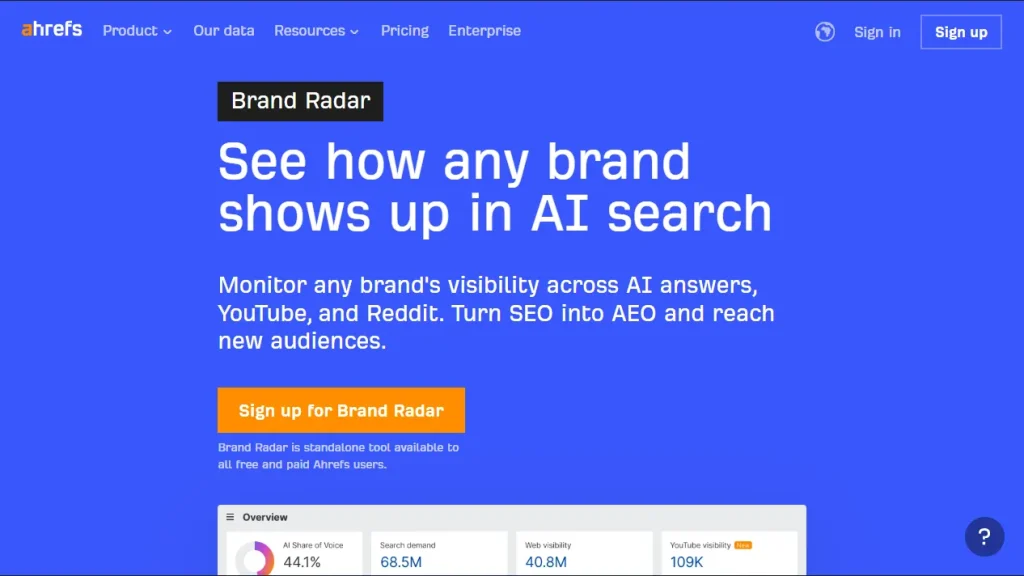
1. Ahrefs AI Visibility Tracker
Best for: SEO agencies and serious e-commerce brands.
Pricing: $129 (lite)
Key-features:
- AI Share of Voice (SOV)
- AI Visibility Impressions
- AI Responses Report
- AI Mention & Citation Gaps
- Cited Domains & Pages Reports
It is one of the earliest and most trusted platforms in AI visibility tracking. Ahref’s Brand Radar, also known as the AI visibility tracker, tracks your brand across major LLMs with thousands of daily queries.
It shows position, prompt triggers, sentiment, and competitor comparison. Integrates with traditional SEO data. SEO agencies and serious e-commerce brands.
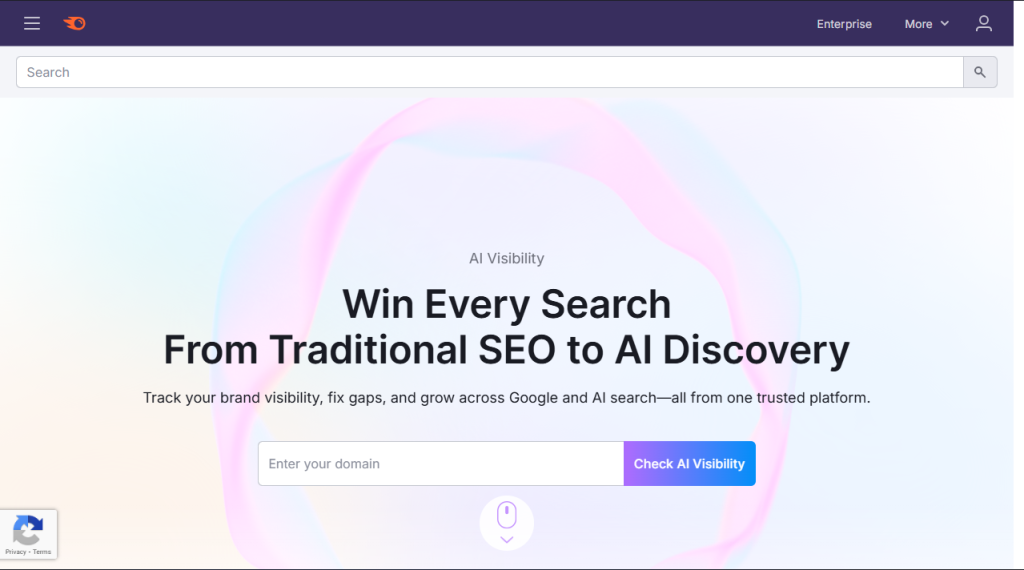
2. Semrush AI Toolkit
Best for: Full-service marketing teams already using Semrush.
Pricing: $199 /month (Starter)
Key-features:
- AI Mentions Tracking
- AI Share of Voice (SOV)
- Brand Performance Dashboard
- Prompt Research Report
This platform has expanded massively. Semrush AI toolkit tracks your brand mentions in ChatGPT, Gemini, Perplexity, and more.
Other than that, it also shows source links cited, position, and trend graphs. I will personally say that the Semrush AI toolkit is very good for spotting sudden drops after algorithm updates.
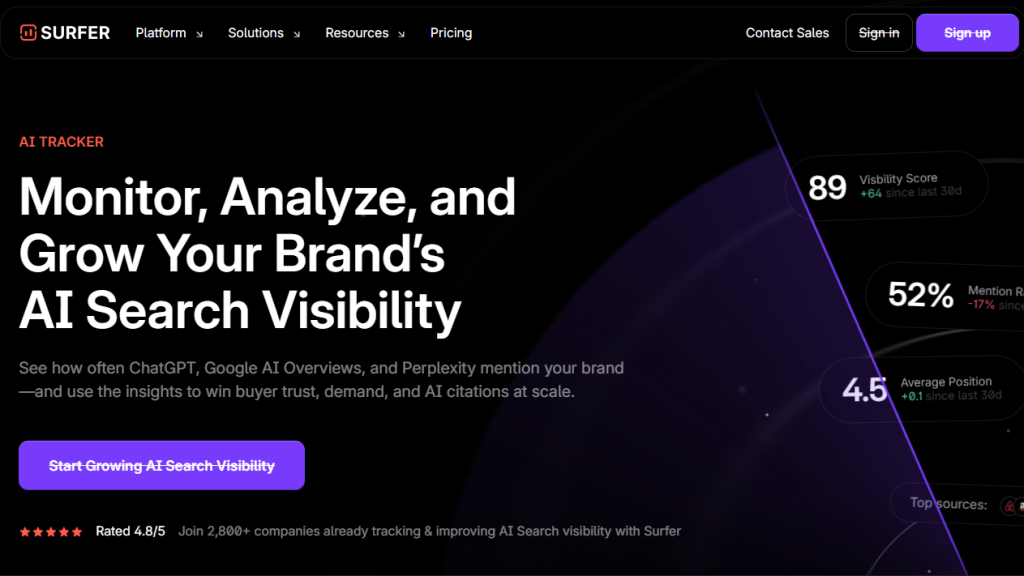
3. Surfer AI Search Visibility
Best for: Content-heavy brands and publishers.
Pricing: $52/month for basic tracking.
Key-features:
- AI Mention Tracking
- AI Citation Insights
- Mention Gap Analysis
- Sentiment Tracking
Surfer AI search tracker is very focused on AEO (Answer Engine Optimization). This helps you to track how often you appear in AI answers, which prompts surface, and how your content is summarized.
This platform is a great prompt database for testing. It is also helpful in sentiment tracking about your platform in AI search results.
4. Peec AI
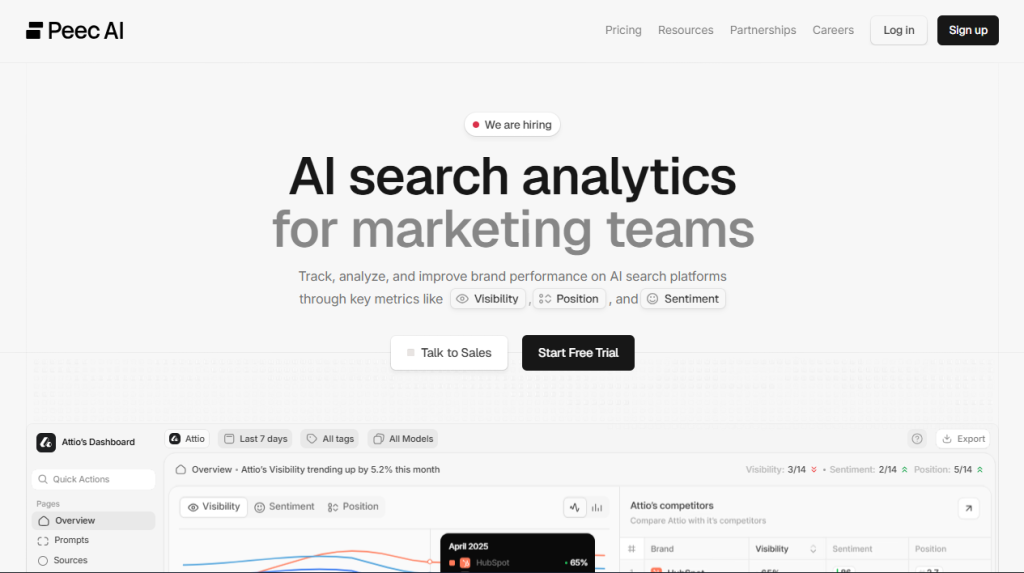
Best for: Mid-size brands wanting affordable but deep AI monitoring.
Pricing: €89 /month (includes 25 prompts and tracking in 3 countries)
Key-features:
- AI Visibility Dashboard
- AI Share of Voice
- Suggested Prompts
Peec.ai is a fast-growing European tool for tracking AI search visibility. This works best for mid-sized brands that require AI tracking, but it is an affordable option.
It is excellent at showing exact prompts with answer pairs. This also helps in tracking strong competitor benchmarking and sentiment analysis.
5. Conductor AI
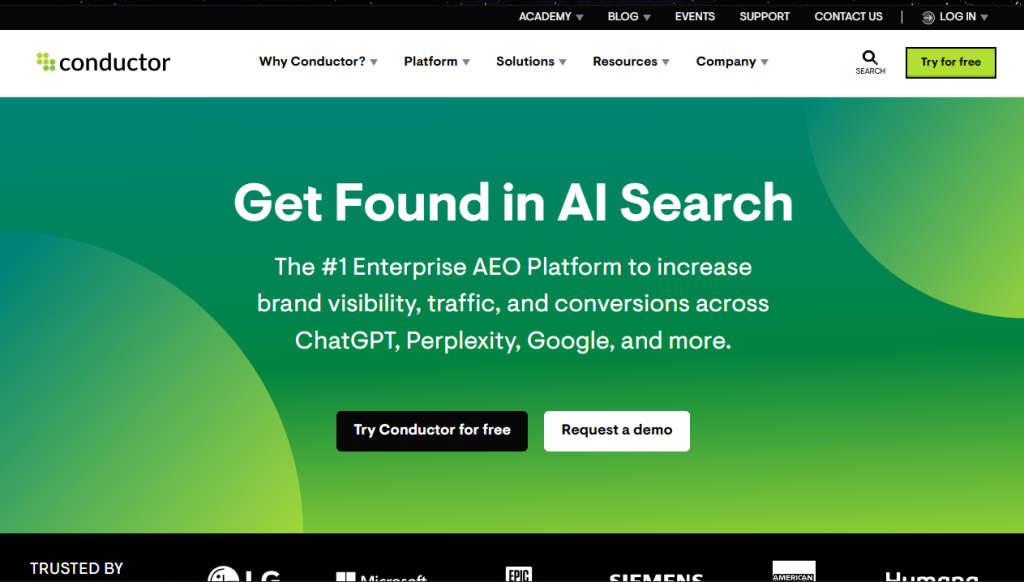
Best for: Executive-friendly AI visibility reports
Pricing: Depends on your website (Not fixed tiers)
Key-features:
- AI Overview Tracking
- Answer Engine Optimization (AEO) Dashboard
- Sentiment and Brand Perception Analysis
- Citation Tracking
Conductor has featured a new AEO tracking tool in the market. It specializes in real-time monitoring of how brands appear across ChatGPT, Claude, Perplexity, Gemini, and Grok.
This provides you with prompt-level insights, citation position tracking, and automated weekly competitor reports.
7-Day Action Plan for AI Search Monitoring
Here is a quick 7-day plan that you should definitely try to analyze whether your brand appears in AI searches:
- Day 1: Run manual searches in ChatGPT, Claude, Gemini, and Perplexity using 10 of your most important customer questions. Screenshot every mention or absence that you track.
- Day 2: Pick one monitoring tool from the list above and sign up for a trial.
- Day 3–4: Set up branded queries and let them run for a couple of days.
- Day 5: Look at the first report. Note your brand’s position, sentiment, and top competitors.
- Day 6: Share the report with your team or boss. Decide on one improvement to test, such as new content, better link-building, press push, etc.
- Day 7: Run the same 10 manual searches again and compare.
This will give you real baseline data of your brand’s one-week performance and a clear next step.
Final Thoughts: Don’t Let AI Overlook Your Brand
Now you know how to track brand mentions in AI search using practical methods and reliable tools. In 2026, AI search is as essential as Google. If your brand is not showing up in answers from ChatGPT, Gemini, Claude, Perplexity, and other AI tools, you are quietly losing visibility, trust, and revenue.
Start with the basics, such as running manual checks, setting up alerts, and testing at least one AI search monitoring tool. I use these approaches for the NogenTech brand, and they deliver real insights. Take action this week and make sure AI is highlighting your brand, not overlooking it.