- Data security risks are shifting from production to non-production environments.
- Modern data masking focuses on usability, not just protection.
- Enterprise solutions differ in complexity, scalability, and integration capabilities.
- Leading data masking tools include K2view, Broadcom Test Data Manager, IBM InfoSphere Optim, Informatica Persistent Data Masking, and Perforce Delphix
Exposure during production used to be the greatest threat to sensitive data. Today, the greater risk lies in everything surrounding it.
Non-production environments, including testing, development, and analytics, are where data is most frequently copied, reshaped, and reused. This is also where conventional security controls are most likely to fail.
As a result, data masking and anonymization tools have moved into the spotlight, not as compliance add-ons, but as essential enablers of safe data usage. The goal is simple: give teams access to realistic data without introducing risk.
Modern data masking solutions are built around this principle. They protect sensitive information while preserving usability, structure, and integrity, ensuring data remains functional across systems and use cases.
In this blog post, I have listed the five platforms leading that shift in 2026.
Top 5 Data Masking Solutions to Consider
Below are some of the most reliable and widely used data masking solutions that organizations are adopting in 2026.
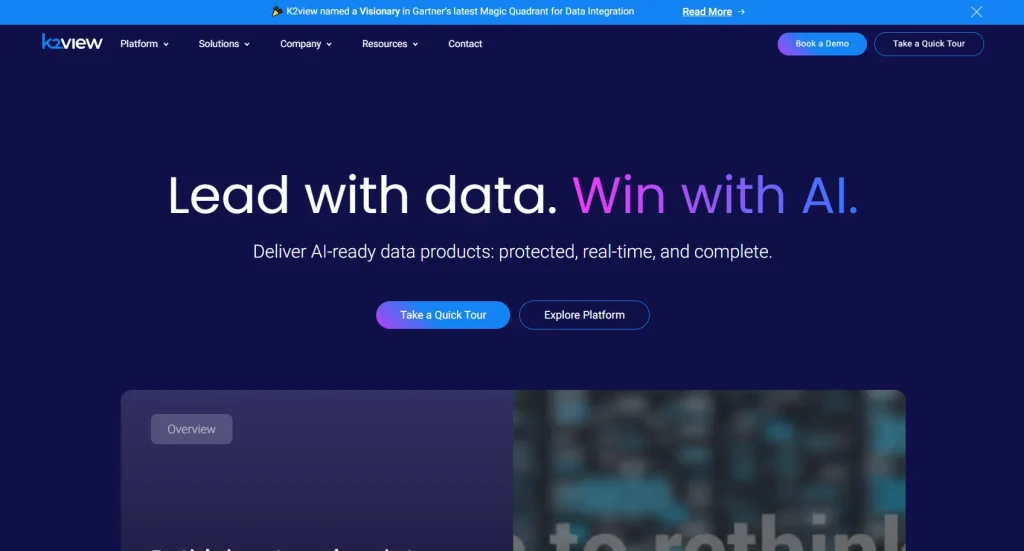
1. K2view
K2view approaches data masking as part of a broader data lifecycle rather than a standalone function.
Beyond masking data at rest, it supports structured and unstructured data masking, as well as in-flight anonymization, enabling protection even while data moves between systems. This is particularly important in modern, distributed architectures where data is rarely static.
A key differentiator is its ability to preserve referential integrity across systems. When masking a customer entity, for example, all related records, orders, payments, and interactions, remain fully consistent. This ensures masked datasets behave like real data in downstream use.
K2view also integrates automated PII discovery and classification using rules and LLM-based cataloging. Combined with a broad library of masking functions, synthetic data generation, and API-driven automation, it delivers a comprehensive, enterprise-grade platform.
The main consideration is implementation effort; deployment requires planning, particularly in complex environments. However, once operational, it delivers scalable, high-quality masking across diverse data landscapes.
Best for: Enterprises requiring scalable, compliant data masking across multiple systems and data types.
2. Broadcom test data manager
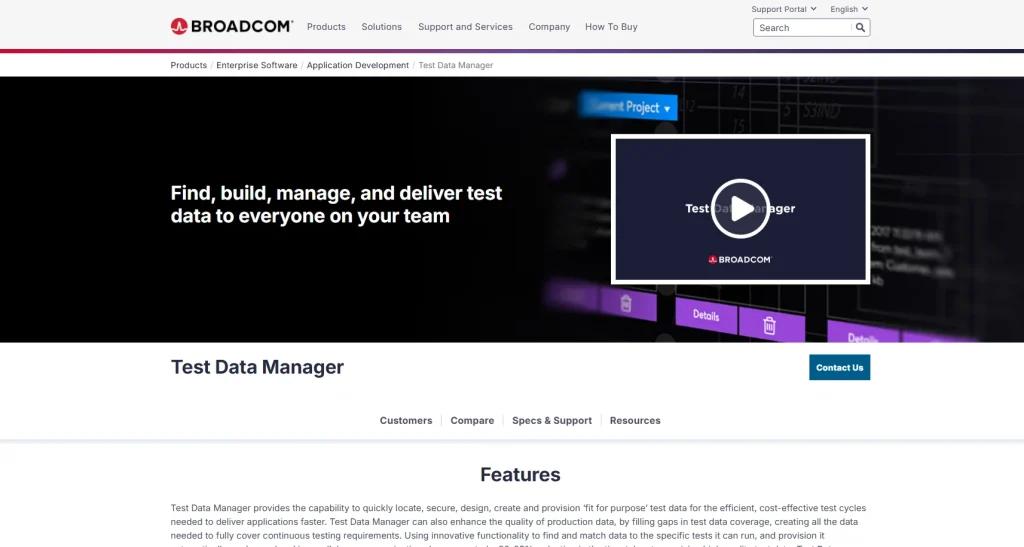
Broadcom offers a more traditional, enterprise-focused approach to data masking, evolving alongside large-scale test data management practices.
It supports both static and dynamic masking, along with synthetic data generation and data subsetting. Integration with DevOps pipelines makes it suitable for organizations with established testing workflows.
Its strength lies in handling large, complex environments. However, that capability comes with trade-offs – implementation can be complex, and self-service capabilities are more limited compared to newer platforms.
This makes it less suited for teams prioritizing agility, but it is still relevant for enterprises deeply invested in the Broadcom ecosystem.
Best for: Large enterprises managing complex environments within existing Broadcom ecosystems.
3. IBM infosphere optim
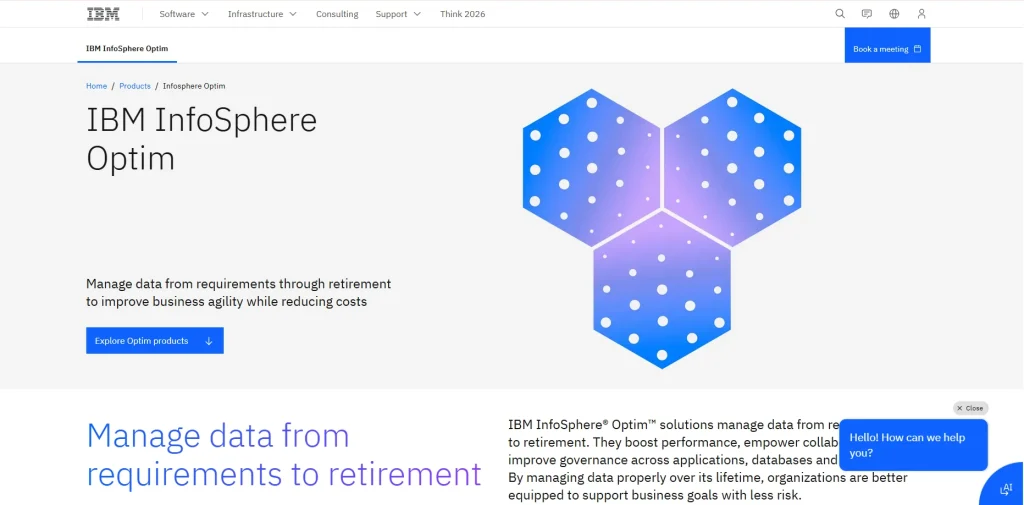
IBM InfoSphere Optim brings maturity and broad compatibility, particularly for organizations operating across legacy and modern systems.
It provides structured data masking across databases, big data platforms, and hybrid environments. Its data archiving capabilities also support managing production data volumes alongside masking initiatives.
For organizations balancing legacy infrastructure with modernization efforts, Optim offers stability and strong compliance support, including GDPR and HIPAA.
However, integration with modern, cloud-native architectures can be complex, and the user interface reflects its legacy origins. While highly reliable, it may not align with teams seeking more agile, modern experiences.
Best for: Enterprises operating across legacy and hybrid data environments.
4. Informatica persistent data masking
Informatica focuses on continuous data protection, particularly in the context of cloud transformation.
Its persistent masking approach ensures sensitive data is irreversibly anonymized across environments. It also supports real-time masking, enabling protection of production data without disrupting operations.
The platform’s API-driven architecture supports integration into existing workflows – especially for organizations already using the Informatica ecosystem.
That said, licensing and setup can be complex, and the platform may require significant expertise to deploy and manage effectively.
Best for: Enterprises undergoing cloud transformation and seeking consistent, long-term data protection.
5. Perforce Delphix
Perforce Delphix introduces a different approach by combining data masking with data virtualization.
Instead of only masking datasets, it creates virtual copies of production data that can be masked and provisioned quickly to development and test environments. This accelerates data delivery and reduces storage overhead.
It also includes synthetic data generation and centralized governance, making it well-suited for organizations with mature DevOps practices.
However, the platform can be complex and costly to implement, and some users report limitations in reporting and analytics capabilities.
Best for: Organizations with advanced DevOps pipelines requiring fast, scalable data provisioning.
Making Data Masking Work for Modern Enterprises
Data masking has evolved beyond simple anonymization. It now sits at the intersection of security, compliance, and development velocity.
Choosing the right solution depends heavily on your data landscape, architecture, and operational maturity. However, the overall direction is clear – modern platforms are shifting from restricting access to enabling safe, usable data at scale.
The tools that succeed in 2026 are those that balance protection with usability – delivering secure data without slowing innovation.