- DevOps combines development and operations into one workflow.
- Automation and CI/CD are core to its success.
- It improves speed, quality, and collaboration.
- Adoption requires both cultural and technical changes.
- AI and cloud technologies are shaping the future of DevOps.
Software development doesn’t look the way it did even five years ago.
Release cycles are shorter. User expectations are higher. And businesses can’t afford delays when competitors are shipping updates daily.
That’s exactly where DevOps comes in.
DevOps isn’t just a buzzword anymore—it’s become a core practice for modern development teams trying to move faster without breaking things.
Recent industry reports show that high-performing DevOps teams deploy code up to 200x more frequently and achieve 24x faster recovery times compared to traditional development teams.
From what many teams experience in real-world projects, DevOps works best when it’s treated as a mindset first, not just a set of tools. When done right, it removes bottlenecks, improves collaboration, and helps teams deliver better software consistently.
In this blog post, I will explain DevOps and how it boosts software development workflows.
What Is DevOps?
DevOps combines development (Dev) and operations (Ops) together into a single, collaborative workflow.
Instead of working in separate phases, teams operate as one unit—sharing responsibility from writing code to deploying and maintaining it.
In simple terms, DevOps means:
- Continuous development
- Continuous testing
- Continuous deployment
- Continuous monitoring
The goal is straightforward: deliver high-quality software faster and more reliably.
What makes DevOps powerful is automation. Tasks that once required manual effort, like testing, integration, or deployment, are now handled automatically through pipelines.
Why DevOps Matters More Than Ever in 2026
Modern software environments are more complex than ever. Teams are now working with:
- Cloud-native applications
- Microservices architectures
- Distributed systems
- AI-powered features
Managing all of this manually isn’t realistic anymore.
DevOps provides structure and automation to handle this complexity efficiently. It allows teams to scale without losing control over quality or performance.
Another key factor is competition. Businesses that can release faster, adapt quickly, and fix issues instantly have a clear advantage.
In this modern world, DevOps is no longer a “nice-to-have.” It’s a core requirement for staying competitive.
Key Benefits of DevOps in Software Development
1. Faster Time to Market
Speed is one of the most visible benefits of DevOps. With CI/CD pipelines in place, teams can:
- Push updates quickly
- Test changes instantly
- Release features without delays
This allows companies to respond to user feedback in real time instead of waiting for the next release cycle.
2. Improved Collaboration Across Teams
One of the biggest problems in traditional development is the gap between developers and operations. DevOps removes that barrier.
Instead of working separately, teams collaborate throughout the entire lifecycle. This reduces misunderstandings, improves communication, and ensures smoother releases.
Over time, this shared responsibility builds stronger, more aligned teams.
3. Higher Software Quality
Continuous testing is a core part of DevOps.
Instead of waiting until the end of development, testing happens at every stage. This means bugs are caught early, before they reach production.
The result is:
- More stable applications
- Fewer production issues
- Better user experience
4. Increased Efficiency Through Automation
Automation is what makes DevOps scalable. Tasks like:
- Code integration
- Testing
- Deployment
- Infrastructure setup
are handled automatically, reducing manual errors and saving time.
Developers can focus more on building features instead of managing repetitive processes. Organizations looking to implement comprehensive automation across their development pipelines often engage DevOps services to accelerate adoption.
5. Scalability and System Reliability
Modern applications must handle growth without breaking.
DevOps practices like Infrastructure as Code (IaC) make it easier to scale systems while maintaining consistency. This ensures:
- Reliable performance
- Faster recovery from failures
- Consistent environments across development and production
How DevOps Works: The Lifecycle
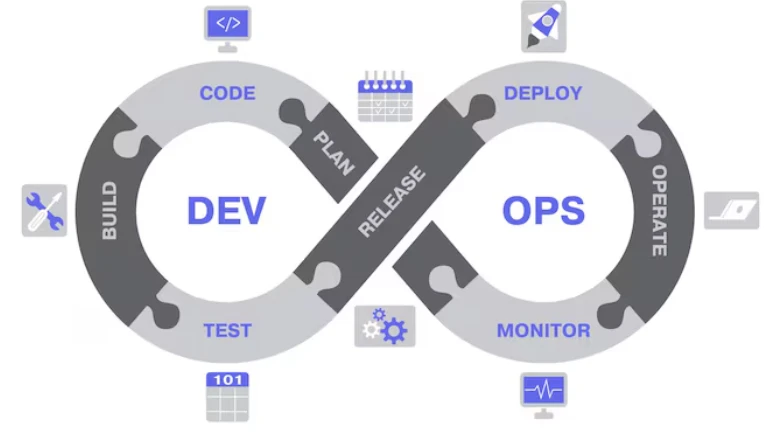
The DevOps lifecycle is a continuous loop that focuses on improvement and speed.
It typically includes:
- Plan: Define features and requirements
- Develop: Write and manage code
- Build: Compile and package applications
- Test: Run automated tests
- Deploy: Release updates continuously
- Operate: Manage infrastructure
- Monitor: Track performance and user feedback
Because this cycle never stops, teams can constantly improve their product.
Modern DevOps Trends in 2026
DevOps continues to evolve with new technologies and practices.
AI-Powered DevOps (AIOps)
AI is helping automate monitoring, detect anomalies, and predict failures before they happen.
DevSecOps (Security Integration)
Security is now integrated into every stage of development instead of being added at the end.
Cloud-Native Development
DevOps is closely tied to cloud platforms, enabling flexible and scalable infrastructure.
GitOps and Infrastructure as Code
Managing infrastructure through code ensures consistency and easier version control.
DevOps vs Traditional Development – Comparison Table
| Aspect | Traditional Approach | DevOps Approach |
| Workflow | Siloed teams | Collaborative |
| Deployment | Manual & slow | Automated & fast |
| Testing | Late-stage | Continuous |
| Feedback | Delayed | Real-time |
| Scalability | Limited | Highly scalable |
When Should You Adopt DevOps?
DevOps becomes essential when:
- Releases take too long
- Teams struggle with coordination
- Bugs frequently reach production
- Scaling becomes difficult
If your development process feels slow or disconnected, DevOps can make a significant difference.
Final Thoughts
DevOps has redefined how modern software is built and delivered. It’s not just about moving faster; it’s about creating a system that is reliable, scalable, and continuously improving.
From real-world implementation, the biggest impact comes when DevOps is treated as a long-term strategy rather than a quick fix.
Because in today’s fast-paced digital world, the ability to deliver quickly and deliver well is what truly sets successful companies apart.