American businesses expanding internationally need more than a payment gateway that accepts credit cards. Customers in different markets may prefer digital wallets, bank transfers, or local payment methods that are unfamiliar in the United States. The business must also manage currencies, refunds, settlement, reconciliation, and payment failures across those markets.
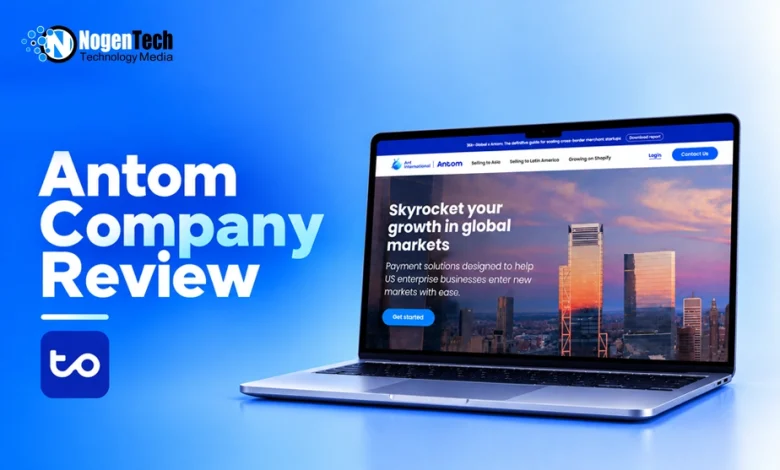
The Antom company presents its US offering as a global acquiring platform for enterprises entering new markets. It combines international payment acceptance, multiple integration options, settlement support, and unified reconciliation.
However, the services available to an individual merchant will depend on its business model, approved markets, agreement, and technical setup.
What Is Antom?
Antom is a merchant payment and digitalization platform operated under Ant International. It provides payment services for businesses selling to customers across multiple countries and regions.
According to Antom’s public information, its global network covers more than 200 payment markets and over 300 payment methods. Its US offering also lists support for more than 100 processing currencies and over 90 settlement currencies.
These figures describe the platform’s overall reach. They do not mean that every payment method, currency, or market is automatically available to every merchant. Availability can vary according to the merchant’s location, industry, transaction type, risk profile, and commercial agreement.
For businesses still deciding which checkout options customers need, understanding the main online payment methods used by businesses provides useful context before evaluating a global provider.
Antom Services for US Merchants
Antom’s US offering focuses on helping enterprise merchants accept payments from international customers without building a separate payment connection for every market.
Global Payment Acceptance
Antom provides access to card payments, digital wallets, online banking options, and other local payment methods. This can be useful when a US merchant wants to enter a country where customers do not rely primarily on international credit cards.
The number of supported methods matters less than the methods available in each target market. Before signing an agreement, a merchant should confirm:
- Which payment methods are available in each country
- Whether those methods support one-time or recurring payments
- Which transaction currencies can be accepted
- How refunds and disputes are handled
- Whether any business-category restrictions apply
A payment method listed in a provider’s global catalog may still require separate approval or configuration for a particular merchant.
International Market Support
Antom highlights Asia and Latin America as important expansion regions for US enterprises. Local payment knowledge can help a merchant understand how customers prefer to pay, but payment access alone does not guarantee success in a new market.
The merchant remains responsible for issues such as product demand, pricing, taxes, legal requirements, customer service, fulfillment, and localization. Antom may reduce payment friction, but the wider market-entry strategy still belongs to the business.
API, SDK, and Checkout Integration
Antom promotes a single integration for accessing its payment products. Depending on the approved solution, businesses may integrate through APIs, SDKs, hosted checkout pages, plugins, or other supported routes.
The right option depends on the merchant’s technical resources and the level of checkout control it needs. A hosted checkout may reduce some development work, while a customized API integration may give the business more control over design and transaction behavior.
Technical teams should review:
- Supported web and mobile environments
- Authentication and data-security responsibilities
- Payment status and webhook behavior
- Failed and abandoned transaction handling
- Localization and accessibility
- Refund and cancellation workflows
- API versioning and maintenance requirements
Businesses building payment functionality into a mobile product should also consider the broader requirements involved in mobile payment app development, including security, user experience, testing, and regulatory responsibilities.
Processing and Settlement
Processing currency and settlement currency are not the same thing. The processing currency is used when the transaction is handled, while the settlement currency determines how the merchant ultimately receives its funds.
Antom reports support for more than 100 processing currencies and over 90 settlement currencies through its US offering. A merchant should still confirm the exact currency pairs available for its account and how foreign exchange is calculated.
Finance teams should examine:
- Transaction and processing fees
- Foreign exchange rates and markups
- Settlement schedules
- Minimum settlement amounts
- Refund and chargeback costs
- Reserve or withholding conditions
- Bank deposit references
- Reconciliation file formats
The final cost should be calculated using the merchant’s expected transaction mix rather than a headline rate.
Unified Reconciliation
Antom offers unified settlement and reconciliation intended to reduce the operational work created by multiple providers and payment methods. A consolidated reconciliation file can be valuable, especially for companies operating across several markets.
However, finance teams should test whether Antom’s reports connect cleanly with their order management, enterprise resource planning, and accounting systems. Each transaction should be traceable from the original order through authorization, refund, fee deduction, currency conversion, and final bank deposit.
Which Businesses May Consider Antom?
Antom’s US page identifies e-commerce, travel, education, and digital services among its supported industry areas. Suitability depends more on the transaction model than the industry label.
E-Commerce Businesses
An international online retailer may benefit from local payment methods, multi-currency support, mobile checkout options, and consolidated reporting.
The retailer should test whether payment identifiers connect correctly with orders, inventory, refunds, and customer accounts. Offering more methods is only useful when customers can understand the checkout and employees can manage the resulting transactions.
Travel Companies
Travel payments may involve advance bookings, higher transaction values, itinerary changes, partial refunds, cancellations, and delayed service delivery.
A travel business should test complete and partial refunds, payment changes, disputes, and transactions in multiple currencies. Its support team also needs a clear way to connect booking, payment, passenger, and refund records.
Education Providers
Education businesses may collect one-time course payments, enrollment fees, installment payments, or recurring subscription charges. They should verify which billing models and payment methods are supported in the countries where students live.
Payment approval should also connect reliably with enrollment and access systems so that successful payments activate the correct service.
Digital Services
Streaming platforms, software companies, gaming businesses, and other digital services may need recurring billing, tokenized payments, trials, and automated cancellations.
These businesses should confirm that recurring transactions are supported by the relevant local payment methods. The merchant must also maintain clear customer consent, cancellation rules, and payment records.
Security and Compliance Questions
A global payment provider handles sensitive financial and transaction data, but responsibility is not transferred entirely from the merchant. The division of security duties depends on the integration and the data passing through the merchant’s systems.
The technical and security teams should ask:
- Which Antom entity will provide the contracted service?
- Where will transaction and customer data be processed?
- Which security controls are handled by Antom?
- Which controls remain the merchant’s responsibility?
- How are payment credentials tokenized or stored?
- How are fraud rules configured and reviewed?
- What happens after a suspected data or account compromise?
- Which compliance reports can Antom provide?
Businesses accepting card payments should review the applicable requirements published by the PCI Security Standards Council. Using a payment provider may reduce part of the merchant’s compliance scope, but it does not automatically remove every PCI DSS responsibility.
Test Antom Before a Wider Launch
A product demonstration cannot show how the complete payment lifecycle will perform within the merchant’s systems. A controlled pilot should use real products, devices, currencies, payment methods, and operational workflows.
The test should follow transactions through:
- Payment method display at checkout
- Authorization or payment confirmation
- Order creation and fulfillment
- Failed and abandoned transactions
- Full and partial refunds
- Disputes or chargebacks, where applicable
- Fee and foreign exchange reporting
- Settlement into the merchant’s bank account
- Reconciliation with accounting records
- Support response when an issue occurs
Merchants should measure checkout completion, payment failures, response time, refund processing, reconciliation accuracy, and support workload. Antom’s platform-wide performance figures should not replace results from the merchant’s own implementation.
Is Antom a Good Choice for US Merchants?
Antom may be worth considering for established US merchants that want to enter multiple international markets, particularly when local payment methods and consolidated operations are priorities. A single integration and unified reconciliation could reduce some of the work involved in maintaining several direct provider connections.
It may be less suitable for a business that sells only in the United States, requires a very limited set of payment methods, or cannot justify the operational work involved in international expansion.
The final decision should be based on the merchant’s approved markets, payment-method coverage, total fees, settlement arrangements, integration requirements, security responsibilities, and contracted support. Antom’s published network provides evidence of broad capability, but the service that matters is the one defined in the merchant’s agreement and proven through testing.