- Businesses overpay for CRM software due to per-user pricing, add-ons, and vendor lock-in.
- CRM total cost goes far beyond the monthly license fee and most teams use less than 30% of CRM features they pay for.
- Open-source CRMs eliminate per-seat pricing and vendor dependency and fractional CRM admins offer a cost-effective alternative to full-time hires.
- A phased migration strategy minimizes switching risks.
Most businesses don’t realize they’re overpaying for CRM software until the costs become impossible to justify. What starts as a manageable monthly expense quietly grows into a major operational burden.
The issue isn’t just pricing—it’s how pricing structures are designed to grow faster than the value most teams actually extract. From per-user fees to costly add-ons and renewal traps, expenses scale faster than the value most teams actually get.
In this blog post, you will learn where that money really goes, why so many businesses stay in contracts that don’t serve them, and what practical steps you can take to stop overpaying.
The Real Cost of CRM Software Goes Beyond the License Fee
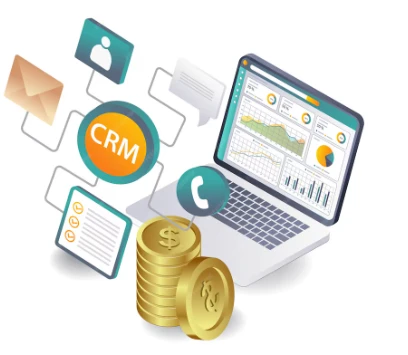
Most businesses evaluate CRM software by looking at the sticker price. That’s the wrong number to focus on. The real cost lives in everything around the license, and according to Grand View Research, the global CRM market surpassed $91 billion in 2024.
With that much money flowing through the industry, vendors aren’t exactly motivated to keep pricing simple.
Per-User Pricing That Scales Against You
Here’s the math nobody does upfront. If you’re paying $75 per user per month, a team of 20 costs $18,000 a year. Hire 10 more people next year, and that jumps to $27,000. You didn’t get more features. You didn’t unlock anything new. You just added headcount.
And the pricing tiers? They’re designed to push you toward the “enterprise” plan the moment you need one specific feature (usually reporting or automation) that’s conveniently locked behind the more expensive option.
Implementation and Consultant Costs Nobody Budgets For
Most CRM vendors quote you a license fee and quietly assume you’ll hire outside help to actually set the thing up. Depending on the platform, implementation consulting runs $150 to $300 an hour. A mid-size rollout can easily cost $25,000 to $50,000 before a single sales rep logs in.
That’s money most businesses don’t plan for. And when the implementation drags on (which it usually does), those hours stack up fast.
Add-Ons, Storage Fees, and API Overage Charges
The base plan rarely includes everything you need. Want more than 2GB of file storage? That’s extra. Need API calls beyond the standard limit? Extra. Marketing automation? Premium tier. Advanced analytics? Separate product entirely.
Sound familiar? It’s the same pattern cable companies perfected years ago. The advertised price gets you in the door. The actual price shows up later.
The Renewal Trap: Why Switching Feels Impossible
After 18 months on a platform, your workflows, data, integrations, and team training are all built around it. The vendor knows this. That’s why renewal negotiations rarely involve discounts.
They know you’ve already calculated the cost of switching, and it’s painful enough to keep you where you are.
Why So Many Businesses Stay in Overpriced CRM Contracts
It’s easy to say “just switch.” It’s a lot harder to actually do it.
Sunk Cost Thinking Keeps Teams Locked In
“We’ve already spent $80,000 on this system” is one of the most common reasons businesses stay with a CRM that isn’t working for them.
The money is gone regardless, but the emotional weight of that investment makes walking away feel like admitting failure. So teams keep paying, keep complaining, and keep hoping next quarter’s update fixes things.
Fear of Data Loss During Migration
Your CRM holds years of customer data, deal history, communication logs, and pipeline metrics. The idea of migrating all of that to a new platform (and potentially losing some of it in the process) keeps a lot of decision-makers up at night.
It sounds basic, but this fear alone kills more CRM switches than any pricing objection. The reality is that providers specializing in Twenty CRM consulting have turned data migration into a structured, low-risk process. But most businesses don’t know that option exists, so the fear wins.
No Clear Picture of What a Switch Actually Costs
Most teams don’t have a reliable estimate of what migration would actually involve. Without that number, the unknown feels riskier than the known. So they stay, even when they suspect they’re overpaying by thousands every year.
Internal Champions Who Built the Current System
There’s almost always someone on the team who invested serious time customizing the current CRM. They built the dashboards, configured the automations, and trained the rest of the staff. Suggesting a switch can feel like telling that person their work didn’t matter. Nobody wants to have that conversation.
The Hidden Signs You’re Paying Too Much for Your CRM
You don’t always notice overspending right away. But certain patterns are telling.
Your Team Uses Less Than 30% of the Features
Take a look at your CRM’s feature list. Now look at what your team actually touches on a daily basis. If you’re paying for enterprise-grade functionality but your reps only use it as a glorified contact list and email tracker, you’ve got a problem.
And honestly? This is more common than most companies want to admit.
Every New Hire Automatically Increases Your Bill
Per-user pricing means growth directly increases cost. If adding a $55,000-a-year customer support rep also adds $1,200 in annual CRM licensing, that’s a tax on hiring that compounds quietly across the organization.
You Need a Consultant Just to Make Basic Changes
If adding a custom field or modifying a workflow requires calling an outside consultant at $200 an hour, the platform isn’t working for you. It’s working for the consultant. Good CRM software should let your team handle routine changes without external help.
Reporting and Analytics Require Expensive Add-Ons
This one stings. You’re already paying for a platform that stores all your customer data, but pulling meaningful reports from that data costs extra? That’s a pricing strategy, not a product limitation. And it’s surprisingly common across the major CRM vendors.
What Businesses Are Doing Differently in 2026
The good news: more companies are pushing back. Here’s what the shift looks like.
Auditing CRM Usage Before the Next Renewal
Smart teams are running usage audits 90 days before their renewal date. They’re pulling login data, tracking feature adoption, and calculating the actual cost per active user (not just per licensed user). The numbers are often eye-opening.
Separating Must-Have Features From Nice-to-Have Ones
Instead of accepting whatever the vendor bundles into a tier, businesses are listing the 10 to 15 features they actually depend on and shopping based on that list. Turns out, most teams need far less than what they’re paying for.
Exploring Open Source and Self-Hosted Alternatives
This is the part that’s changing the fastest. Open source CRM platforms have matured significantly over the past few years. They’re no longer clunky developer tools with bare-bones interfaces.
Modern options like Twenty offer clean UIs, solid APIs, and production-ready features that compete with platforms costing ten times more.
Working With Implementation Partners to Reduce Risk
The biggest barrier to switching has always been risk. But businesses are finding that working with experienced implementation partners (rather than attempting a solo migration) cuts both the timeline and the uncertainty.
A good partner handles data migration, workflow setup, and team training so the switch doesn’t derail daily operations.
How Open Source CRM Cuts the Cost Without Cutting Capability
If vendor lock-in is the disease, open source is one of the strongest remedies available. But it works differently than most businesses expect.
No Per-Seat Licensing Means Costs Stay Flat as You Grow
This is the single biggest financial advantage. You’re not paying per user. You’re paying for hosting and (optionally) support. Whether you have 15 users or 150, the core software cost doesn’t change.
For a company planning to double headcount over the next two years, that’s a genuinely massive difference in total cost of ownership.
Full Data Ownership Removes Vendor Dependency
With a self-hosted CRM, your data lives on your infrastructure. You control the backups, the security policies, and the export formats. There’s no vendor standing between you and your own customer records.
That changes the power dynamic completely. There’s no renewal conversation, because there’s nothing to renew.
Modern Open Source Platforms Are Built for Real Business Use
Five years ago, suggesting an open source CRM to a sales leader would’ve gotten you laughed out of the room. That’s not the case anymore.
Platforms like Twenty ship with contact management, pipeline tracking, task automation, and API integrations that match what mid-market teams actually need. The gap between open source and proprietary CRM has closed faster than most people realize.
When to Bring In an Implementation Partner
Open source doesn’t mean you have to do everything yourself. Most businesses don’t have an in-house team that can spin up a production CRM from scratch, and they shouldn’t have to. Working with a partner who knows the platform means fewer missteps, faster time to value, and a system configured for how your team actually works (not how a vendor assumes you’d use it).
The right partner handles data migration, workflow configuration, and user onboarding so your team stays focused on selling, not troubleshooting a half-finished setup.
Ways to Cut CRM Costs Without a Full Platform Switch
Not every business needs to rip out its CRM and start over. Sometimes the smarter move is fixing how you’re using (and paying for) the one you already have.
Renegotiate Your Contract With Usage Data in Hand
Most businesses renew their CRM contract on autopilot. That’s a mistake. If you walk into a renewal conversation with actual usage data showing that 40% of your seats haven’t logged in for 90 days, you’ve got real bargaining power to negotiate a lower tier or remove unused licenses.
Vendors would rather discount your renewal than lose the account entirely. But they won’t offer that discount unprompted. You have to ask, and you have to show up with numbers.
Hire a Fractional CRM Admin Instead of a Full-Time Specialist
A full-time Salesforce admin costs $80,000 to $120,000 a year in most markets. For mid-size teams, that’s hard to justify when you only need 10 to 15 hours of admin work per week. Fractional CRM admins (freelancers or consultants who work part-time across multiple clients) give you the same expertise at a fraction of the cost.
Platforms like Upwork and Toptal have made this easier than it used to be. And honestly? For most teams under 100 users, a fractional admin handles everything a full-time hire would, just without the overhead.
Consolidate Overlapping Tools Into One Platform
Here’s a pattern that quietly inflates CRM costs: your team pays for a CRM, a separate email marketing platform, a standalone analytics tool, and maybe a project management app that overlaps with half of what the CRM already does. Each tool has its own subscription, its own login, and its own learning curve.
Before shopping for a new CRM, check whether your current one (or a replacement) can absorb two or three of those standalone tools. Consolidation doesn’t just cut licensing costs. It simplifies your tech stack, reduces training time, and gives your team fewer places to check every morning.
Invest in Adoption Training That’s Actually Role-Specific
Low CRM adoption is the most expensive problem nobody talks about. If your team uses 30% of what you’re paying for, the other 70% is pure waste. But the fix isn’t a generic “here’s how the CRM works” webinar. It’s targeted, role-specific training.
A sales rep needs to know how to log a call, update a deal, and pull their pipeline in under 60 seconds. A sales manager needs dashboards and forecast reports. An operations lead needs workflow automations and data exports.
Train each role on their specific workflows, and adoption jumps from 30% to 80% faster than most teams expect. That’s not a guess. It’s a pattern every CRM rollout confirms.
A Practical Action Plan for Businesses Ready to Stop Overpaying
Knowing you’re overpaying is one thing. Doing something about it is another. Here’s a straightforward path forward.
Step 1: Audit What You Actually Use in Your Current CRM
Pull your usage data. Which features does your team open daily? Which ones haven’t been touched in six months? If you’re paying for 40 features and using 12, that’s your starting point for negotiation or migration.
Step 2: Calculate Your True 3-Year Total Cost of Ownership
Don’t just look at this year’s invoice. Add up licensing, per-user fees, add-ons, consultant hours, storage costs, and anticipated growth. A CRM that costs $30,000 this year might cost $90,000 over three years once you factor in headcount growth and price increases at renewal.
Step 3: Run a Proof of Concept Before Committing to a Switch
Don’t migrate your entire team overnight. Pick one department or one workflow and test the new platform for 30 to 60 days. You’ll learn more from a focused pilot than from a month of vendor demos and sales presentations.
Step 4: Plan the Migration in Phases to Minimize Disruption
Move historical data first, then workflows, then users. Phased migration keeps your team productive during the transition and gives you time to catch issues before they affect the whole organization.
Stop Letting Your CRM Drain Your Budget
CRM software should support growth—not quietly drain your budget. Businesses that stop overpaying aren’t lucky—they’re intentional.
They’re the ones who take a hard look at what they actually need, compare it honestly against what they’re spending, and explore alternatives that didn’t exist three years ago.
The tools are better now. The switching costs are lower. The only thing keeping most businesses in overpriced CRM contracts is the assumption that switching is harder than it actually is.