Cursor AI Acknowledges Using Kimi K2.5 as Composer 2 Base
The AI coding startup acknowledged using a Chinese open-source model as the foundation for its newest release, but only after a developer discovered the evidence publicly embedded in the product itself.

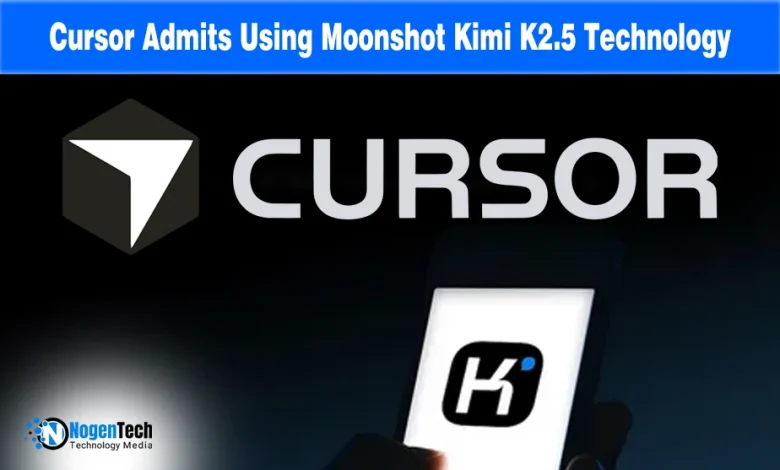
Cursor, the AI-powered coding assistant developed by Anysphere, launched Composer 2 on March 19, 2026, billing it as a major proprietary advancement for its user base of over one million daily active developers. Within hours, however, a developer on X discovered that the model powering Composer 2 was not built from scratch at all.
The internal model identifier embedded in Cursor’s own product pointed directly to Kimi K2.5, an open-source model developed by Moonshot AI, a Beijing-based artificial intelligence company backed by Alibaba and HongShan, formerly known as Sequoia China.
What followed was a swift public acknowledgment, a brewing license dispute, and an uncomfortable geopolitical conversation about Chinese AI in American software products.
How Developers Exposed Cursor’s Kimi K2.5 Foundation
The discovery, as reported by TechCrunch, came from a developer using the handle @fynnso on X, who noticed that the internal model identifier for Composer 2 read: accounts/anysphere/models/kimi-k2p5-rl-0317-s515-fast, a string that left little room for ambiguity.
The post accumulated over 444,000 views within 24 hours, rapidly drawing attention from developers, AI researchers, and industry observers alike.
The evidence did not stop there. According to National Today, Yulun Du, Moonshot AI’s head of pre-training, independently tested Composer 2’s tokenizer and confirmed it matched Kimi’s tokenizer identically, adding a layer of technical verification to what the model ID had already suggested.
Two other Moonshot AI employees who had initially engaged with the discovery quickly deleted their related posts, though the evidence was already fully public by that point.
Cursor’s Co-Founder Acknowledges the Omission
Faced with mounting public evidence, Cursor’s leadership moved quickly to address the situation. In response, Lee Robinson, Cursor’s VP of Developer Education, confirmed on X: “Yep, Composer 2 started from an open-source base,” adding that roughly only one quarter of the compute spent on the final model came from the Kimi K2.5 base, with the remainder coming from Cursor’s own continued training and reinforcement learning.
Co-founder Aman Sanger went further. As covered by the Financial Express, Sanger directly acknowledged the transparency failure, stating: “It was a miss to not mention the Kimi base in our blog from the start. We’ll fix that for the next model.”
The admission was notable given Cursor’s profile. Business Insider reported that the company raised a $2.3 billion funding round last fall at a $29.3 billion valuation, and is reportedly exceeding $2 billion in annualized revenue, making it one of the most valuable AI developer tools startups in the world.
The License Question Cursor Now Has to Answer
Beyond the transparency issue lies a potentially more consequential legal question. As TipRanks reported in its coverage of the controversy, Kimi K2.5 is released under a Modified MIT License that contains one critical commercial clause: any product that either exceeds 100 million monthly active users or generates more than $20 million in monthly revenue is required to prominently display “Kimi K2.5” in its user interface.
At its current revenue run rate, Cursor surpasses the $20 million monthly threshold by a significant margin, meaning the company may now be obligated to surface the Kimi attribution directly within the product itself, not merely in a blog post correction.
Additional coverage from AOL noted that this clause has drawn particular scrutiny from the developer community, given how quietly the foundation model was initially integrated.
Moonshot AI Responds and the Geopolitical Subtext
Moonshot AI’s official response was notably generous. The official Kimi account on X congratulated Cursor, framing the episode as a positive demonstration of open-source collaboration.
“We are proud to see Kimi-k2.5 provide the foundation. Seeing our model integrated through Cursor’s continued pretraining and high-compute RL training is the open model ecosystem we love to support,” as quoted by TechCrunch.
This tone is also notable given that Moonshot AI has already faced the Anthropic distillation claims earlier, adding a layer of context to its response.
But the broader reaction in the developer community carried sharper edges. Business Insider noted that building on a Chinese-developed model felt particularly sensitive in the current climate, where the AI competition between the United States and China is routinely framed in existential terms.
That tension had already surfaced earlier in 2025, when DeepSeek’s competitive model release triggered widespread alarm across Silicon Valley.
What’s Next For Cursor
Cursor has committed to disclosing foundation model sources in future release blog posts, a policy correction that Sanger’s statement implicitly established, as reported by the Financial Express. The more pressing question is whether Cursor will update Composer 2’s interface to comply with Kimi K2.5’s commercial license attribution requirement, a step the company has not yet publicly confirmed.
The episode is also likely to prompt broader scrutiny of how AI coding tools and developer platforms disclose their underlying model dependencies; particularly when those dependencies trace back to open-source releases from Chinese AI labs.
Source: was messing with the OpenAI base URL in Cursor and caught this